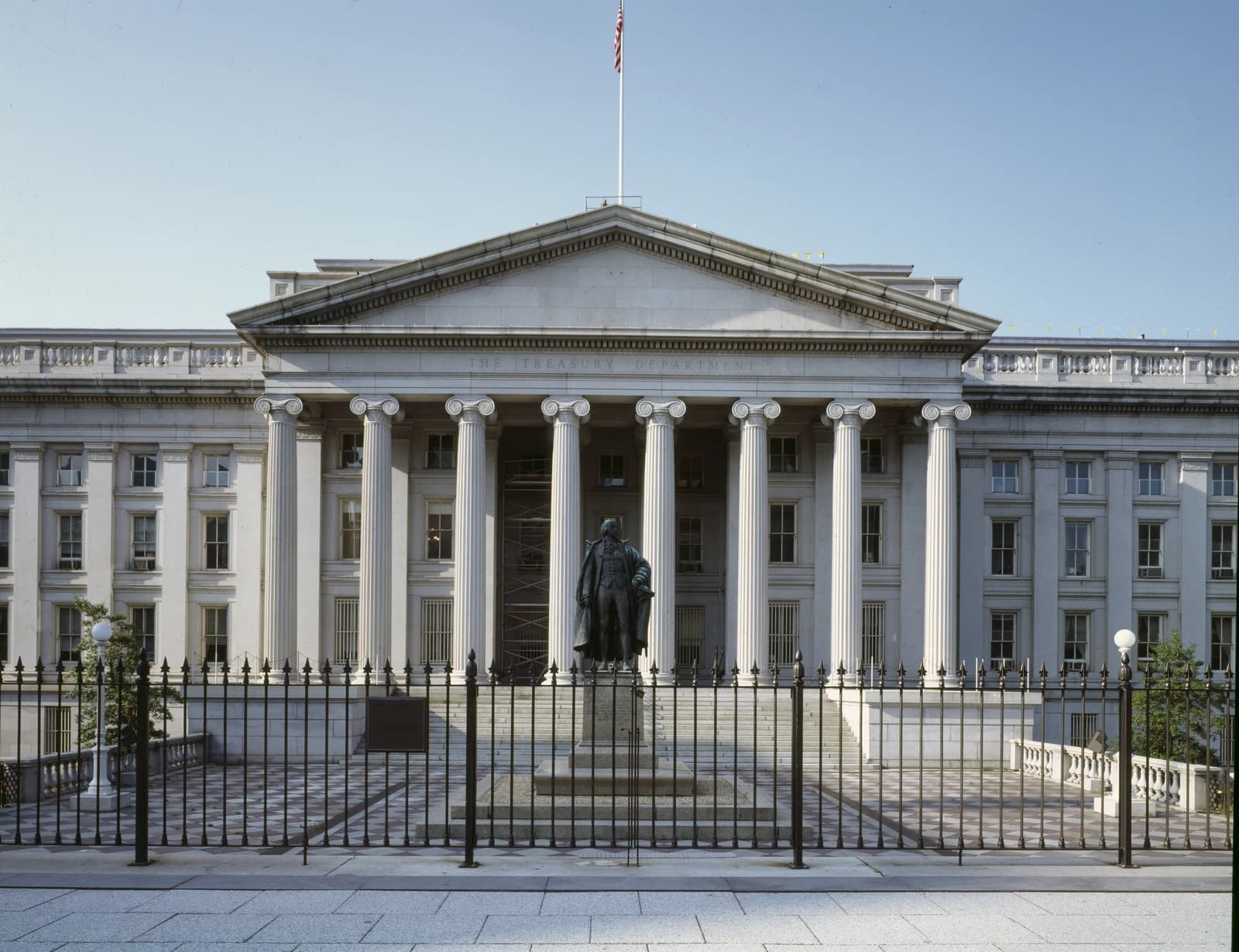
Crypto stablecoin issuers have moved from the margins of global finance to the center of America’s short-term funding market, accumulating more U.S. Treasury bills than some major economies and adding a fresh, if fragile, source of demand for government debt.
Stablecoin Issuers Hold More U.S. Treasury Bills

That shift matters because it links a highly volatile corner of finance to one of the world’s safest and most important markets. Stablecoin groups such as Tether and Circle now hold roughly $142 billion in Treasury bills, about 2% of all outstanding bills and 0.6% of total Treasuries, according to the data in the context. Circle alone reported $74 billion in reserves in the third quarter of 2026, with about 87% in U.S. government paper, while Tether has emerged as one of the largest holders of short-dated Treasury debt. In practical terms, crypto issuers have become a meaningful marginal buyer at a time when some central banks have been trimming their holdings.
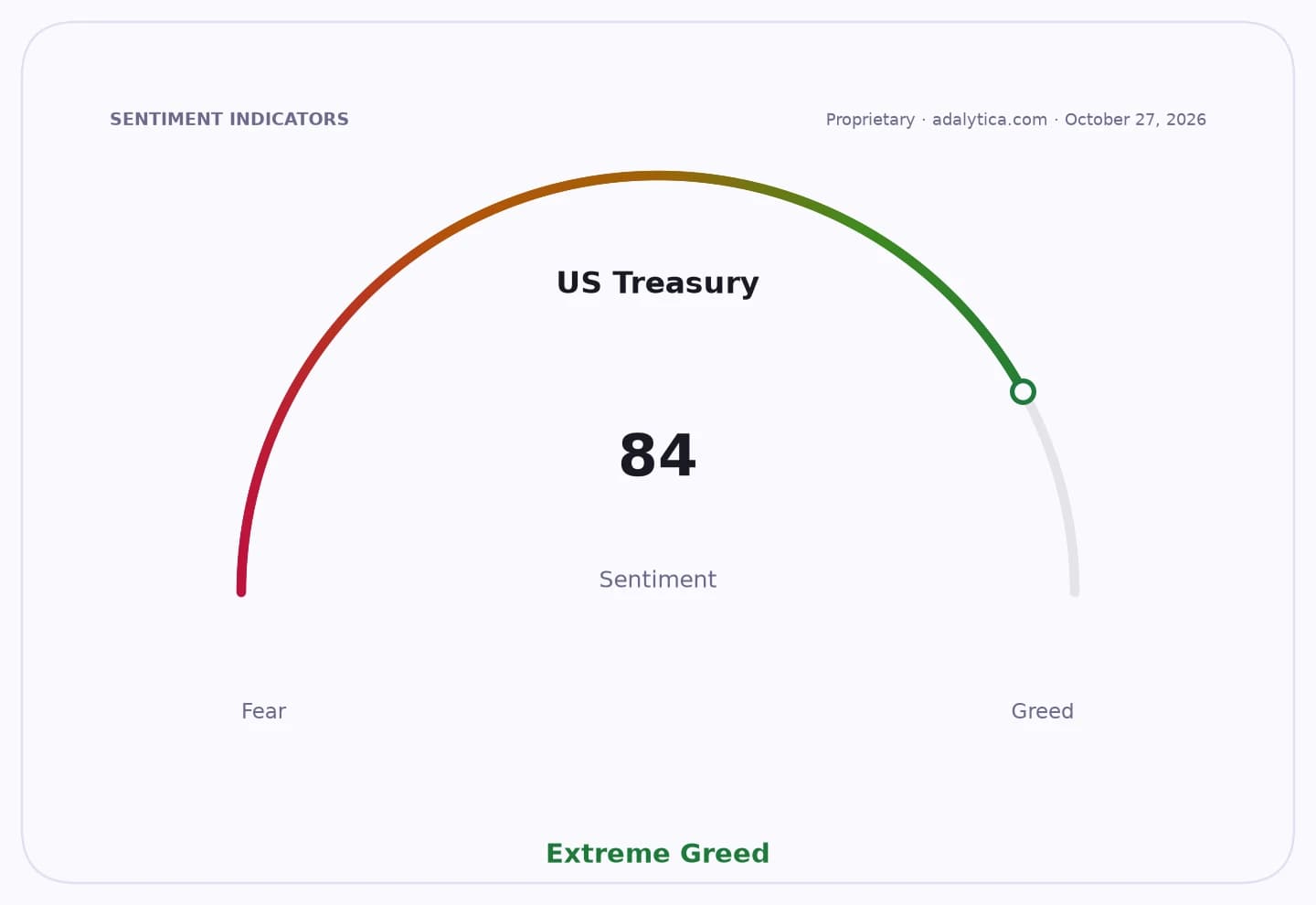
Sentiment Indicators
For Washington, that is an awkward but useful development. The dollar-backed stablecoin model channels cash raised from token users into Treasury bills, effectively recycling private demand into government financing. That has helped support bill auctions and, by some market estimates cited in the source, kept yields from rising even higher in a period of heavy supply. The economics are straightforward: stablecoin issuers earn the spread between zero-yield tokens and Treasury income, and in 2025 and 2026 that spread generated billions of dollars in revenue. Tether reportedly earned more than $10 billion in 2025, while Circle’s revenue depended overwhelmingly on reserve income.
But the same structure also creates a new concentration risk. Stablecoins are only as durable as market confidence in them, and a shock to a major issuer could force rapid liquidation of Treasury bills. That would be more than a crypto event. Large-scale selling of short-dated Treasuries could push bill yields higher, tighten dollar liquidity and spill into broader funding markets. The risk is not abstract: the source notes that if stablecoin demand reversed abruptly, the impact could move from digital assets into traditional fixed income through the very instruments Washington depends on to finance itself.
The regulatory backdrop makes the model even more delicate. The Genius Act, set to take effect on Jan. 18, 2027, formalizes the business by prohibiting issuers from paying interest to token holders and requiring reserves to be kept in very short-dated bills. That helps protect the peg, but it also caps flexibility. It leaves issuers highly exposed to falling rates: Circle, for example, would lose an estimated $739 million a year for every 100-basis-point decline in rates, according to the source. The trade-off is becoming clearer as U.S. yields have eased from recent highs. Higher rates boost issuer profits, but they also reduce demand for stablecoins versus direct Treasury ownership; lower rates improve token demand but shrink reserve income.
Investors should read this as both a validation and a warning. The bull case is that stablecoins are becoming a structural buyer of U.S. government debt at a time when traditional foreign demand is less reliable. The bear case is that the buyer base is unstable, procyclical and tied to confidence in issuers that remain vulnerable to legal, operational and market stress. Recent price action in crypto reinforces that fragility: Bitcoin is down sharply from recent levels, while shares of Coinbase and MicroStrategy have also weakened, underscoring how quickly sentiment can reverse across the sector.
The broader message is that crypto is no longer just using the financial system; it is helping fund it. That could lower borrowing costs at the margin, but it also means a funding market once dominated by governments and central banks is increasingly exposed to the behavior of a few private issuers. If rates stay high, stablecoin firms can remain profitable but may not expand as fast. If rates fall, demand could rise but the economics of reserve funding will weaken. Either way, the market is now large enough that investors in Treasuries, crypto and bank liquidity all have a stake in how this model evolves.
| Entity | Gains | Losses |
|---|---|---|
| U.S. Treasury market | ▲New marginal bill demand | ▼Higher concentration risk |
| Stablecoin issuers | ▲Reserve income and scale | ▼Rate sensitivity, run risk |
| Crypto users | ▲Dollar exposure and payments utility | ▼Peg and redemption risk |
| Traditional Treasury buyers | ▲Less pricing pressure at the margin | ▼More competition for bills |