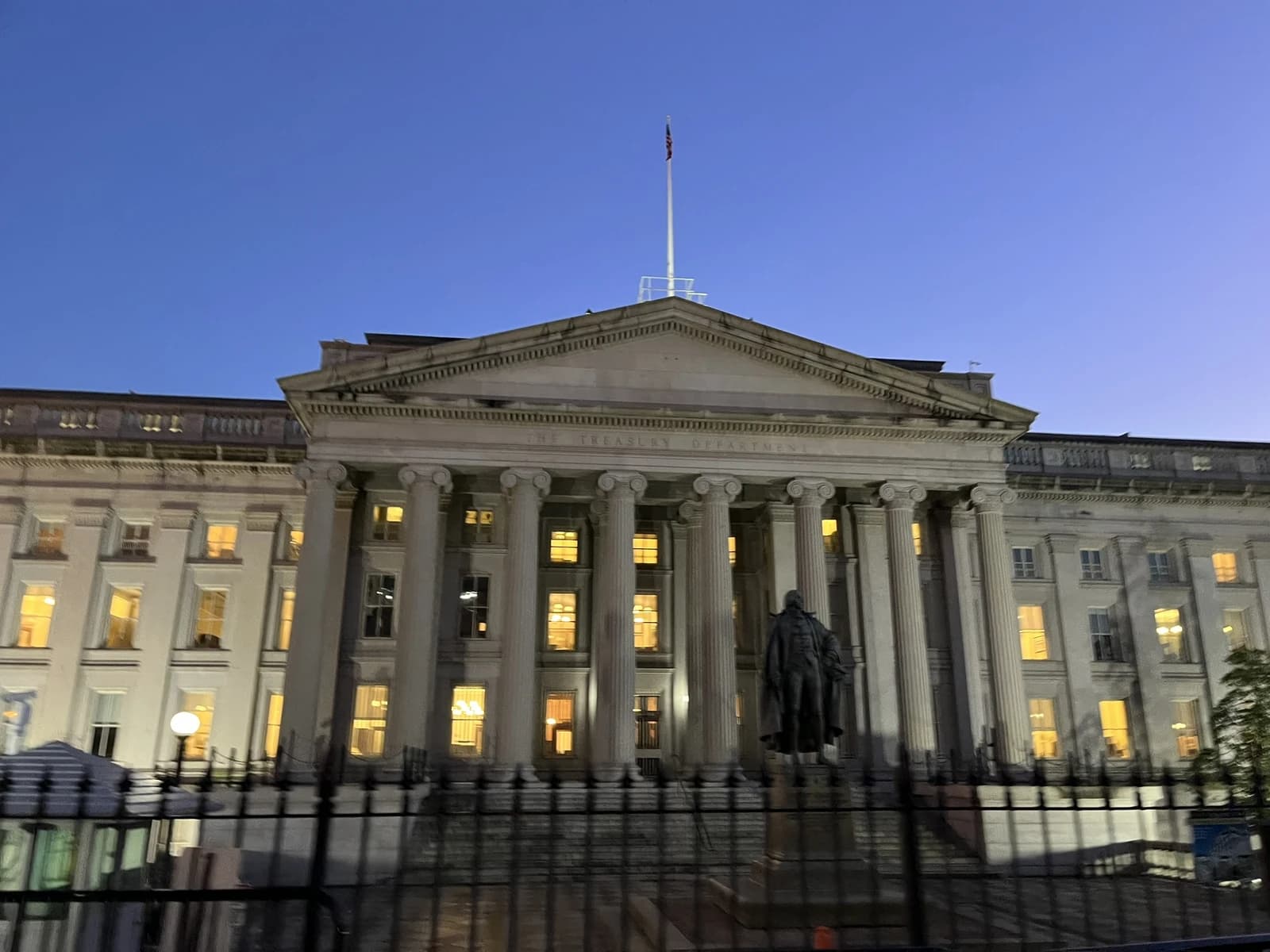
The United States is back in debt-ceiling territory, and President Donald Trump’s warning that failure to act could push the government toward “bankruptcy” underscores how quickly a political fight can become a market event.
U.S. Debt Ceiling Risks Treasury Market Volatility
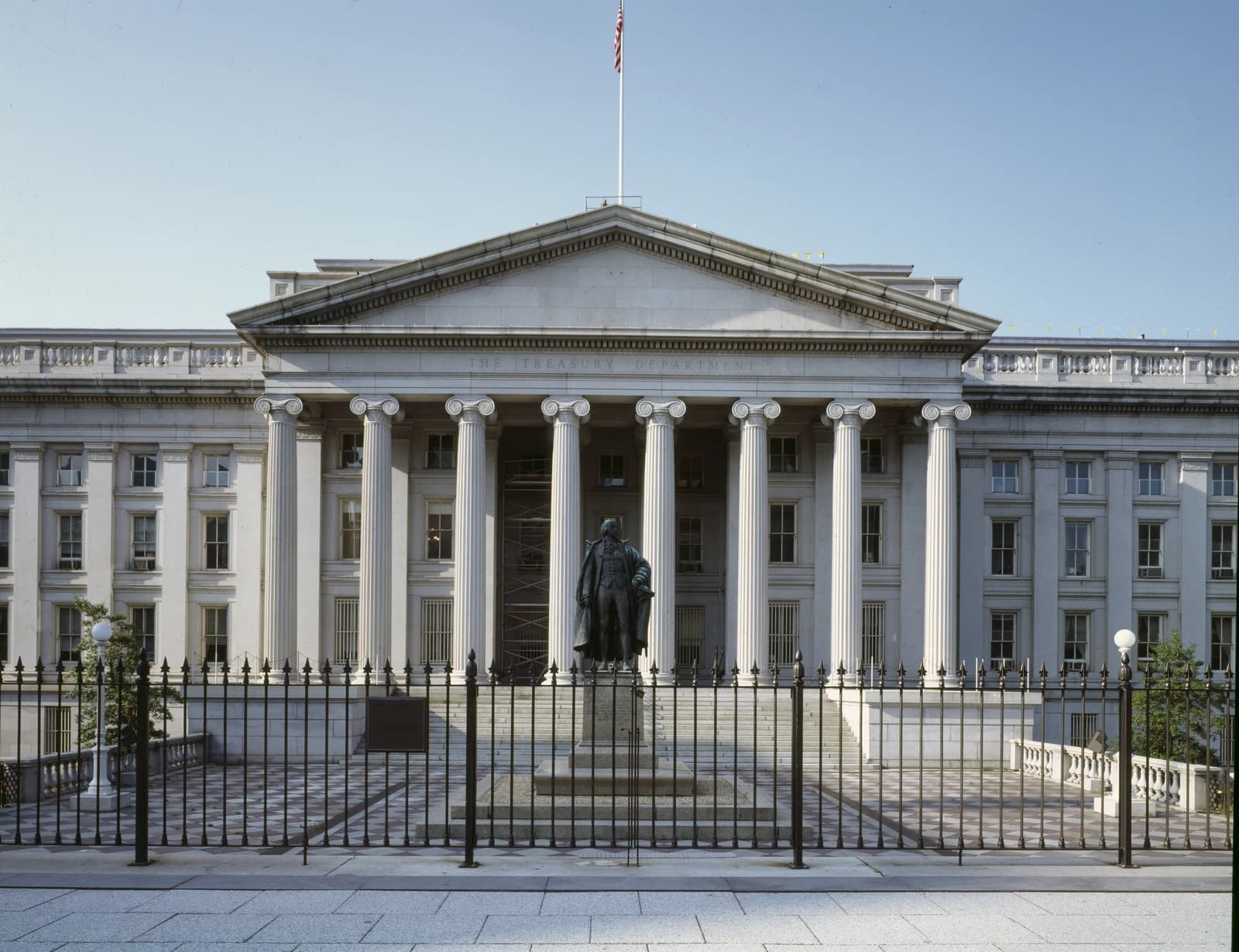
For investors, the issue is not the rhetorical flourish but the financing mechanics behind it. A failure to raise or suspend the debt limit would not mean insolvency in the corporate sense, but it could force the Treasury to delay payments, rattle the world’s benchmark risk-free asset and inject fresh volatility into rates, equities and the dollar. Even the threat of disruption matters because the Treasury market sits at the center of global collateral, funding and valuation systems.
Sentiment Indicators

Trump told Fox News there should be no such limit on U.S. borrowing and said “such a restriction should not exist,” arguing that the country has never faced a similar situation. The comment revives a recurring Washington confrontation that tends to intensify as the deadline approaches and lawmakers test how much market pressure they can absorb before compromising.
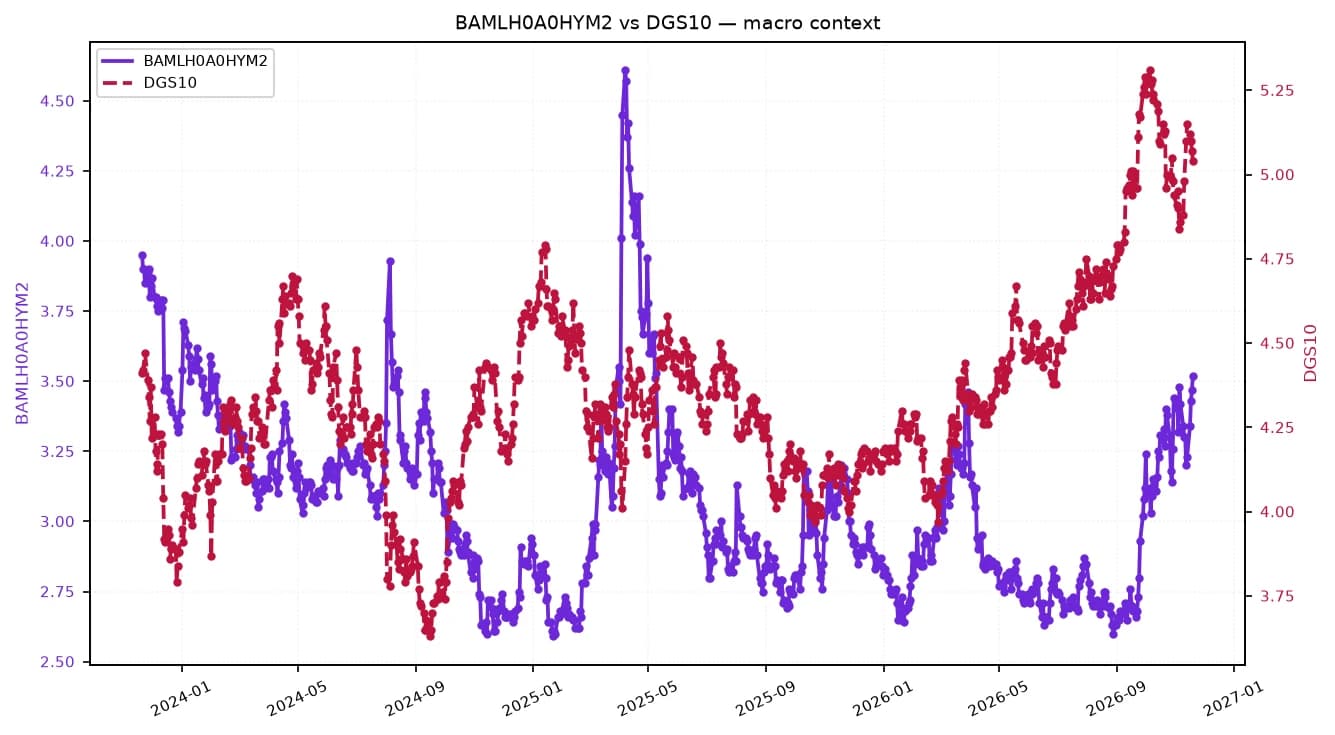
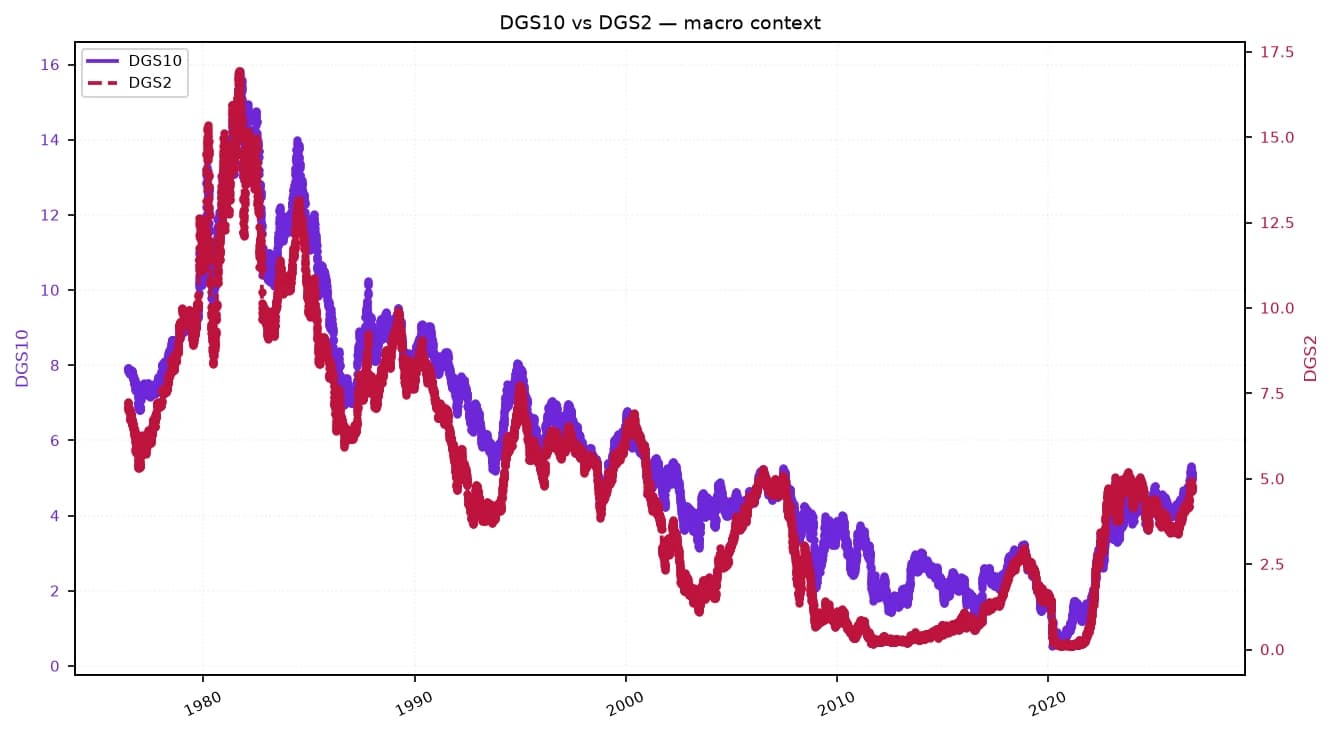
That pressure is already visible in fixed income. The 10-year Treasury yield was around 5.015% in the latest forecast reading, while the 2-year stood near 4.733%, levels that leave the government financing itself at materially higher costs than in the post-crisis era. High-yield spreads were also edging wider, with the BofA U.S. high-yield option-adjusted spread at 3.52%, suggesting investors are not treating the political backdrop as noise. A debt-ceiling impasse would likely amplify that caution by raising the premium demanded on short-dated Treasury bills most exposed to delayed payment risk.
DGS10 vs DGS2 — macro contextadalytica.com
Explore this data interactively — full history, time series and cross-market comparisons.
S&P 500
Equities are also vulnerable to the headline risk. The S&P 500 ETF SPY has sold off sharply, closing at 689.81 on November 20 after recent sessions that pushed its relative strength index below 30, a conventional sign of oversold conditions. The Adalytica S&P 500 trade snapshot shows “Extreme Fear” sentiment at 4, even as awareness remains high, a combination that points to fragile risk appetite. In that kind of setting, any escalation in Washington can accelerate de-risking rather than create a standalone macro shock.
Treasuries, by contrast, may see a split response. The iShares 20+ Year Treasury Bond ETF TLT rose to 81.45 on November 20 from 80.35 the prior day, with Adalytica’s Treasury bond snapshot showing a jump in sentiment to 62 from 41. That suggests some investors are positioning for a flight to quality, even though the debt-ceiling issue can perversely lift yields on bills at the front end while supporting longer-dated government bonds if growth fears dominate.
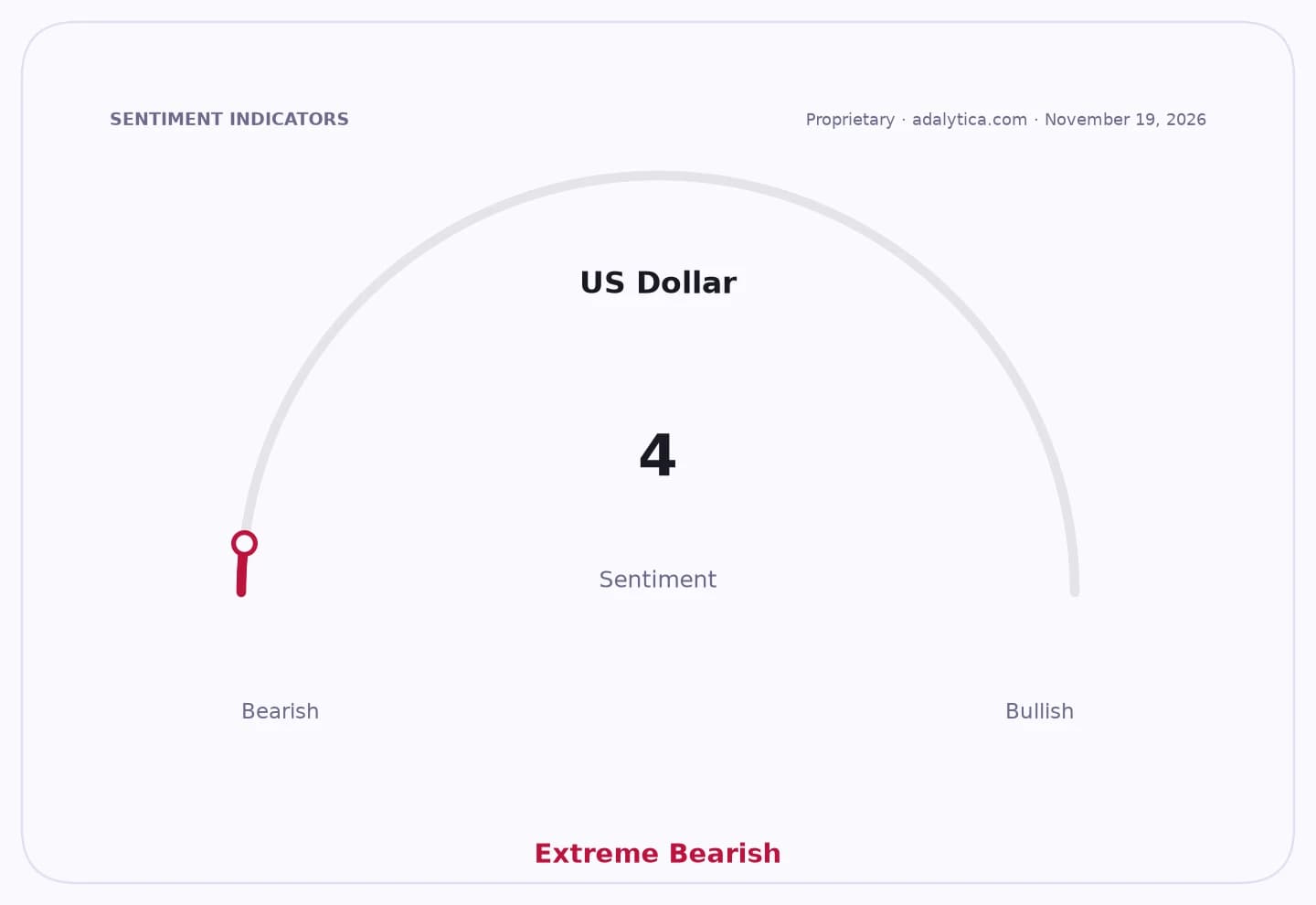
The dollar tells a more unsettled story. The U.S. Dollar Index ETF UUP traded at 29.62 on November 20, near its recent range, but Adalytica’s dollar trade signals show sentiment at zero and “Extreme Fear,” while awareness remains “Extreme Greed.” That mix reflects uncertainty: the dollar can benefit from haven demand in stress episodes, but a prolonged institutional standoff can also weigh on confidence in U.S. policy management.
| Entity | Gains | Losses |
|---|---|---|
| Treasury bulls | ▲Safe-haven demand | ▼Fiscal headline risk |
| Equity investors | ▲None | ▼Higher volatility |
| Short-dated T-bills | ▲Potential higher yields | ▼Payment-risk premium |
| U.S. government | ▲If a deal is passed | ▼If negotiations fail |