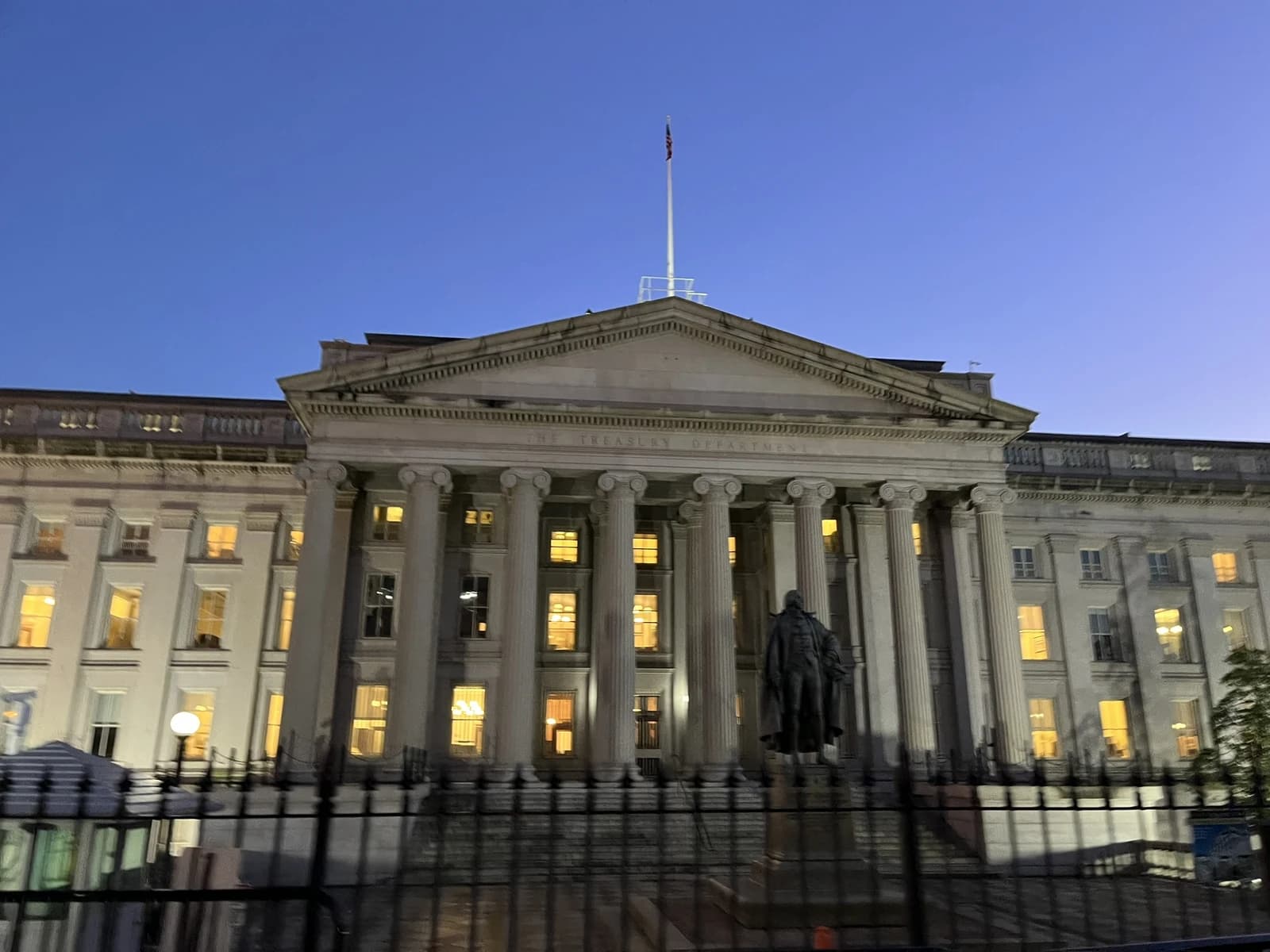
Investors are bracing for a renewed debt-ceiling fight after Democrats won control of both chambers of Congress, raising the odds that the next budget battle could turn into a prolonged standoff that rattles Treasuries and money markets.
Debt ceiling fight could pressure Treasuries

The immediate policy change is less important than the leverage it creates. With the US national debt already above $40 trillion, even a remote chance of delayed action on borrowing authority can distort pricing in short-dated bills, pressure repo funding and revive the political risk premium that markets had largely pushed to the side in recent months.
Sentiment Indicators
The debt ceiling itself is unlikely to be reached until late next year, but that timing is part of the problem. If Congress does not act before year-end, Democrats may be able to use the so-called X-date as bargaining leverage once the new Congress takes office in January. That raises the chance of the kind of last-minute brinkmanship that has repeatedly unsettled investors even when default was not the base case.
“Default scenario from our view is very unlikely,” said Michael Reynolds at Glenmede. “But the further you go down that brinksmanship path, the more worried markets are going to be about that eventuality.”
DGS10 vs T10Y2Y — macro contextadalytica.com
Explore this data interactively — full history, time series and cross-market comparisons.
The near-term focus is the Dec. 11 funding deadline, which could offer Republicans an opening to address the debt ceiling in a lame-duck session. Some strategists doubt they will seize it after the scale of the Democratic win. Dustin Reid of Mackenzie Financial said the administration would probably prefer to raise the ceiling before the new Congress is seated, but added that he does not expect that to happen.
That leaves markets vulnerable to a longer and messier negotiation. BMO’s Vail Hartman warned of a possible “protracted debt ceiling standoff in 2027,” with the risk of sovereign downgrade pressure, price distortions around the projected X-date and volatility in cash and repo markets if Treasury has to rely on extraordinary measures and draw down its General Account.
For investors, the issue is not just a headline risk. The Treasury market remains the backbone of global collateral and funding, and past debt-ceiling episodes have produced spillovers into bill yields, swap spreads and short-term financing costs. The latest moves in rate markets underscore how sensitive that backdrop remains: the 10-year Treasury yield hovered around 4.84% on Nov. 5, while the 10s-2s curve was still mildly positive, showing investors are already weighing a softer growth outlook against fiscal uncertainty.
The equity market has also shown signs of caution. The S&P 500 ETF, SPY, slid sharply in the latest session and its 50-day moving average is still near the current level, while momentum indicators such as RSI have weakened. Treasury bond ETF TLT has held up better, with price sitting above its 50-day moving average and RSI rising, suggesting demand for duration as investors hedge policy risk.
Adalytica trade signals show the same split in positioning: sentiment on SPY is neutral but awareness is at “Extreme Greed,” while sentiment on US Treasury bonds is at the upper end of the scale, indicating investors are actively looking for protection. That kind of setup typically benefits bond holders if political uncertainty intensifies, but it can also become unstable if a standoff spills into broader funding markets.
Moody’s said the broad fiscal path is unlikely to change materially because the drivers of rising debt — mandatory spending, demographics and interest costs — remain intact. BlackRock Investment Institute likewise said divided government may not alter the fiscal trajectory much, but it does raise the risk of shutdowns and funding showdowns.
For now, the base case remains that Washington eventually raises the ceiling before any default threat becomes real. The market risk is that the path there becomes the story — and in Treasury markets, the path can be enough to move prices long before the destination is reached.
| Entity | Gains | Losses |
|---|---|---|
| Democrats | ▲More leverage in fiscal talks | ▼Higher blame risk if standoff drags on |
| Treasury bond holders | ▲Safe-haven demand | ▼Volatility around X-date |
| Short-term funding markets | ▲Higher trading volumes | ▼Repo and bill-market distortions |
| Republicans | ▲Chance to force concessions | ▼Less control over negotiations |