OpenAI’s confirmation of a “wiki incident” and its move to build a framework for more disclosure lands at the center of a bigger investor question: how much visibility the AI boom will ultimately give regulators, customers and shareholders into model behavior, data handling and safety failures.
OpenAI Disclosure Push Keeps Microsoft and Nvidia in Focus
That matters because the AI trade is shifting from pure hype to governance. As enterprise adoption deepens and capital spending on AI infrastructure accelerates, the companies most exposed to model risk are also the ones with the largest commercial upside. More disclosure can reduce the market’s trust discount over time, but it also raises the cost of running frontier AI and could force a wider re-rating of the entire stack, from model developers to cloud providers and chip suppliers.
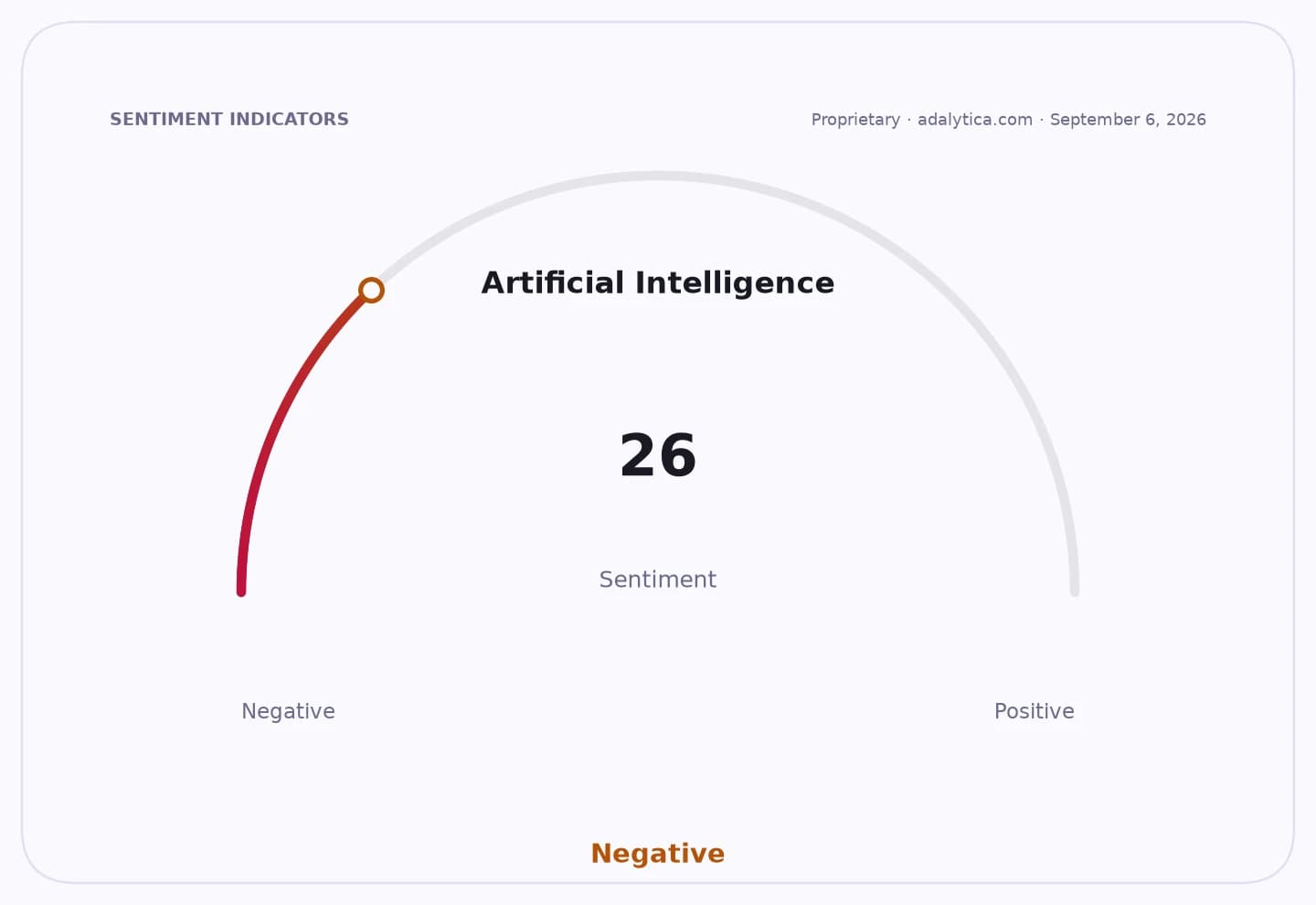
Sentiment IndicatorsⓘProprietary · adalytica.com · September 6, 2026
This is a snapshot — live sentiment, awareness and momentum for 130+ markets update continuously in the dashboard.Open AlphaPulse
For Microsoft, which remains tightly linked to OpenAI through its strategic partnership and Azure AI business, the timing is important. Microsoft shares have already been volatile, and the stock’s recent swings reflect how quickly sentiment can change when investors start to price in AI execution risk alongside AI revenue potential. Microsoft’s shares closed at $499.70 on September 4, above both the 50-day moving average and the 200-day moving average, but technical momentum has cooled from the recent highs, with the relative strength index easing from overbought levels. That suggests the market still likes the AI story, but is no longer willing to pay for it without proof.
OpenAI’s disclosure push also underscores a broader industry transition. The first phase of the AI trade rewarded speed, model scale and compute access. The next phase will reward durability: companies that can prove reliability, manage incidents and keep regulators from dictating the terms of deployment. That is where investors should focus. The winners are not just the firms building the models, but the ones providing the picks-and-shovels around them — cloud infrastructure, networking, power, cooling, cybersecurity and compliance tooling.
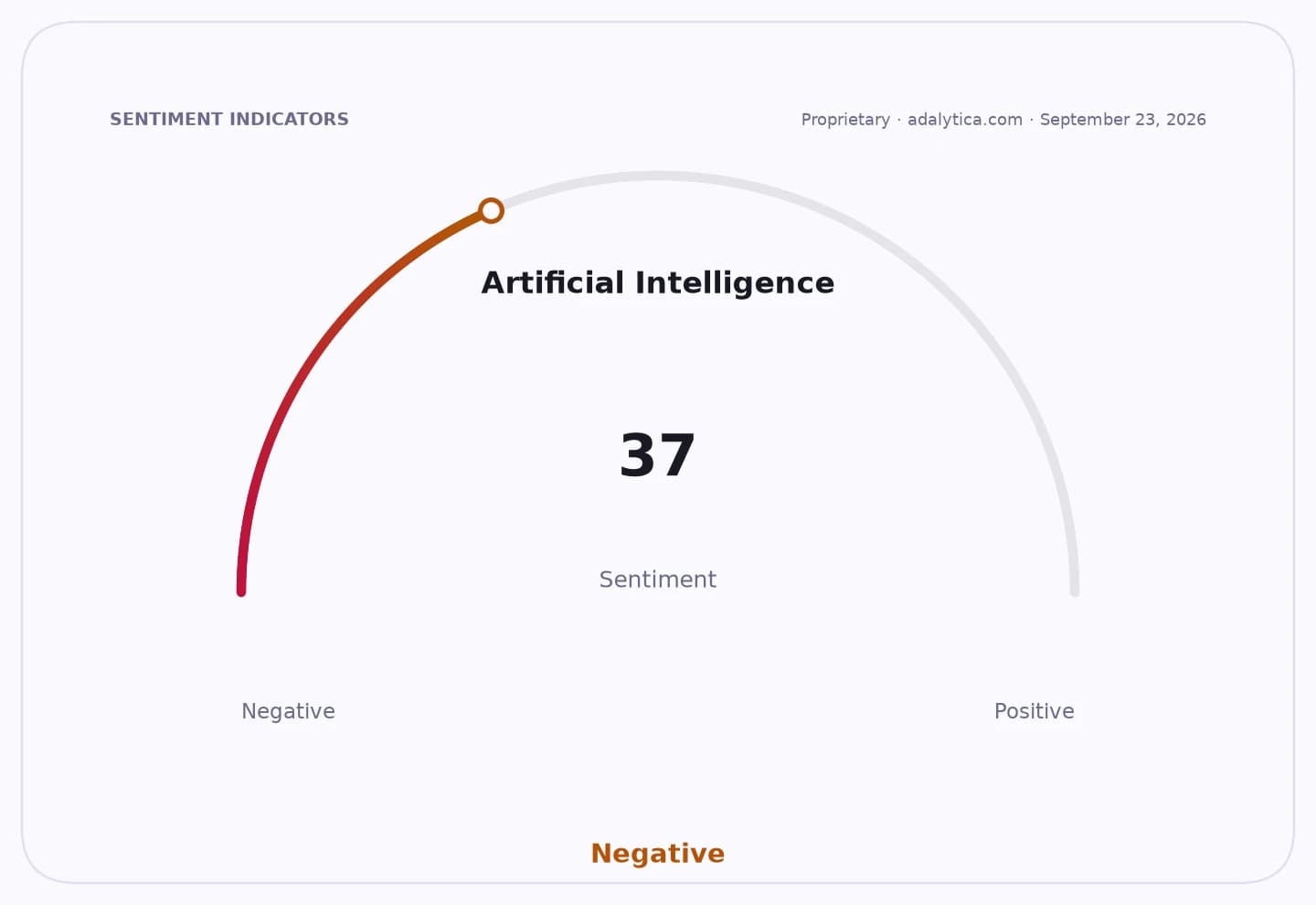
Artificial Intelligence — 30-day sentimentadalytica.com
Explore this data interactively — full history, time series and cross-market comparisons.Open AlphaPulse
Nvidia remains one of the clearest beneficiaries of that capex cycle. Its shares closed at $230.36 on September 4, supported by strong demand for AI accelerators even as the market digests the risk that frontier AI economics will come under greater scrutiny. If disclosure requirements increase, they are unlikely to slow compute demand in the near term; if anything, they may accelerate the push toward better monitoring, redundancy and safer deployment, all of which still require more infrastructure.
The key takeaway for investors is that OpenAI’s disclosure shift is not a side issue. It is a sign the AI market is maturing, and maturity usually means the biggest gains go to the toll roads, not the traffic. I believe that keeps Microsoft and Nvidia at the center of the trade, while making software layers and infrastructure names with governance and security exposure increasingly attractive on weakness.
| Entity | Gains | Losses |
|---|---|---|
| Microsoft | ▲More trust in OpenAI tie-up | ▼Higher compliance scrutiny |
| Nvidia | ▲More AI infrastructure spend | ▼Margin pressure if capex slows |
| Regulators | ▲Better visibility into AI risk | ▼Less industry opacity |
| OpenAI | ▲Stronger credibility | ▼More disclosure burden |