Oracle shares sank 8.8% on Wednesday after a hotter-than-expected September CPI report sent Treasury yields higher and revived bets that the Federal Reserve may need to keep policy tighter for longer.
Oracle Shares Fall on CPI and Higher Treasury Yields

The stock closed at $130.55, with volume of 50.4 million shares, about 61% above its three-month average, as investors sold software names exposed to higher financing costs and slower valuation support. The move came in a weak tape: the S&P 500 fell 1.08% and the Nasdaq Composite lost 1.88%.
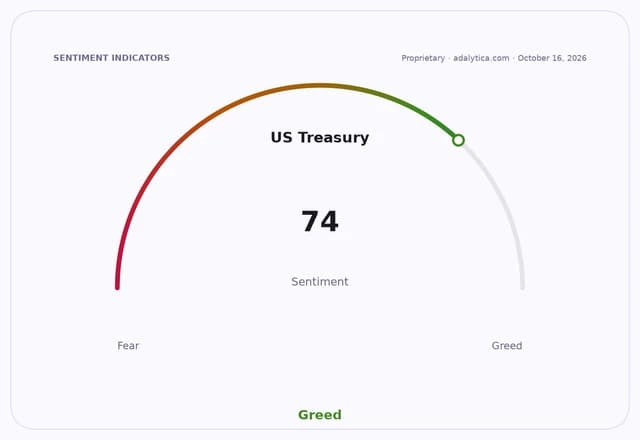
For Oracle, the macro shock lands on top of a balance-sheet story that was already bothering investors. The company’s push into AI cloud infrastructure has increased spending on data centers and power logistics, while debt is heading toward $167 billion and free cash flow is under pressure before revenue tied to OpenAI-related contracts is expected to begin in 2027.
That has already filtered through to credit markets. Oracle was downgraded to BBB-, just one notch above junk, underscoring how sensitive the company is to higher borrowing costs if Treasury yields keep climbing.
CPIAUCSL vs DGS10 — macro contextadalytica.com
Explore this data interactively — full history, time series and cross-market comparisons.Open AlphaPulse
The inflation data matters because it raises the odds of another Fed rate increase, or at minimum delays any relief in rates. That is a direct headwind for Oracle’s financing profile and a drag on the broader cloud-software trade, where investors have been willing to pay up for long-dated growth only when rates are stable or falling.
The selloff also shows how quickly market enthusiasm for Oracle’s AI buildout can collide with execution risk. Oracle posted 30% revenue growth to $19.3 billion in fiscal first-quarter 2027, helped by triple-digit cloud infrastructure growth, but investors are increasingly focused on whether that momentum can offset heavy capital spending and margin pressure.
The next test comes on Dec. 14, when Oracle reports again. Until then, the stock is likely to trade as much on Treasury yields and Fed expectations as on its own cloud bookings.
| Entity | Gains | Losses |
|---|---|---|
| Treasury yields | ▲Stronger inflation repricing | ▼Rate-sensitive equities |
| Oracle bondholders | ▲Higher caution on leverage | ▼Higher refinancing risk |
| Oracle bulls | ▲Faster cloud revenue growth | ▼Near-term margin and cash-flow pressure |
| Software peers | ▲Relative safety if spending is lighter | ▼Multiple compression from higher rates |