Orlen is turning Poland’s LNG infrastructure into a regional trading corridor, signing new gas agreements with Ukraine, Slovakia and Hungary that deepen Central and Eastern Europe’s shift away from Russian supply and widen demand for U.S. cargoes.
Orlen signs new gas deals with Ukraine, Slovakia, Hungary
The most immediate economic significance is not just that Orlen has added more contracts, but that it is building a cross-border commercial network around Poland’s terminals, pipelines and shipping capacity. That gives the state-controlled group a bigger role in gas arbitrage and supply security at a time when Europe is still trying to lock in non-Russian molecules before the EU phases out Russian gas imports after 2027 under REPowerEU. For buyers in the region, the arrangements offer more routing flexibility. For Orlen, they create a larger addressable market and a clearer platform to monetize its LNG sourcing and trading capabilities.
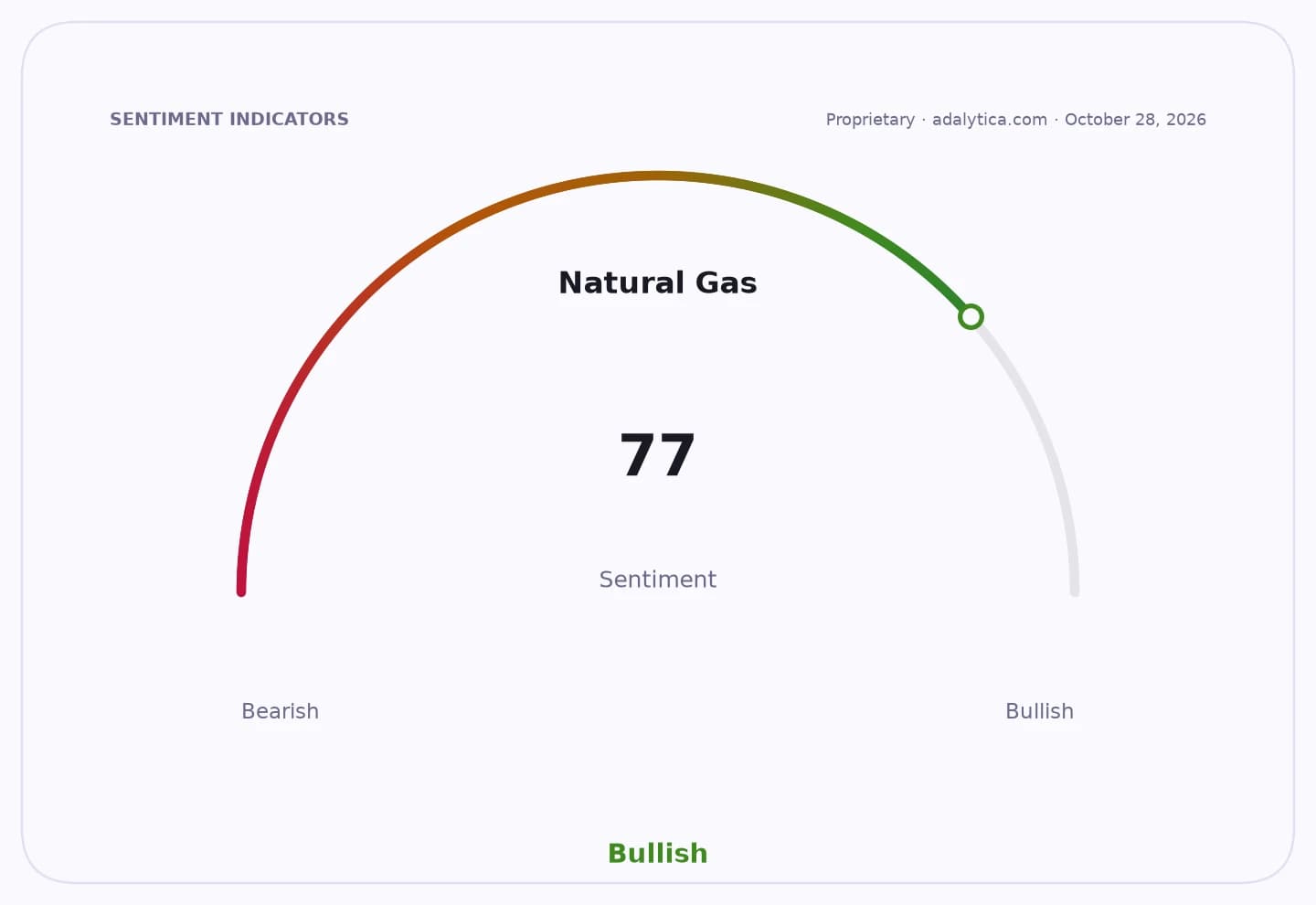
Sentiment Indicators
The deal with Naftogaz will supply Ukraine with gas from three LNG cargoes sourced from the United States, regasified at Świnoujście and sent onward by pipeline. Orlen said the arrangement will support Ukrainian supply continuity in the first quarter of 2027, a period that matters because winter demand and war-related damage have repeatedly strained the country’s energy system. Orlen said it has already concluded five contracts with Naftogaz since 2025, covering more than 600 million cubic meters of gas derived from U.S. LNG imported through Świnoujście and Klaipėda.
That volume is still modest relative to total European gas demand, but the direction matters. Each new contract reinforces Poland’s status as an energy transit and trading point rather than just a local market. The strategic logic is clear: the more LNG that enters through Polish terminals, the more the country can act as a distribution hub for neighbors that want optionality beyond traditional supply routes. That also benefits U.S. exporters, whose cargoes continue to gain traction in Europe as long-term buyers seek diversification and security.
Orlen’s parallel agreement with Slovenský plynárenský priemysel, Slovakia’s biggest gas supplier, is even more indicative of where the market is heading. The companies will now open talks on gas sources, commercial terms and delivery arrangements, with LNG delivered into Poland and moved south through European networks. SPP said it is preparing for the post-2027 environment, when Russian gas imports into the EU are due to be phased out. For Slovakia, that is a supply-chain problem as much as a political one: it needs replacement volumes that are reliable, price-competitive and physically deliverable through existing infrastructure.
The memorandum with Hungary’s MVM ONEnergy points to the same structural shift. Hungary has relied heavily on southern routes, but Orlen and MVM will assess LNG deliveries into Polish terminals, regasification and onward transport to Hungary. Even if the cooperation remains exploratory for now, it reflects a broader regional realignment in which landlocked and pipeline-dependent markets are looking for access to seaborne LNG through Poland. That supports the Baltic Eagle Gas Hub concept, which is built around the Świnoujście and Klaipėda terminals, planned floating storage and regasification capacity in the Gulf of Gdańsk and Orlen’s own LNG carrier fleet.
For investors, the key question is whether this becomes a durable earnings engine or remains mainly a strategic positioning story. The bullish case is that Orlen is creating a scalable trading and logistics platform in a market where energy security has become a premium service. More routes, more counterparties and more regasification-linked sales could improve utilization of assets that are otherwise expensive to build and maintain. The bearish case is that margin capture in gas trading can be cyclical and competitive, and the economics will depend on transportation constraints, spread conditions and how quickly Europe’s gas map is rewritten after 2027.
Still, the balance of the story is favorable for Orlen and for regional buyers seeking diversification. The new pacts suggest Poland is moving from being a consumer of imported gas to a gatekeeper for regional supply. That has geopolitical value, but it also has commercial value: in Europe’s changing gas market, infrastructure, optionality and trusted counterparties are becoming as important as molecules themselves.
| Entity | Gains | Losses |
|---|---|---|
| Orlen | ▲Bigger regional trading role | ▼Higher execution risk |
| Ukraine, Slovakia, Hungary | ▲More supply options | ▼Less reliance on legacy routes |
| U.S. LNG exporters | ▲New European demand | ▼Pressure from competition |
| Russian gas suppliers | ▲— | ▼Further market share loss |