Pakistan’s central bank has rebuilt foreign exchange reserves to $21.5 billion from less than $3 billion in early 2023 without a material increase in external debt, a sign that the country’s stabilization program is beginning to generate hard-currency buffers rather than merely postponing financing stress.
Pakistan central bank lifts reserves to $21.5 billion
State Bank of Pakistan Governor Jameel Ahmad said the reserve accumulation was driven by the SBP’s own foreign-exchange purchases, not fresh borrowing, while forward liabilities were cut to below $1 billion from more than $5.7 billion. That matters because reserve gains funded by new loans can leave a country looking stronger on paper while its debt burden worsens. A reserve build supported by current-account improvement and market reform is more durable and reduces rollover risk for both the sovereign and the banking system.
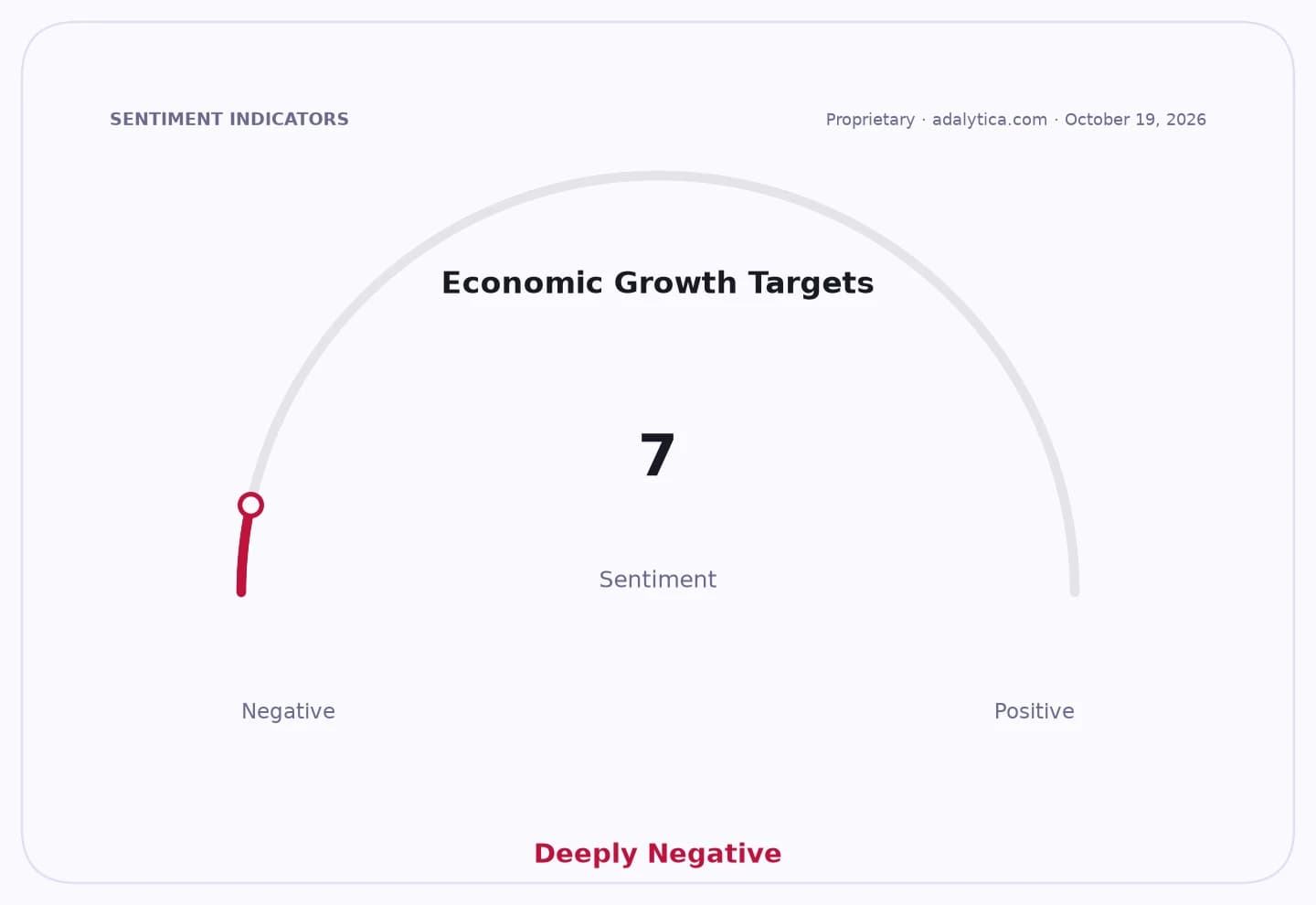
Sentiment IndicatorsⓘProprietary · adalytica.com · October 21, 2026
This is a snapshot — live sentiment, awareness and momentum for 130+ markets update continuously in the dashboard.Open AlphaPulse
The improvement also speaks to a broader repair in Pakistan’s external accounts. Ahmad said the purchases were enabled by an almost balanced current account in fiscal 2026, helped by regulatory reforms that improved interbank liquidity and encouraged remittances to move through formal channels. The central bank expects continued reserve accumulation with the current-account deficit likely to stay within 0% to 1% of GDP in fiscal 2027, a level that would keep pressure on the rupee and on external financing contained if sustained.
For investors, the implication is that Pakistan is moving from crisis management toward a more credible stabilization story. The country’s access to capital markets has been helped by IMF engagement, sovereign rating upgrades and what the governor described as improved investor confidence. That combination is important for bondholders, banks and foreign portfolio investors because it lowers the probability of another disorderly balance-of-payments event and improves the odds that Pakistan can fund itself on better terms.
The fiscal backdrop has also strengthened, with the primary balance posting a third consecutive annual surplus in fiscal 2026 and debt-to-GDP on a downward path. Inflation has fallen sharply from the peaks seen in fiscal 2023, and real GDP growth recovered to 3.7% in fiscal 2026, with 3.5% to 4.5% projected for fiscal 2027. That gives policymakers more room to absorb external shocks, though it does not eliminate them.
The main risk is that the gains remain vulnerable to renewed oil-price pressure, geopolitical strain or a reversal in remittance flows. But for now, the more important narrative is that Pakistan has rebuilt reserves through policy discipline rather than another debt-led patch, which is a better foundation for stability and, if maintained, for a re-rating of risk over time.
| Entity | Gains | Losses |
|---|---|---|
| SBP / Pakistan | ▲Larger FX buffers | ▼External financing stress eases |
| Sovereign bondholders | ▲Lower default risk | ▼Less upside from distress pricing |
| IMF / reform supporters | ▲Validation of program | ▼Leverage if reforms slow |
| Importers / hedged borrowers | ▲More stable rupee outlook | ▼Fewer crisis-driven currency gains |