Pakistan has turned down a $490 million commercial loan from an arm of the Islamic Development Bank because the financing came in too expensive, underscoring how sharply the country’s borrowing costs have risen just as its funding needs are swelling to about 20% of GDP.
Pakistan rejects $490 million IsDB loan
The decision is more than a single rejected facility. It shows Islamabad is being forced to choose between taking on costly debt now or risking a funding squeeze later, at a time when external obligations, a wider-than-planned current account deficit and heavy domestic maturities are all pulling on the budget at once.
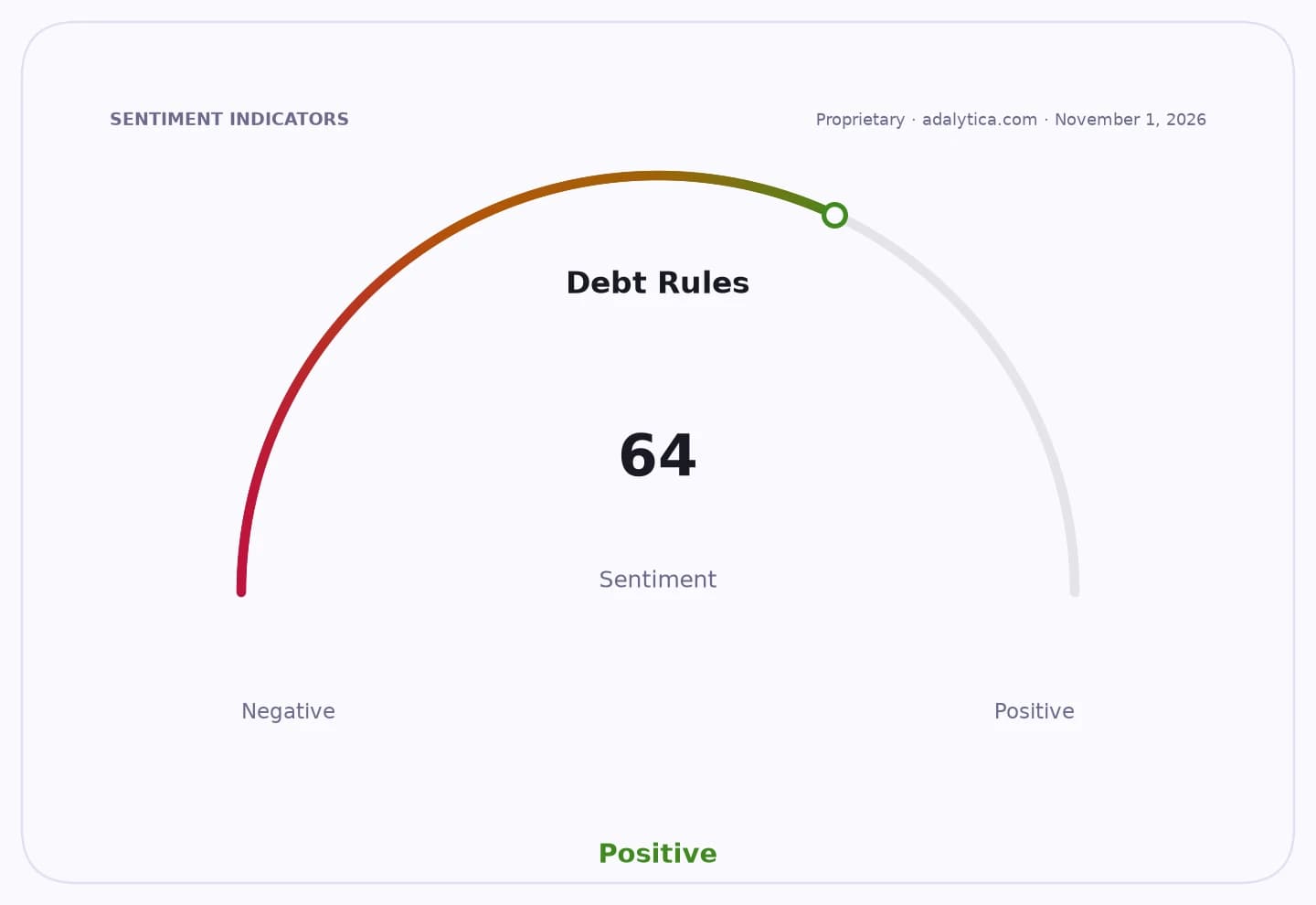
Sentiment Indicators
Officials said the International Islamic Trade Finance Corp. offered the one-year facility at an all-in cost of about 8%, well above the finance ministry’s target of around 6%. That made the proposal more expensive than Pakistan’s December 2027 bond, which was trading near 6.1%, even though the government has already tapped the market this year at higher levels.
Pakistan raised $3 billion through Eurobonds in September, including a five-and-a-half-year issue at a 7.5% coupon and a 10-year bond at 7.9%. But those deals came against a backdrop of US Treasury yields above 5%, far above the ultra-low rates that helped Islamabad borrow cheaply in 2021. The comparison matters: Pakistan’s access to capital has not vanished, but the price of that access has become much less forgiving.
That is why the rejection of the IsDB facility matters for investors. When a sovereign starts walking away from funding because the coupon is too high, it is a sign that debt service sensitivity is rising and that every new loan is being judged against a tighter affordability threshold. In Pakistan’s case, the finance ministry’s own borrowing plan for fiscal 2026-27 pegs gross financing needs at Rs28.647 trillion, or about 20% of GDP, including a federal deficit of Rs7 trillion and more than Rs21 trillion of domestic and external maturities.
The International Monetary Fund has also projected a current account deficit of 1% of GDP, or nearly $4.5 billion, above the government’s estimate range of $2.5 billion to $3 billion. That gap matters because it suggests Pakistan may need more external financing than officials have been telling markets, increasing pressure on multilateral lenders and any remaining commercial sources.
There is also a governance angle. The debt office has been operating without a permanent director general since January, and the ministry has now asked the Economic Affairs Division to find a cheaper alternative. For a sovereign managing acute funding stress, execution risk becomes part of the credit story. The slower the funding process, the more leverage lenders gain and the more expensive financing can become.
For investors, the trade-off is clear. Pakistan is not out of the market, but it is becoming increasingly price-sensitive, which supports a selective view rather than a broad bullish one on the sovereign. Bondholders may still find value in Pakistan’s paper if multilateral support holds and external financing gaps are bridged, but the country’s dependence on repeated refinancing keeps volatility high and makes duration risk look more dangerous than headline yields suggest.
The next test is whether Islamabad can replace the rejected $490 million at better terms or whether it will have to accept higher pricing somewhere else in the capital stack. Either outcome reinforces the same thesis: Pakistan’s financing needs are manageable only if lenders stay open and patient, and that leaves the country’s debt story highly exposed to global rates, IMF assumptions and the pace of external inflows.
| Entity | Gains | Losses |
|---|---|---|
| Pakistan government | ▲Cheaper funding if replacement is found | ▼Higher refinancing pressure |
| IsDB/ITFC | ▲Avoids lending below target spread | ▼Loses a sovereign client |
| Multilateral lenders | ▲More demand for concessional capital | ▼More exposure to Pakistan risk |
| Pakistan bondholders | ▲Potential policy discipline | ▼Higher rollover and default risk |