Pakistan’s tax system is shifting more of the burden onto salaried workers even as the IMF-backed program eases it for real estate and retailers, underscoring a politically fraught revenue strategy that may help the budget in the short run but risks deepening inequality and consumer stress.
Pakistan tax burden shifts to salaried workers
The clearest signal is the widening gap in who is paying income tax. In the July-September quarter, the salaried class contributed Rs144 billion, Rs90 billion more than the combined Rs54 billion paid by retailers and the real estate sector. That imbalance matters economically because salaried workers are among the most visible and easiest-to-tax groups in Pakistan, while trading and property remain structurally under-collected despite being large parts of the cash economy.
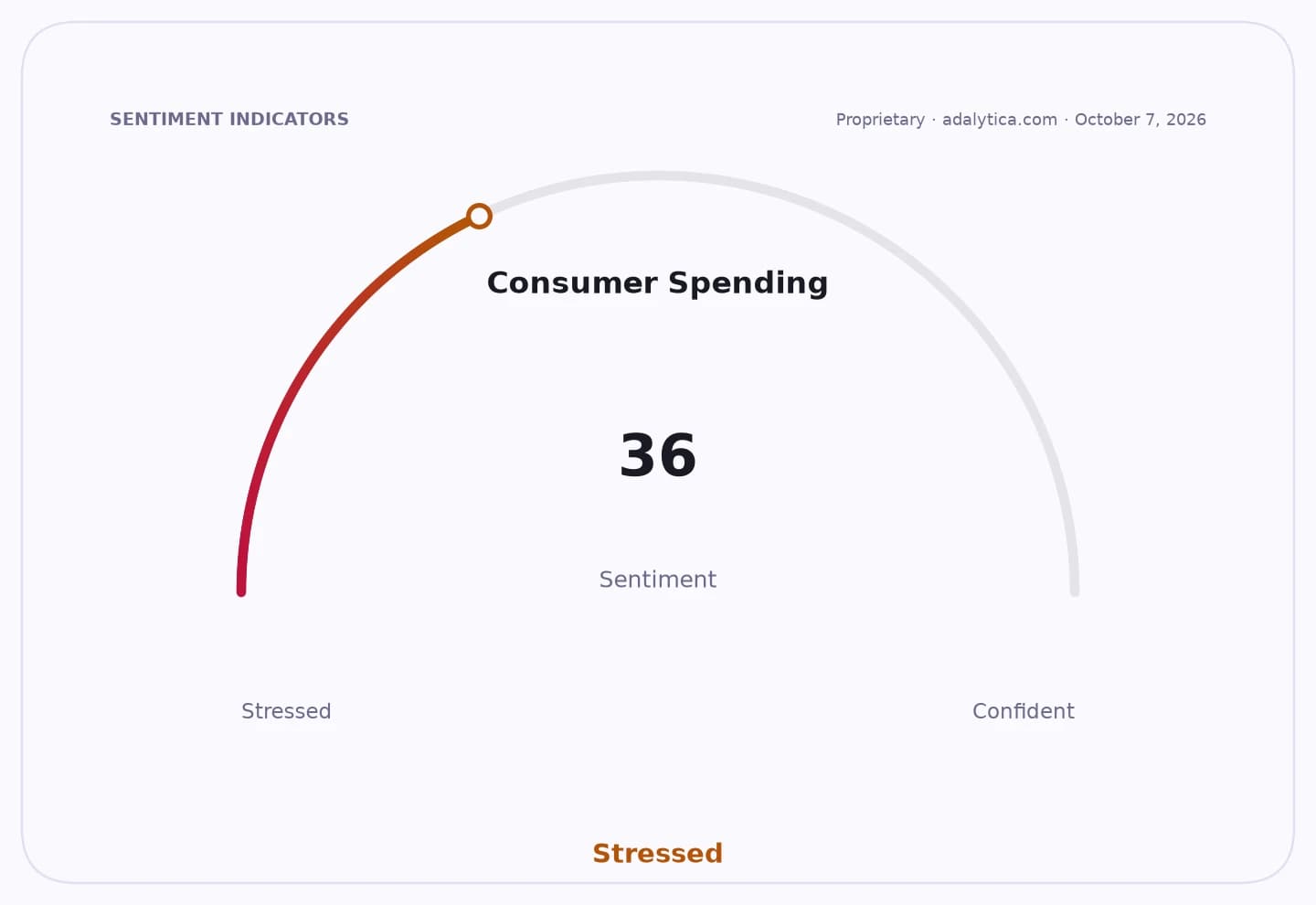
Sentiment IndicatorsⓘProprietary · adalytica.com · October 7, 2026
This is a snapshot — live sentiment, awareness and momentum for 130+ markets update continuously in the dashboard.Open AlphaPulse
The data also show the direction of policy. Real estate tax collection fell 38% to Rs35.2 billion in the first three months of the fiscal year after the government halved taxes on property transactions, a move the IMF endorsed. Advance income tax on property sales dropped to Rs23 billion from Rs39.5 billion, while taxes on purchases fell to Rs12.2 billion from Rs17.7 billion. Retailers, meanwhile, were shifted onto a fixed-tax regime that has produced only modest revenue, with withholding taxes from wholesalers and retailers barely rising 1.3% to Rs18.4 billion.
For investors, the message is less about the headline tax numbers than about the policy mix they reveal. The government is choosing to protect politically powerful sectors while leaning harder on wage earners and formal employment. That can stabilize receipts in the near term, but it also limits the upside from tax-base expansion, keeps the fiscal burden concentrated on the formal economy, and reinforces pressure on household spending power at a time when fuel levies and food inflation are already squeezing disposable income.
There is a macroeconomic trade-off here. A narrower tax burden on the salaried class would have supported consumption and improved fairness, but it would also have required the state to confront entrenched informal and asset-heavy sectors more aggressively. Instead, the authorities have reduced rates for real estate and left retailers largely outside the net. That may satisfy powerful constituencies and preserve activity in property markets, but it risks weakening the quality of revenues and prolonging dependence on indirect taxes and withholding collections.
The political economy is central to the story. Prime Minister Shehbaz Sharif had pledged relief for salaried workers once the tax base broadened, but the latest figures suggest the base is not widening fast enough to offset concessions elsewhere. For the IMF, the issue will be whether Pakistan can still meet fiscal targets without repeatedly leaning on the most compliant taxpayers. For investors, the bigger question is whether this approach can coexist with stronger domestic demand, or whether it locks in a low-growth, high-burden equilibrium for the formal sector.
| Entity | Gains | Losses |
|---|---|---|
| Salaried workers | ▲lower relative fairness | ▼higher tax burden |
| Real estate sector | ▲50% tax cut | ▼lower government take |
| Retailers | ▲fixed-tax regime | ▼weaker enforcement risk |
| Pakistan fiscal authorities | ▲near-term revenue stability | ▼broader tax-base reform |