Lorenzo Amor, head of Spain’s ATA self-employed association, has made a tax cut on personal income the first demand for the next government, arguing that adjusting the IRPF tariff for inflation would immediately boost household purchasing power.
Spain self-employed leader seeks income tax cut
The request goes to the core of Spain’s policy debate as voters prepare for the Nov. 29 election: whether a state facing sticky prices and still-elevated living costs should return bracket creep to taxpayers or keep using the tax take to support public finances. Amor’s argument is straightforward. When wages rise more slowly than prices, inflation quietly pushes workers into higher tax bands and leaves real incomes squeezed even when pay packets appear larger.
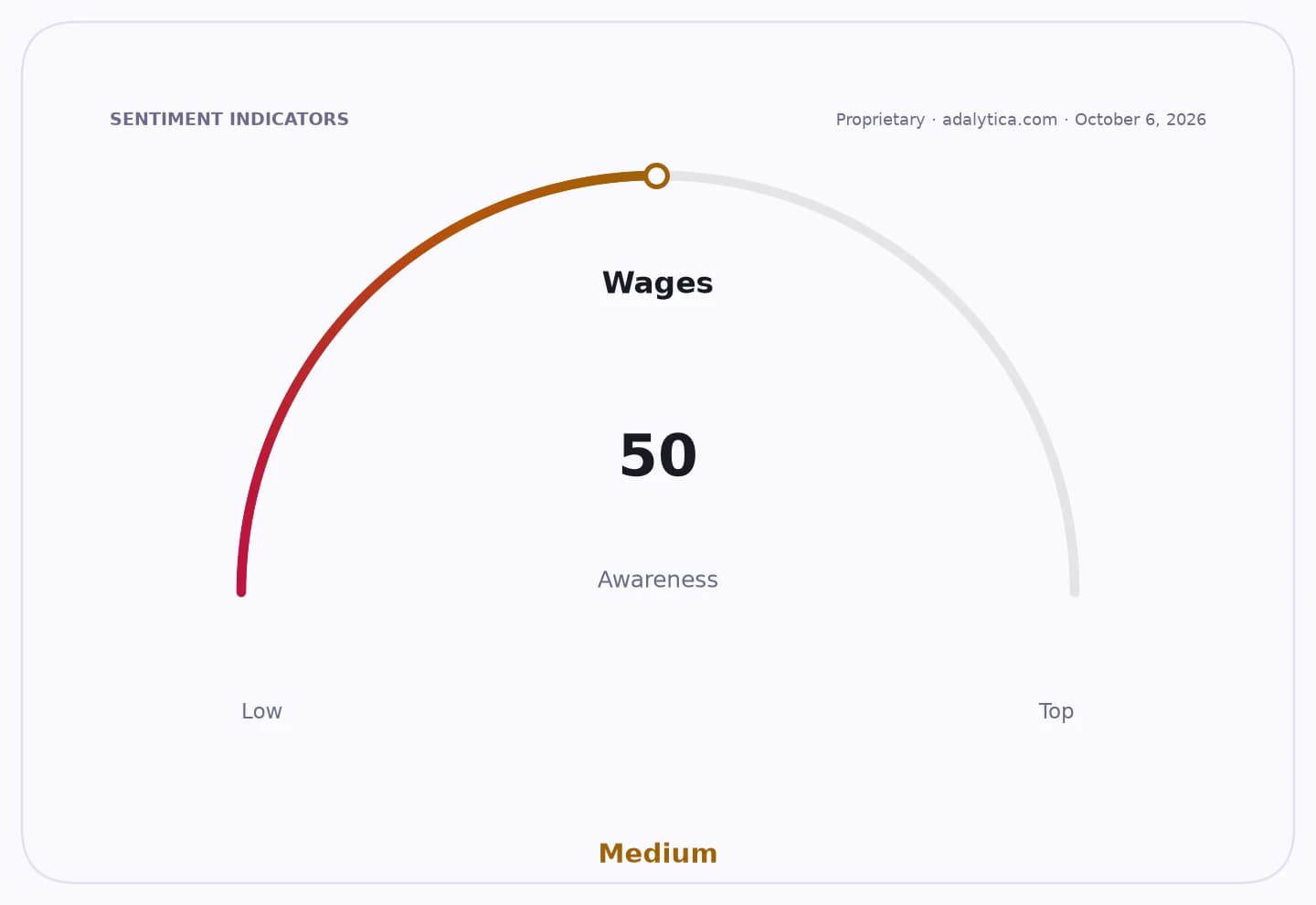
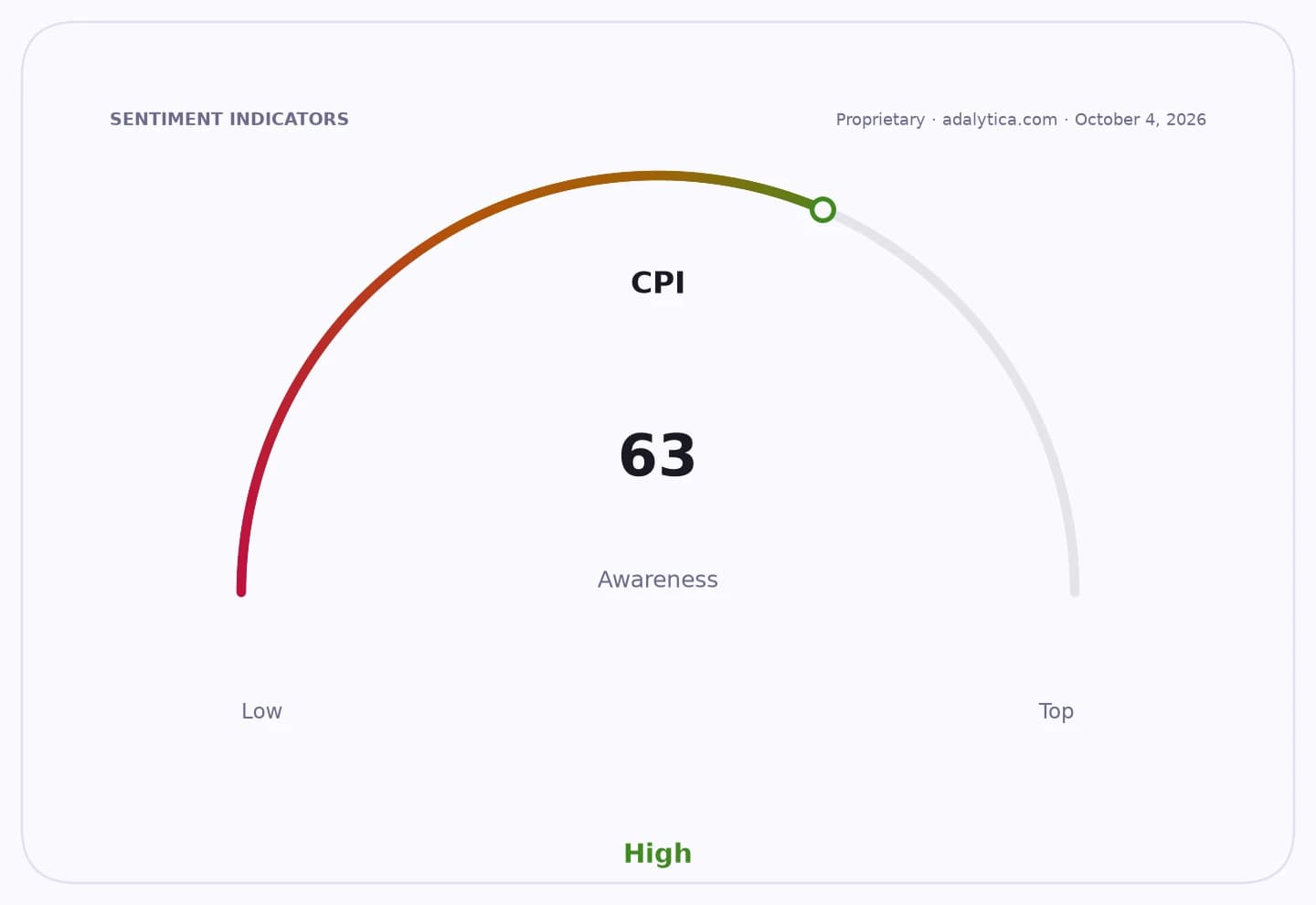
Sentiment IndicatorsⓘProprietary · adalytica.com · October 7, 2026
This is a snapshot — live sentiment, awareness and momentum for 130+ markets update continuously in the dashboard.Open AlphaPulse
That makes deflation, or indexation, economically significant because it would reduce the drag of inflation on disposable income without necessarily changing headline wage growth. For households, especially the self-employed and lower-to-middle earners, the immediate effect would be higher net pay. For the state, the cost would be lower revenue at a time when governments across Europe are still balancing social spending, debt service and the need to avoid fueling inflationary demand.
The timing matters. Spain’s consumer price backdrop remains far above the disinflationary levels of the last decade, even if it is no longer in crisis territory. The data context shows U.S. inflation still running above 330 on a CPI index basis, underscoring the broader global environment in which tax systems are being scrutinized for their interaction with prices and wages. In that setting, bracket deflation becomes less a technical tax fix than a distributional choice over who absorbs inflation: the taxpayer or the Treasury.
Amor’s intervention also fits the politics of the self-employed sector, which has spent recent years pressing for clearer rules, fewer administrative frictions and more predictable deductions. His call for a franchised VAT regime and greater legal certainty around deductions reinforces that message. For small business owners, taxes are not an abstract macro debate; they shape cash flow, hiring decisions and the ability to withstand weaker demand.
Investors should not read the comments as an immediate market catalyst, but they do matter for Spanish fiscal policy risk. Any move to index income taxes would likely be welcomed by consumers and domestic demand names, while narrowing room for spending or forcing offsetting measures elsewhere in the budget. The opposite camp would argue that Spain still needs revenue to support a high-debt sovereign profile and that permanent tax relief would be hard to reverse if growth slows.
The market backdrop remains mixed. Spain-focused equity exposure through the EWP ETF has been trading below its recent highs and its 50-day moving average, suggesting cautious positioning even as longer-term trend support remains intact. By contrast, Taiwan-linked EWT has stayed strong, while Germany’s EWG has been softer, a reminder that country-specific policy shifts can matter, but broader macro and sector drivers still dominate European asset allocation.
For now, Amor’s message is political rather than executable policy. But it captures the next government’s central budget trade-off: whether to use tax policy to defend real incomes after inflation, or to preserve fiscal room at the cost of leaving households with less of the wage gains they have nominally earned.
| Entity | Gains | Losses |
|---|---|---|
| Spanish households | ▲Higher disposable income | ▼Lower tax relief delayed |
| Self-employed workers | ▲Better cash flow | ▼Bracket creep persists |
| Spanish Treasury | ▲Revenue stability | ▼Immediate tax intake |
| Budget hawks | ▲Fiscal consolidation | ▼More pressure for tax cuts |