Ericeira is set to become a flashpoint for Europe’s far right this weekend, with the first Patriots Academy drawing party officials, MEPs and activists to Portugal while more than 350 residents plan protests outside the hotel.
Portugal hosts Patriots for Europe academy in Ericeira
The gathering matters because it is not just another ideological conference. It is a bid by the Patriots for Europe family to deepen coordination, sharpen its message on sovereignty and migration, and build a more durable political machine ahead of the next phase of European policymaking. For investors, that keeps the political backdrop for Europe’s rulemaking in focus at a time when border policy, fiscal priorities and Brussels’ authority are already under pressure.
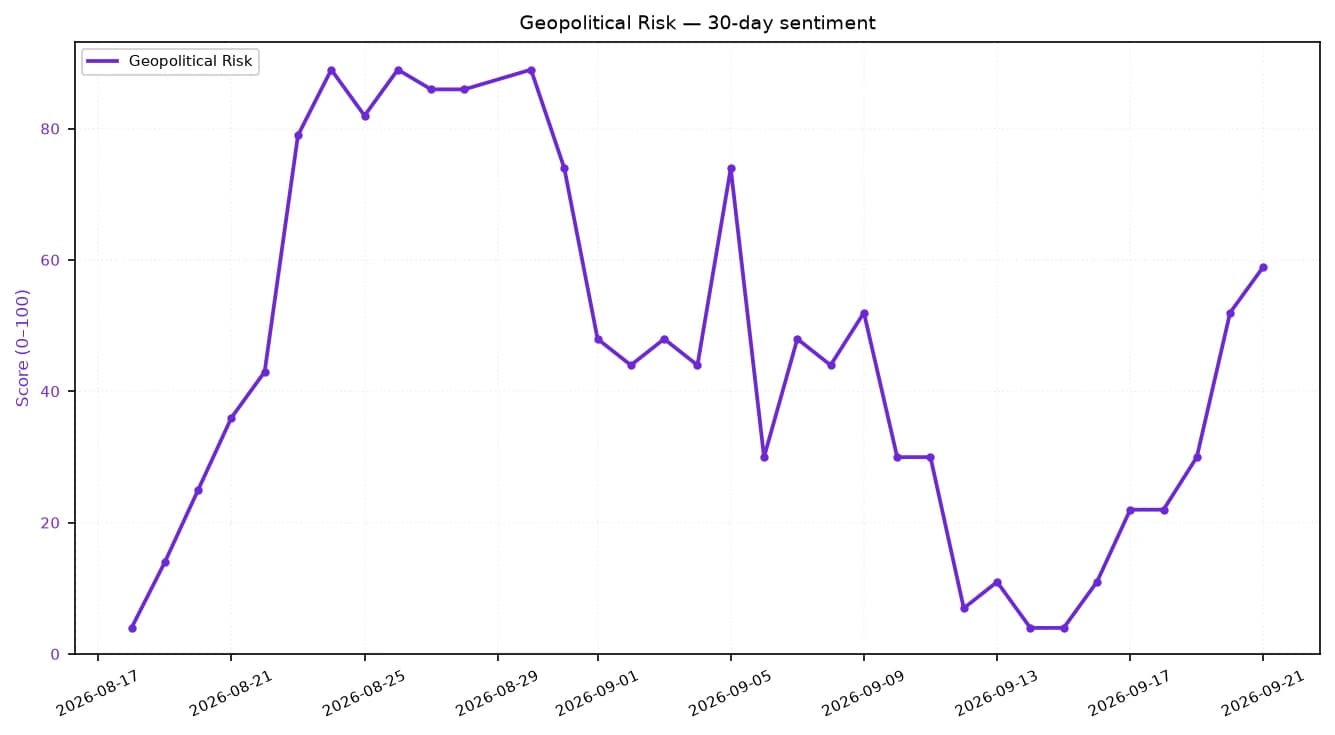
Sentiment IndicatorsⓘProprietary · adalytica.com · September 30, 2026
This is a snapshot — live sentiment, awareness and momentum for 130+ markets update continuously in the dashboard.Open AlphaPulse
The event in Ericeira is being run by the Patriots for Europe Foundation, linked to the parliamentary group that includes Hungary’s Fidesz, France’s National Rally, Spain’s Vox, Italy’s League, Austria’s FPÖ, Belgium’s Vlaams Belang and Portugal’s Chega. The group says it wants a Europe built on stronger national sovereignty, tighter border controls, competitiveness and less influence from Brussels.
That agenda matters economically because it speaks directly to the policy fault lines that shape capital allocation in Europe: migration, labor supply, regulation, industrial policy and the pace of integration. A more assertive nationalist bloc can slow or redirect decisions on energy, trade, defense, climate compliance and cross-border spending, all of which feed into corporate margins and country risk premia.
Chega’s role gives the meeting local political weight. The party is helping host the academy, with Eurodeputy António Tânger Corrêa opening proceedings and party leader André Ventura set to speak on Saturday. The lineup underscores how the far right is trying to move beyond protest politics and toward network-building, policy discipline and longer-term electoral organization.
That is precisely why markets should care. The European far right no longer looks like a fringe phenomenon confined to rhetoric; it is increasingly a structural force in coalition arithmetic and in debates over Brussels’ reach. Even when it does not govern outright, it can constrain consensus on immigration, fiscal transfers and EU centralization — a meaningful variable for banks, infrastructure investors, utilities and companies exposed to EU regulatory cycles.
The public pushback in Ericeira is equally telling. More than 350 residents have called demonstrations for Friday and Saturday, arguing that the event normalizes the politics it represents. The protests highlight the social friction that accompanies the far right’s rise and the reputational risk for institutions and venues willing to host it.
For investors, the bigger message is that Europe’s political premium is not fading. If anything, the tug-of-war between nationalist mobilization and Brussels’ institutional authority is becoming more visible and more investable, especially in sovereign spreads, defense spending, border-security names and domestically focused stocks that benefit when policy becomes more fragmented and national.
The immediate catalyst is local, but the strategic implication is continental: the far right is organizing, not just campaigning. That makes Europe’s next policy battles less predictable and raises the value of positioning early in sectors that gain from higher sovereignty, more defense, and more public spending on security and infrastructure.
| Entity | Gains | Losses |
|---|---|---|
| Patriots for Europe / Chega | ▲political coordination | ▼Brussels consensus |
| Border-security and defense names | ▲more spending | ▼integration-focused agendas |
| Local residents and hoteliers | ▲visibility and bookings | ▼reputational friction |
| EU central institutions | ▲— | ▼policy authority |