PDF Solutions’ recent share swings show how hard it is for investors to value a company tied to AI-driven semiconductor workflows when the market is struggling to separate structural demand from sentiment-driven trading.
PDF Solutions Shares Volatile on AI Demand Debate
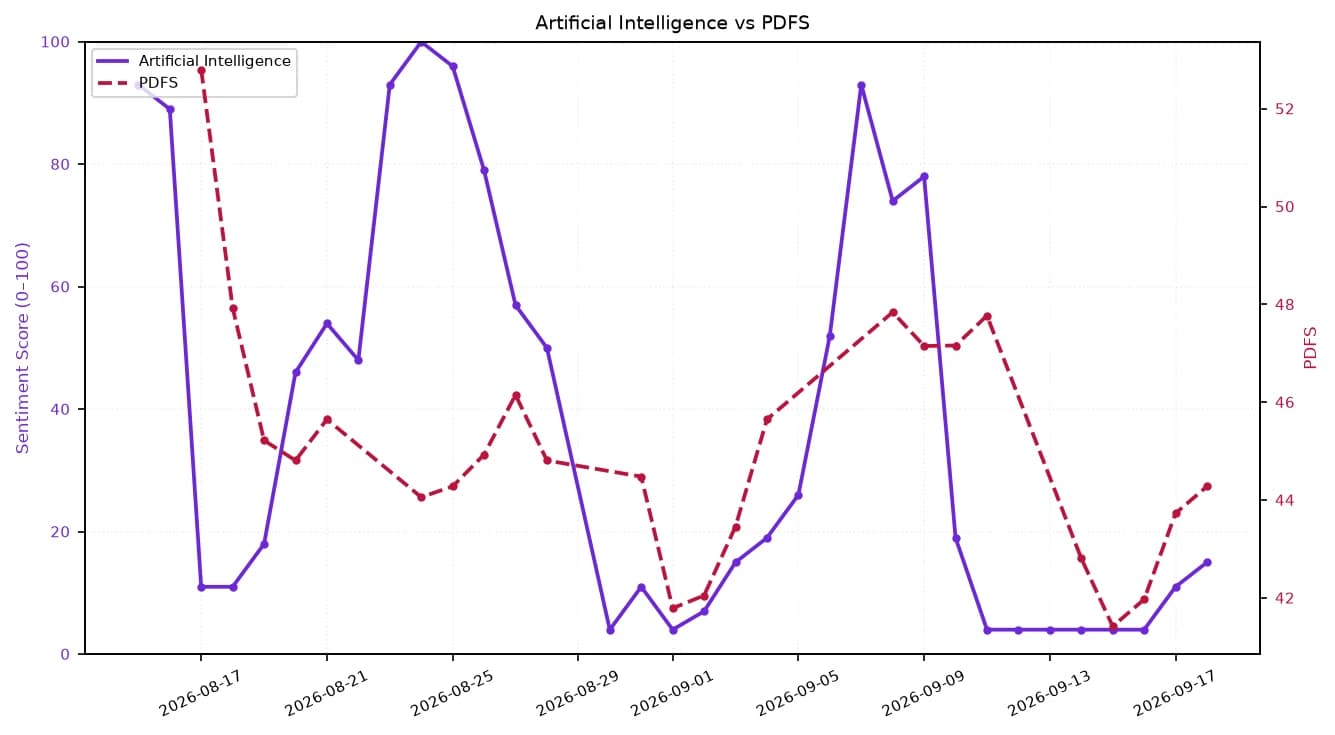
The stock, which trades under ticker PDFS, closed at $44.28 on Sept. 18, up from $30.88 on March 30 and well below a late-June peak of $70.79, underscoring a volatile rerating rather than a clean upward trend. The latest move leaves the shares above both the 50-day moving average of $47.62 and the 200-day moving average of $42.04, but momentum indicators have cooled sharply, with RSI at 48.6 and the MACD still below its signal line. In other words, the market is still trying to decide whether PDF Solutions is a durable AI beneficiary or simply a high-beta trade on the broader enthusiasm for artificial intelligence.
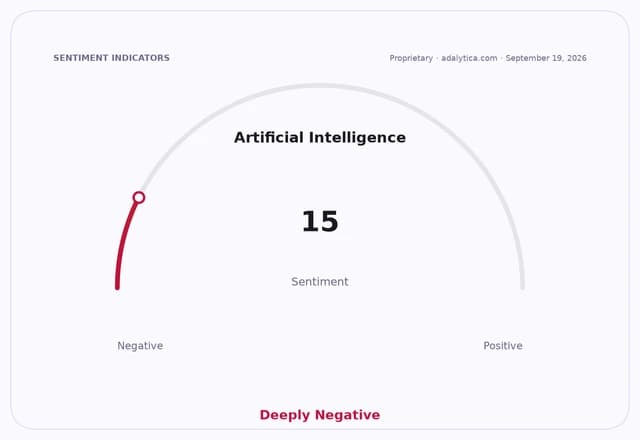
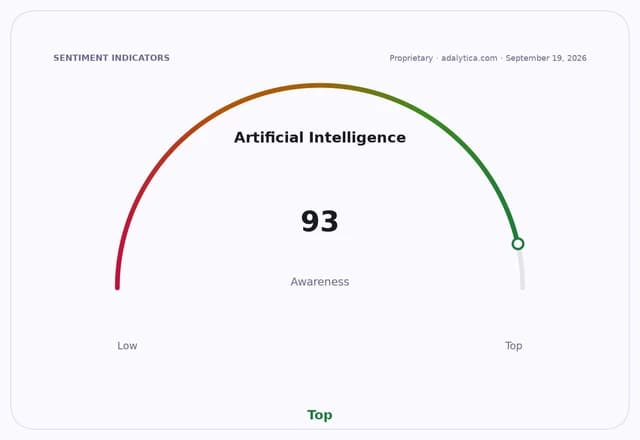
Sentiment IndicatorsⓘProprietary · adalytica.com · September 19, 2026
This is a snapshot — live sentiment, awareness and momentum for 130+ markets update continuously in the dashboard.Open AlphaPulse
That question matters because PDF Solutions sits at the intersection of two powerful themes: semiconductor complexity and AI adoption. As chip design and manufacturing become more intricate, software that helps test, optimize and analyze production data should, in theory, command a premium. The bull case is that AI-led capital spending across the chip ecosystem keeps expanding the addressable market for process analytics and yield-improvement tools. The bear case is that investors have already priced in a good part of that story, and that near-term upside will be limited unless the company can show sustained revenue acceleration and operating leverage.
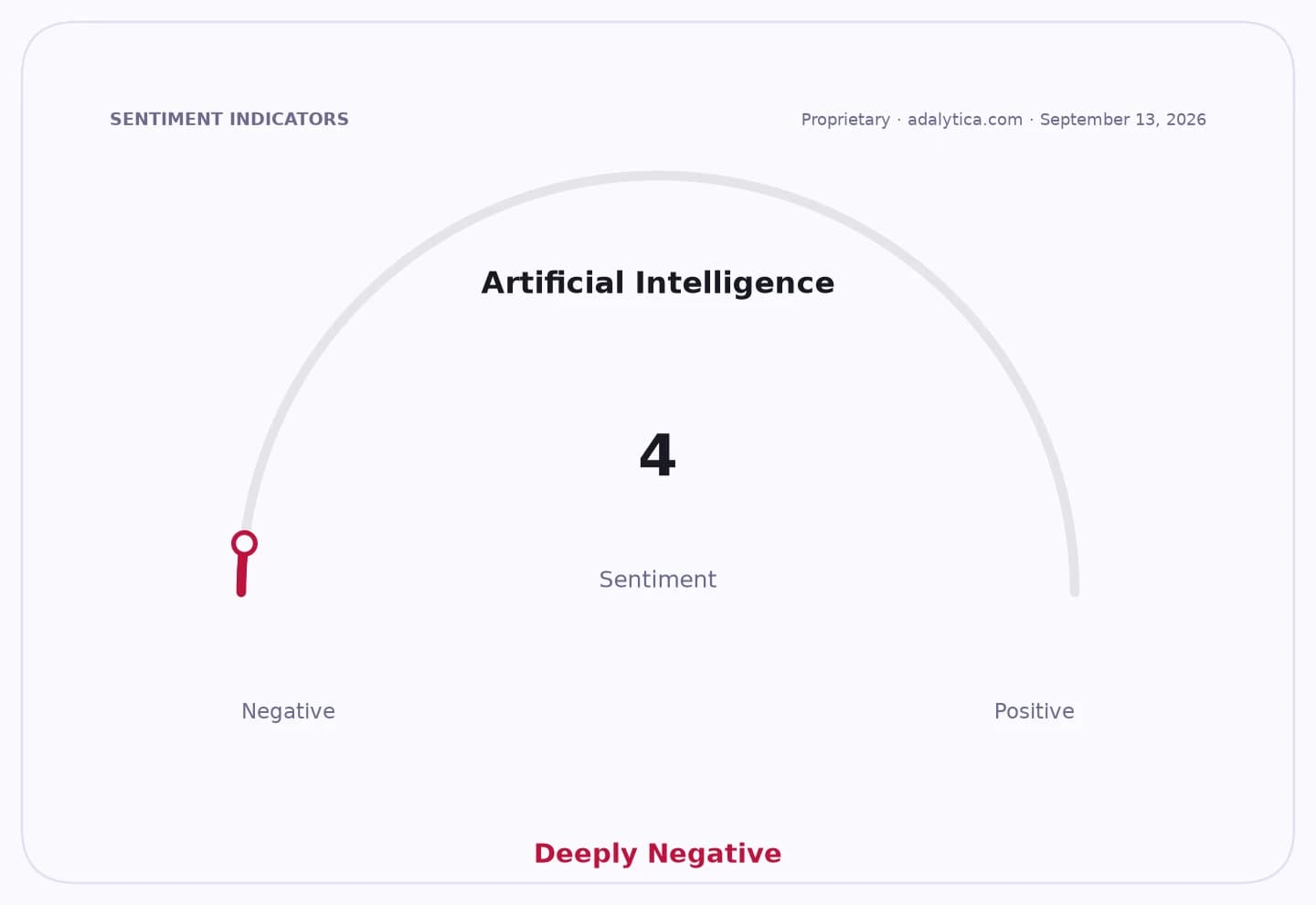
The trading pattern supports both interpretations. Volume jumped to 1.32 million shares on Sept. 18, more than triple the prior session, suggesting renewed institutional interest after a pullback. But the stock has also repeatedly failed to hold earlier highs, and the recent decline from above $70 to the mid-$40s points to a market that is comfortable rewarding the AI narrative only when it is backed by fresh evidence. Adalytica’s AI sentiment gauge currently shows extreme fear even as awareness remains extreme greed, a combination that often signals high interest but weak conviction.
The broader backdrop is that markets have become more selective about AI exposure. Investors are still willing to pay for companies with direct, measurable links to AI infrastructure and deployment, but they are punishing names that cannot clearly translate that exposure into earnings power. That is especially true for software vendors tied to industrial and semiconductor customers, where the revenue cycle can lag the hype cycle. Adobe’s own sharp share retreat and Microsoft’s more measured trading around AI spending show how even large-cap software and platform names are being judged on proof, not promise.
For PDF Solutions, the next catalyst is whether it can convert AI-related demand into a more stable financial profile. If the company can show that its tools are becoming more embedded in chipmakers’ production and design workflows, the stock could recover toward its earlier highs. If not, the recent volatility suggests investors may continue to treat it as a story stock whose valuation depends more on narrative than on recurring fundamentals.
| Entity | Gains | Losses |
|---|---|---|
| PDF Solutions | ▲AI workflow credibility | ▼Valuation stability |
| Momentum traders | ▲Volatility opportunities | ▼Conviction on trend |
| Semiconductor customers | ▲Better process tools | ▼Higher software spend |
| Short sellers | ▲Pullback entries | ▼Sharp rebound risk |