Platts will expand the vessel-size band used in its Asia-Pacific LNG cargo price assessments, a move that reflects the market’s growing use of larger carriers and could improve how benchmark prices track physical trade.
Platts expands Asia-Pacific LNG ship-size range
From Oct. 16, the standard ship size range in the JKM, WIM, SEAM and MEM assessments will widen to 135,000-180,000 cubic meters from 135,000-175,000 cubic meters. For traders, the change matters because benchmark methodology can affect which cargoes are deemed deliverable, how deals are reported into the Platts Market on Close process and, ultimately, how tightly pricing aligns with spot market practice.
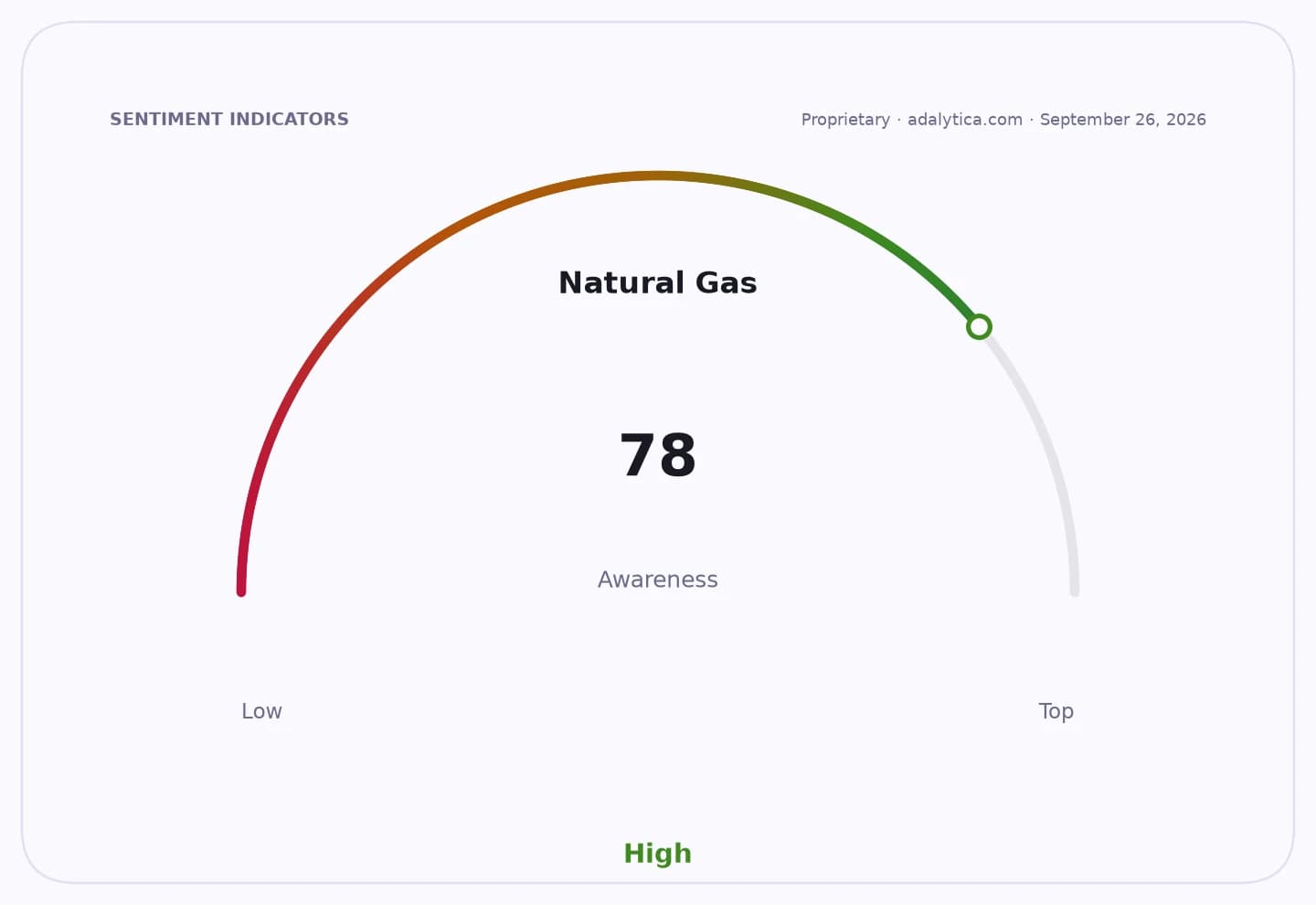
Sentiment IndicatorsⓘProprietary · adalytica.com · September 26, 2026
This is a snapshot — live sentiment, awareness and momentum for 130+ markets update continuously in the dashboard.Open AlphaPulse
Platts said the adjustment follows industry feedback and prevailing market norms, with about two-thirds of offers reported through its Asia-Pacific MOC process in January-June 2026 already specifying a 135,000-180,000 cubic meter range. That suggests the current standard was lagging the market, particularly as LNG fleets continue to trend toward larger vessels.
The update also lands in a market that has been volatile, with LNG prices swinging sharply this year as geopolitical disruptions in the Gulf pushed buyers to diversify supply and forced a heavier reliance on routes and exporters outside the Middle East. A benchmark that better reflects actual ship sizes can help reduce friction in physical trading, especially for importers and sellers negotiating cargoes across Asia’s main pricing hubs.
For investors, the immediate read-through is more operational than directional: the change does not alter supply and demand, but it can influence liquidity, hedging accuracy and contract execution across LNG-linked portfolios. It is also relevant for shipowners and LNG infrastructure players, where larger vessel economics and fleet utilization remain key variables in chartering and export flows.
The move takes effect just as the LNG market continues to balance long-term demand growth against shifting trade routes and supply security concerns, with benchmark methodology likely to stay under scrutiny as larger carriers become standard.
| Entity | Gains | Losses |
|---|---|---|
| Platts / S&P Global Energy | ▲Better benchmark alignment | ▼Old ship-size rule |
| LNG traders / buyers | ▲More flexible deal execution | ▼Less room for edge from mismatch |
| LNG shipowners | ▲Higher acceptance for larger vessels | ▼Operators of smaller carriers |
| Benchmark users | ▲Tighter link to market practice | ▼Legacy assessment participants |