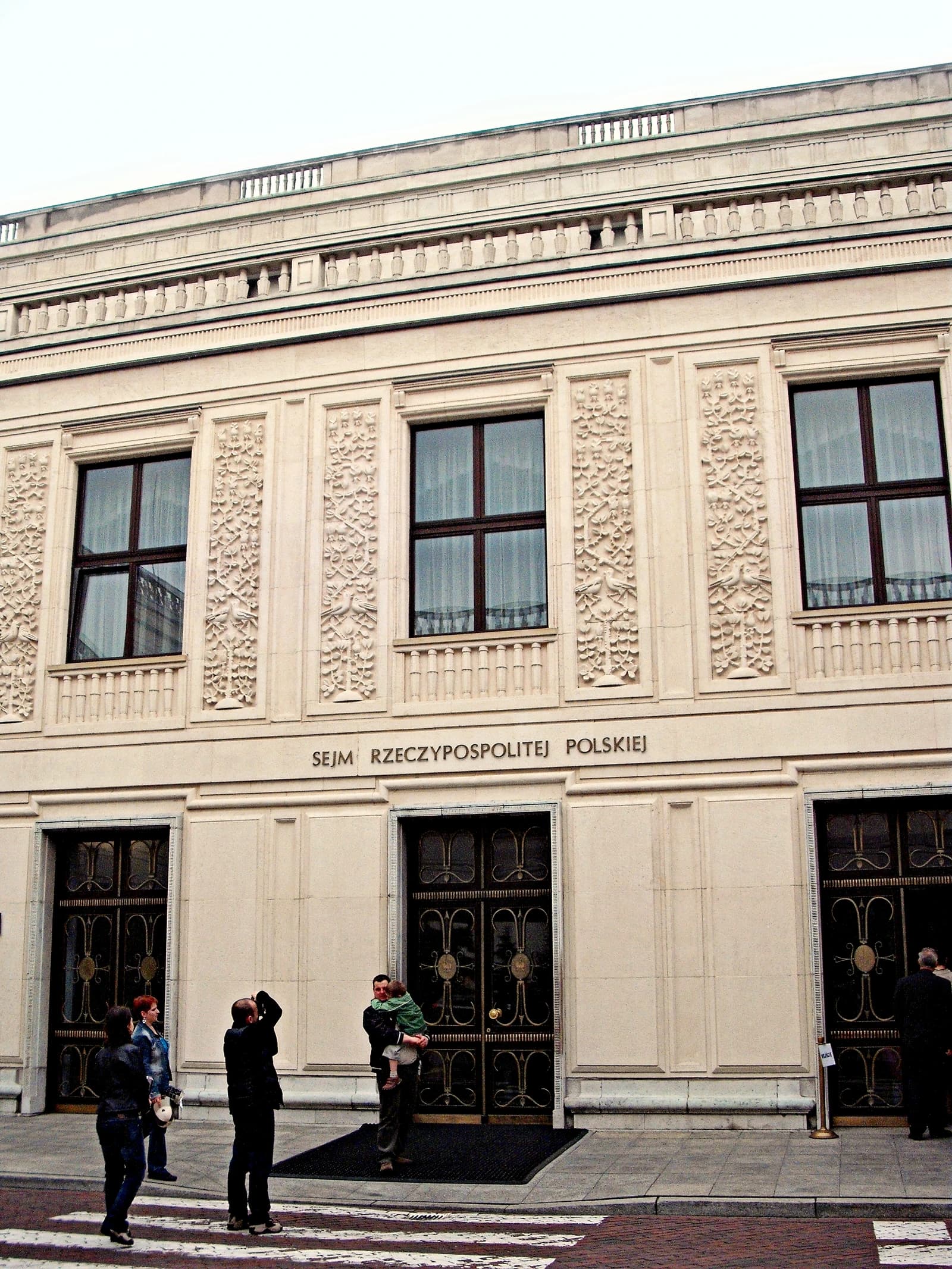
Poland’s constitutional crisis is hardening into an investment risk as President Karol Nawrocki blocks another government-backed judge from taking a seat at the Constitutional Court, extending a stalemate that keeps the country’s top legal arbiter split, politicized and increasingly incapable of settling disputes.
Poland Constitutional Court Stalemate Raises Risk

That matters far beyond Warsaw’s courtroom drama. A dysfunctional constitutional bench prolongs uncertainty over the rule of law, the enforceability of rulings and the durability of Prime Minister Donald Tusk’s reform agenda — all factors that shape Poland’s institutional premium, its currency risk and the discount investors demand on Polish assets. For foreign capital, the issue is not simply who sits on the bench, but whether Poland can restore predictable governance after years of judicial warfare.
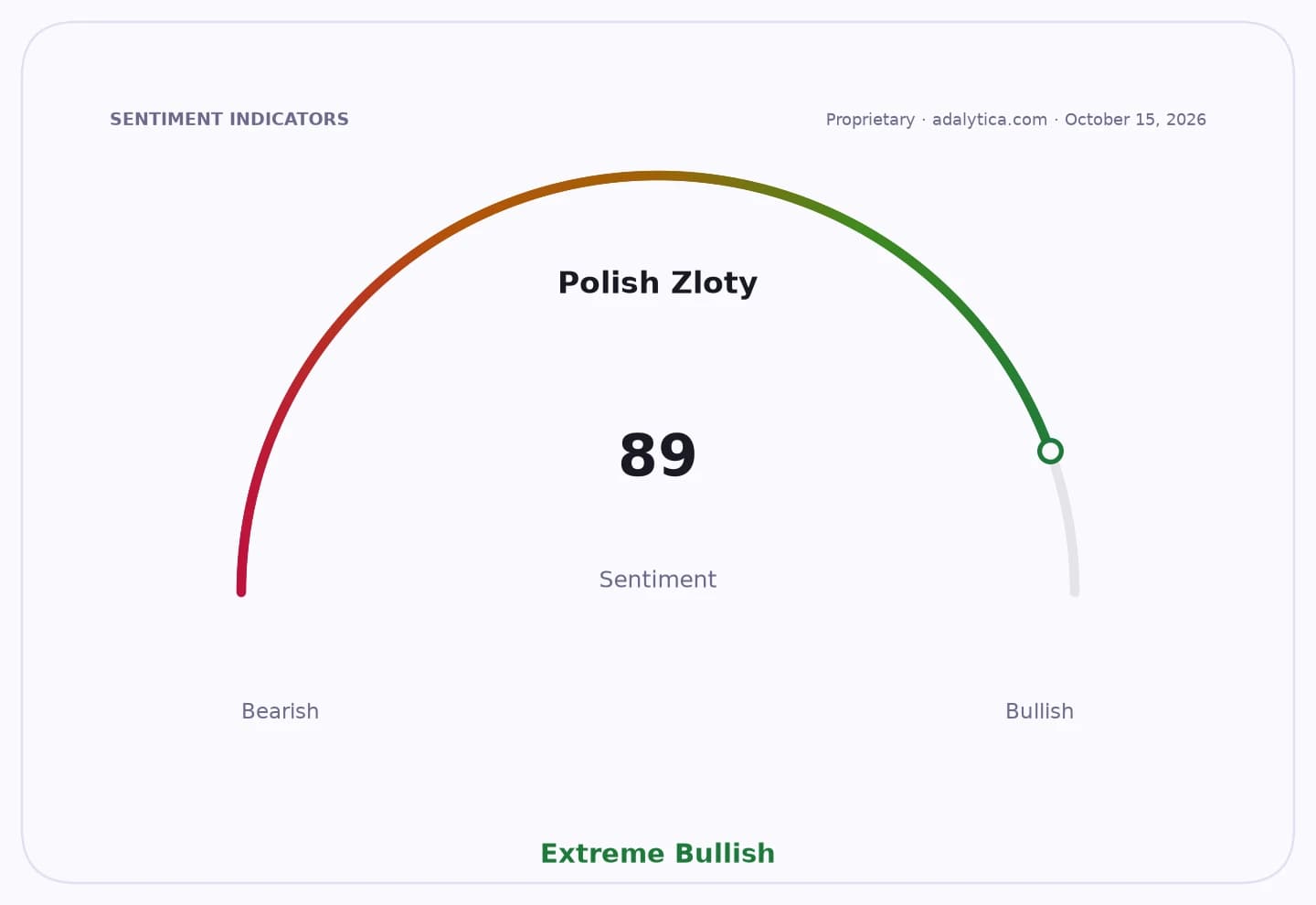
Sentiment IndicatorsⓘProprietary · adalytica.com · October 15, 2026
This is a snapshot — live sentiment, awareness and momentum for 130+ markets update continuously in the dashboard.Open AlphaPulse
The latest flashpoint centers on five judges who have now taken the oath without the president present, after Nawrocki refused to swear them in. Under Polish law, new constitutional judges are supposed to take the oath before the president, but the Venice Commission — the Council of Europe’s advisory body — backed the government’s position, saying the president must swear in parliament-elected judges immediately and cannot review their appointment. If he refuses, the judges may take the oath without him.
Nawrocki’s camp dismissed that view as nonbinding, while court president Bogdan Święczkowski, a holdover from the previous Law and Justice government, has already blocked the earlier four judges from beginning work. He argues the oath taken without the president is invalid. In May, the European Court of Human Rights ordered those four judges admitted, but Święczkowski refused to comply, underscoring how little external rulings are mattering on the ground.
For investors, this is exactly the kind of institutional gridlock that can metastasize from headline risk into valuation risk. Poland has been one of central Europe’s key growth markets, but its equity and fixed-income appeal depends on a functioning legal order and on the government’s ability to deliver policy. Tusk’s coalition, in power since December 2023, still does not have the three-fifths majority needed to override presidential vetoes, and Nawrocki has repeatedly used that leverage to obstruct the government. That raises the odds of prolonged policy paralysis, especially on justice reform and broader state overhaul.
The market signals point to a country where politics and institutions are still carrying a heavy risk premium. The euro trade signal in Adalytica’s snapshot sits in fear territory, while the civic platform political sentiment gauge has dropped sharply day to day even after recent spikes, reflecting how quickly confidence can swing around the court battle. In practical terms, that means investors remain vulnerable to abrupt repricing if the dispute spills into broader governance or triggers fresh street tension.
The confrontation also reinforces a simple investment thesis: in Poland, the real trade is not just domestic reform, but the beneficiaries of institutional repair and the losers from prolonged dysfunction. If Tusk can eventually re-establish the credibility of the court system, that should help narrow the governance discount on Polish financials, infrastructure and domestic cyclicals. If he cannot, the stalemate will keep foreign investors cautious, particularly on assets exposed to regulatory certainty and long-duration policy execution.
For now, the constitutional court fight is more than a legal quarrel — it is a test of whether Poland can convert electoral change into institutional change. Until that is resolved, Poland remains a market where political control, not legal finality, is setting the price of risk. Investors should position for volatility, but also watch for mispriced opportunities in companies and funds that benefit when the rule-of-law discount eventually begins to unwind.
| Entity | Gains | Losses |
|---|---|---|
| Tusk government | ▲Political case for judicial reform | ▼Immediate institutional control |
| Nawrocki / PiS camp | ▲Ability to obstruct reforms | ▼Credibility on rule of law |
| Polish equities and bonds | ▲Potential rerating if reform succeeds | ▼Current legal and policy discount |
| Domestic reform advocates | ▲Pressure for court normalization | ▼Short-term political leverage |