The European Parliament’s approval of sweeping human-rights resolutions on Iran, Georgia and Azerbaijan tightens the political pressure on three governments already in Europe’s crosshairs and raises the odds of fresh sanctions, conditional aid and slower cooperation with Brussels.
EU Parliament Tightens Pressure on Iran, Georgia, Azerbaijan
For investors, the key issue is not the symbolism. It is the potential cost to trade, financing and regional stability when the EU hardens its stance on countries that sit on sensitive energy, transport and security corridors. The vote adds another layer of friction at a time when Europe is already trying to manage sanctions on Russia, defend its institutions and keep capital flowing through a more fragmented geopolitical landscape.
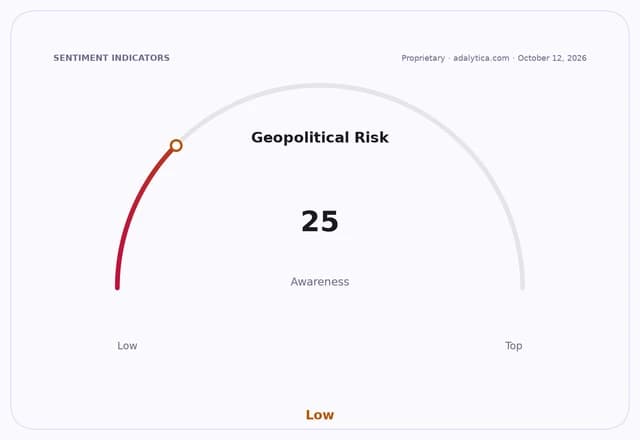
Sentiment IndicatorsⓘProprietary · adalytica.com · October 12, 2026
This is a snapshot — live sentiment, awareness and momentum for 130+ markets update continuously in the dashboard.Open AlphaPulse

Iran drew the sharpest language. Lawmakers condemned what they described as “unprecedented” violence against civilians, urged Tehran to abolish the death penalty and pressed for expanded sanctions, stronger backing for the UN fact-finding mission and possible referral to the International Criminal Court. The resolution, approved by 541 votes to 11 with 25 abstentions, also singled out women facing death sentences and accused Iranian authorities of transnational repression. That matters because it keeps Iran isolated from Europe’s political mainstream and makes any easing in relations less likely, even as the region remains vulnerable to escalation.
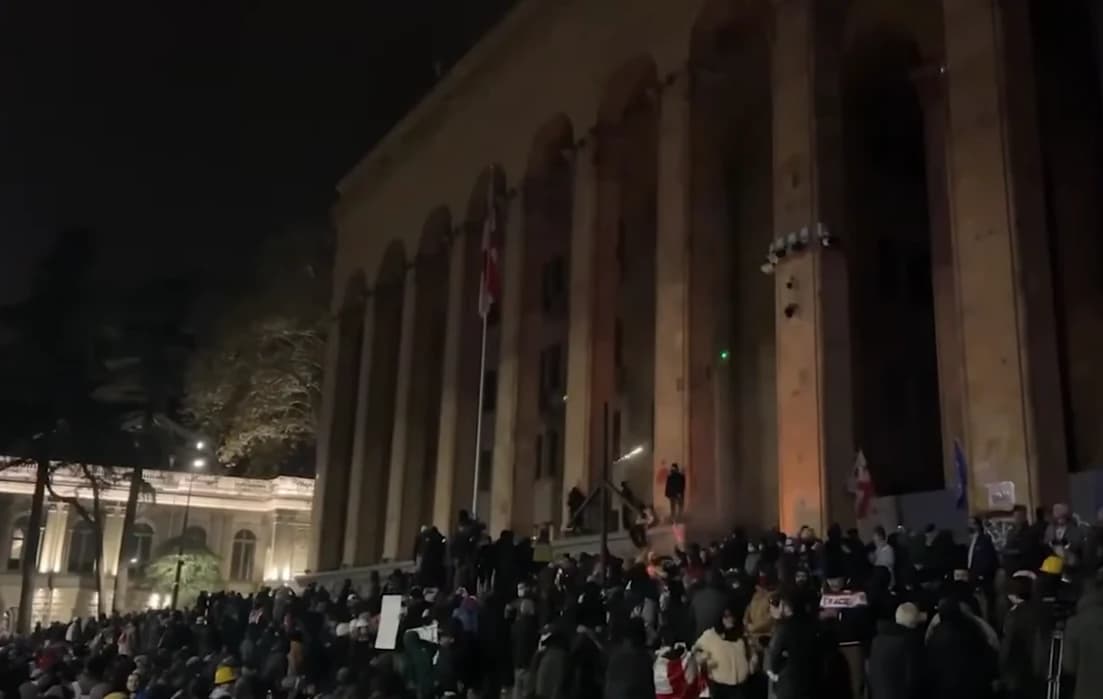
Georgia is the second pressure point. The parliament condemned efforts to ban opposition parties, demanded the immediate release of political prisoners and called for targeted sanctions against officials linked to violent crackdowns. That is economically relevant because political instability in a candidate country can chill foreign investment, delay reform and undermine the EU integration path that underpins investor confidence in the broader Caucasus. The resolution passed 445 to 37 with 97 abstentions.
Azerbaijan faced the same broad message: better human-rights behavior or a colder EU relationship. Lawmakers said any cooperation should be conditional on improvements, including the release of political prisoners, and condemned the misuse of criminal and security laws to silence NGOs and media. They also attacked what they described as cross-border repression of dissidents. The resolution passed 492 to 23 with 60 abstentions. That matters because Brussels is signaling it will not separate energy and infrastructure ties from governance risk, even though Azerbaijan remains strategically important to Europe’s diversification away from Russian supplies.
The market read-through is straightforward: the EU is willing to weaponize access, legitimacy and diplomatic engagement against governments it sees as drifting further from democratic norms. That raises the policy risk premium for investors exposed to the region, from sovereign credit and local banks to energy, logistics and infrastructure assets tied to cross-border flows.
That geopolitical backdrop helps explain the pressure on Europe-focused assets. The iShares MSCI Italy ETF, EWI, was last around $56.32 after a sharp pullback from levels above $61 earlier in September, while the iShares MSCI Germany ETF, EWG, traded near $40.96, below its recent 50-day moving average. Those moves are not a direct verdict on the resolutions, but they show investors are still discounting Europe’s growth and policy uncertainty even as Brussels leans harder into external confrontation and institutional assertiveness.
The bigger narrative is that Europe is using human-rights policy as part of a wider strategic posture: defending rules-based institutions, resisting authoritarian pressure and conditioning economic ties on political behavior. That is good for EU credibility over the long run, but it also means more friction for states on the bloc’s periphery and more headline risk for any company or fund with exposure to the Caucasus, Iran-linked trade routes or the region’s infrastructure stack.
For investors, the opportunity is to stay selective. The immediate beneficiaries are Europe’s security, compliance and defense ecosystems; the likely losers are regimes that depend on European access, legitimacy or financing. In a market that often misprices geopolitics until it is too late, this is another reminder that policy risk in Europe’s neighborhood is becoming a durable investment variable, not a one-off headline.
| Entity | Gains | Losses |
|---|---|---|
| EU institutions | ▲Rule-setting credibility | ▼Short-term diplomatic flexibility |
| Iran | ▲— | ▼Sanctions risk, isolation |
| Georgia | ▲Opposition forces, reform advocates | ▼Ruling party, political stability |
| Azerbaijan | ▲Civil society, independent media | ▼Government access to EU ties |