Poland’s push to turn “from guest to neighbour” is landing at a sensitive moment: political turmoil at home is colliding with a still-solid economy, forcing investors to weigh a long-term integration strategy against short-term institutional risk.
Poland Economy Holds Up Amid Political Turmoil
That matters because Poland has become one of Europe’s most important growth stories, and plans for the 2026-2035 period only work if the state can deliver policy continuity, legal predictability and social cohesion. The country’s economy is still expanding, with GDP projected at about 33,452.3 in the latest outlook, up 1.34% from the prior quarter, while unemployment is expected around 4.11%, a sign that the labor market remains comparatively tight even as the political backdrop worsens.
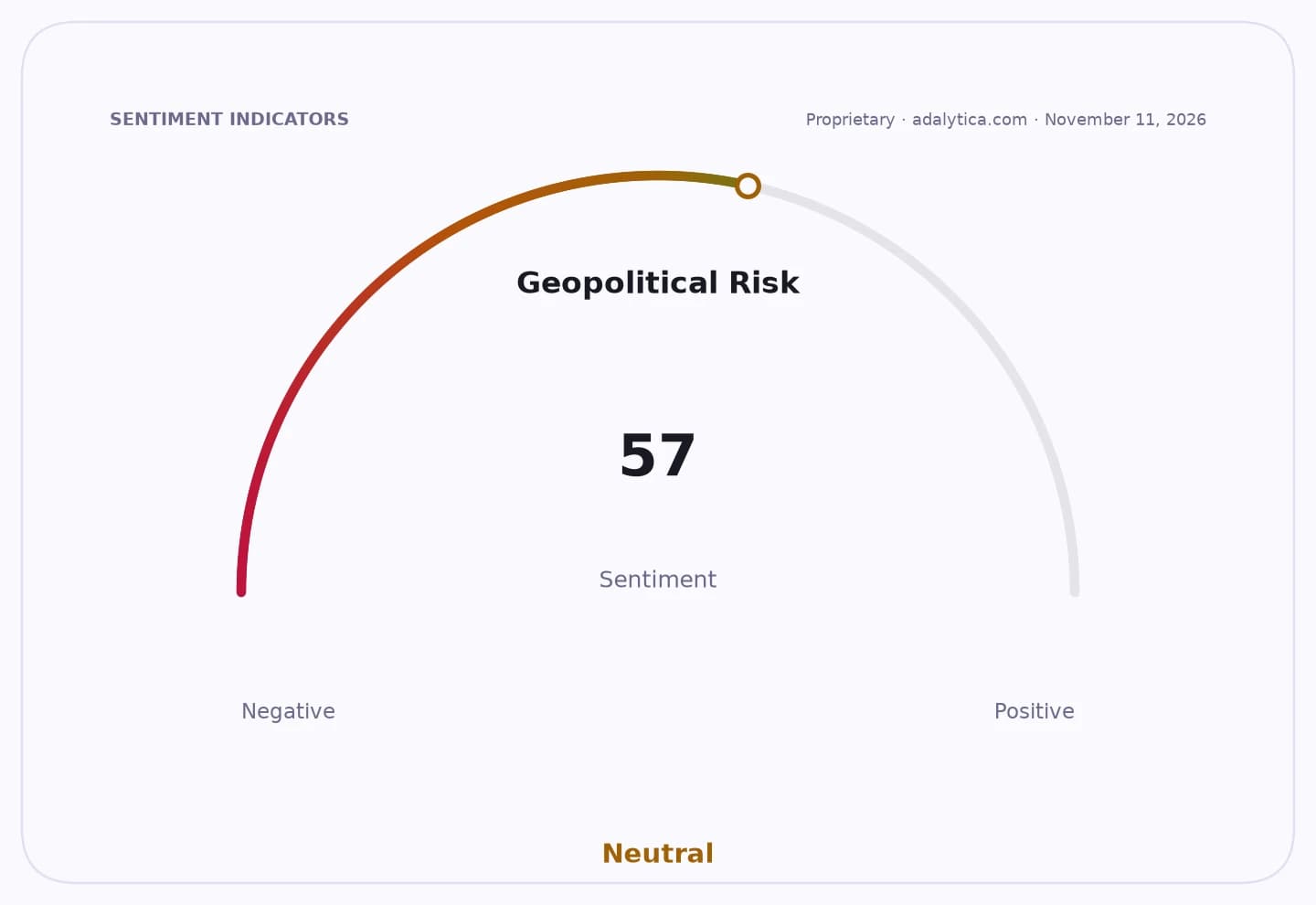
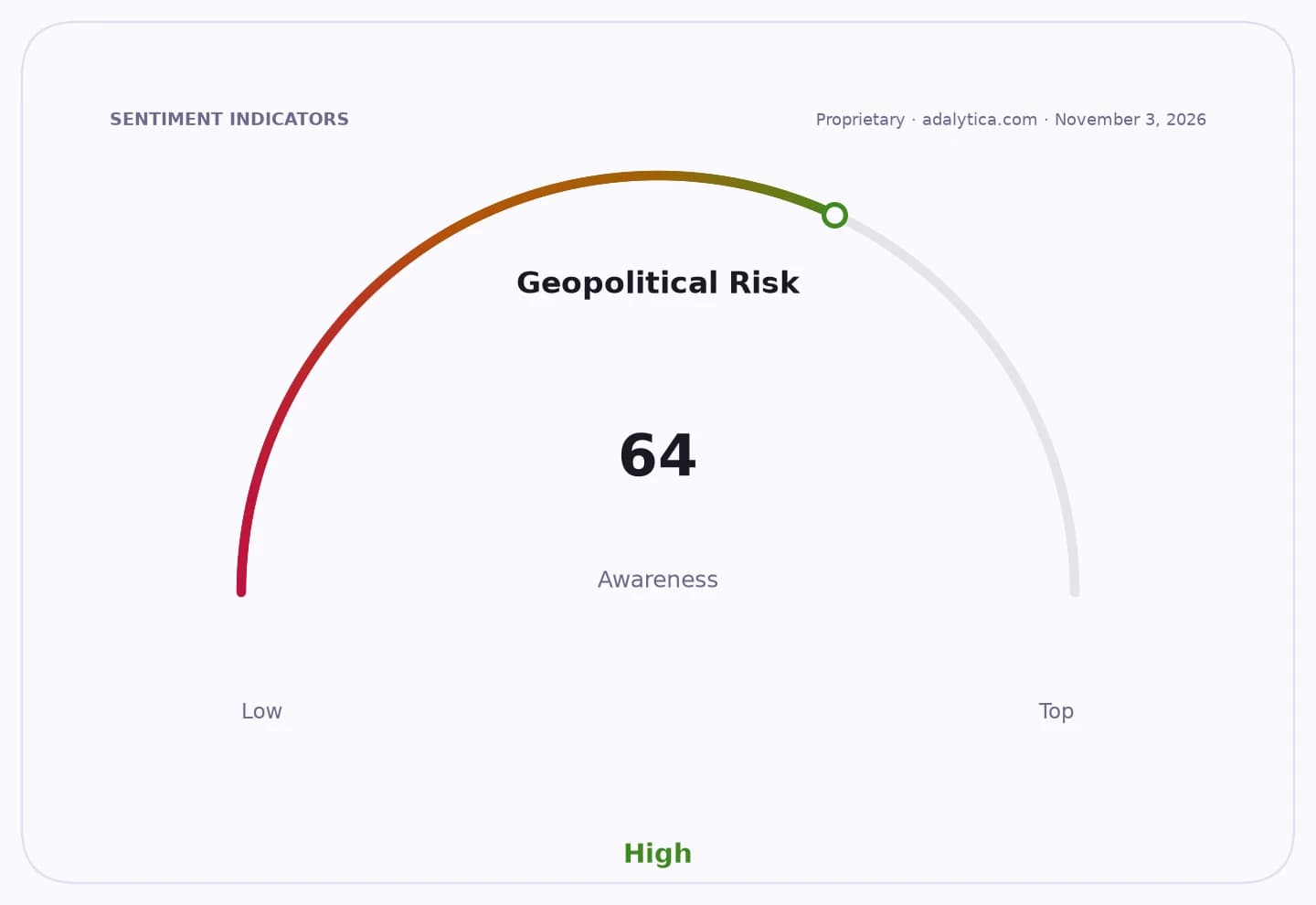
Sentiment Indicators
Geopolitical Risk
For investors, the immediate question is whether the integration strategy can support productivity, consumption and labor supply without being derailed by governance stress. Poland has used immigration and broader social integration as one way to offset demographic pressure and support growth. If handled well, that can help stabilize the workforce, ease bottlenecks and reinforce domestic demand. If handled badly, it can amplify social division and raise the risk premium on Polish assets.
That tension is visible in the market. The iShares MSCI Poland ETF, EPOL, has been volatile but still sits well above its 50-day moving average and 200-day moving average, a reminder that the longer-term trend has not broken even as the near-term picture has turned choppier. The ETF’s recent pullback, alongside a weakening MACD reading and a middling RSI, suggests investors are becoming more cautious about buying ahead of clearer political signals. In other words, the market is still giving Poland the benefit of the doubt — but not unconditionally.
The broader regional mood is also shifting. Global stability sentiment, as tracked by Adalytica.com, has slipped sharply into “Extreme Fear,” underscoring how quickly political shocks can feed into risk appetite. That is especially important for a country like Poland, where foreign capital has long been attracted by growth, labor depth and its role as a manufacturing hub inside the European economy.
The long-term case for Poland remains intact if policymakers can turn migration and integration into a genuine economic advantage. But investors should not ignore the institutional noise around the Constitutional Court and diplomatic fallout, because those kinds of fractures can weigh on valuations long before they show up in the headline data. For now, Poland still looks like a country with strong structural potential — but one that needs political calm to fully realize it.
| Entity | Gains | Losses |
|---|---|---|
| Poland’s long-term economy | ▲Larger labor pool, higher growth potential | ▼Social friction if integration fails |
| Employers and manufacturers | ▲Easier hiring, steadier output | ▼Higher policy uncertainty |
| EPOL holders | ▲Upside from structural growth | ▼Near-term volatility from politics |
| Political rivals and short-term bears | ▲Lower confidence in governance | ▼Missed upside if stability returns |