Poland is preparing its biggest overhaul of gas storage rules in years, a move that could shift ownership of seven underground facilities and push more of the system’s costs onto gas users just as Europe tries to harden energy security ahead of winter.
Poland gas storage overhaul targets Orlen assets
The government’s draft would transfer responsibility for mandatory gas reserves to the State Strategic Reserves Agency and finance it through a storage fee paid by gas network operators and shippers. In practice, that means households and industry would likely shoulder the bill through higher transmission and storage charges — exactly the sort of cost transfer that can trigger pushback from energy-intensive manufacturers.
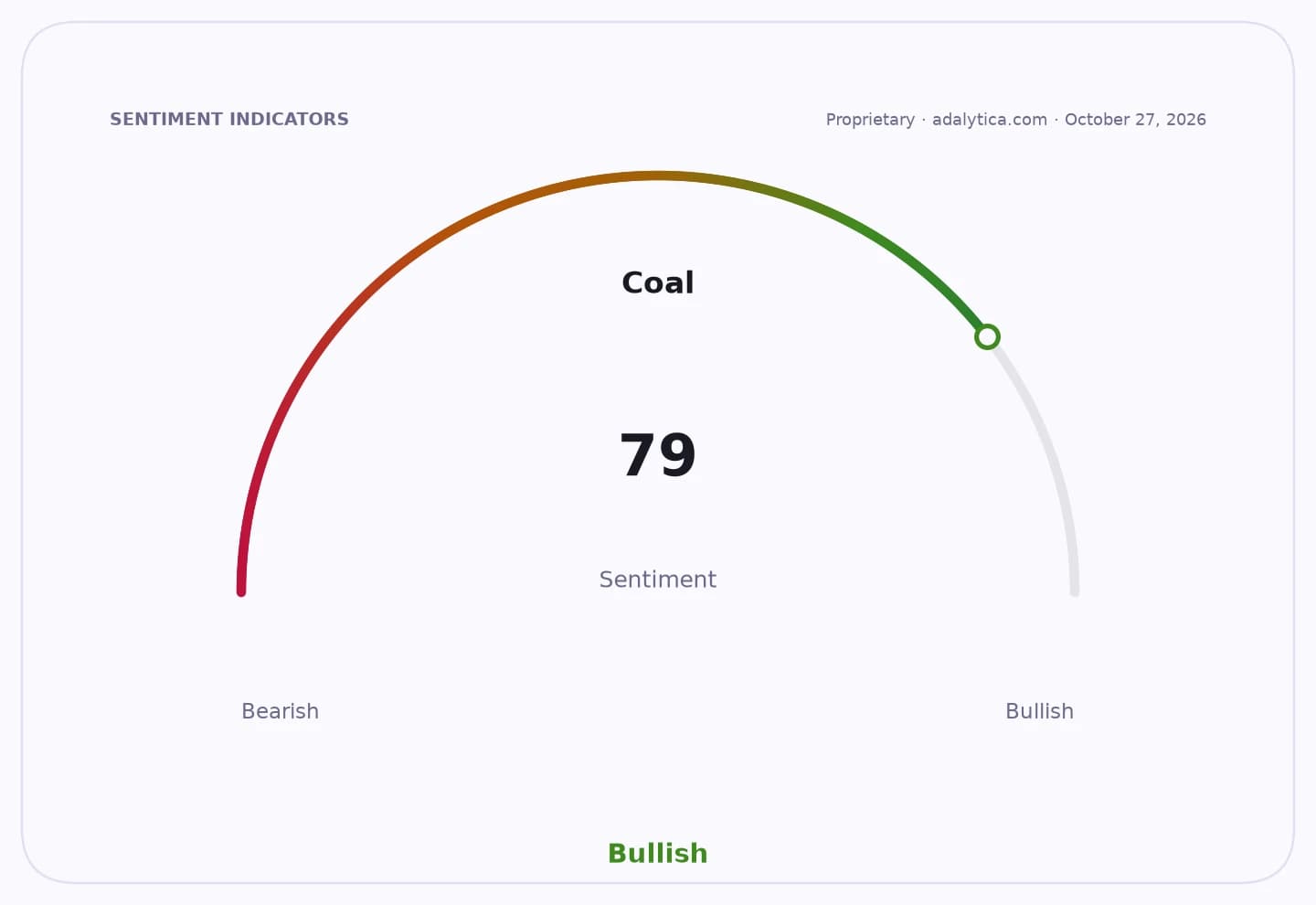
Sentiment Indicators
For investors, the more important question is not just who pays, but who controls the assets. On Friday, Gas Storage Poland, the operator of Poland’s underground storage system, made a non-binding offer to buy seven working storage sites from Orlen. No price was disclosed, but the proposal is the latest attempt to untangle a ownership structure left behind after Orlen absorbed PGNiG.
That structure has long been awkward. Gas Storage Poland operates the storage business, but Orlen still owns the caverns themselves. That makes fresh investment in new storage capacity harder to justify and has complicated plans to expand the country’s buffer against supply shocks. Orlen has already expanded the recently completed Wierzchowice site and had shown little appetite for more expensive storage spending.
The state wants the system fixed because Brussels is no longer willing to wait. The European Commission has argued Poland’s current gas storage regime breaches EU rules and has taken the country to the Court of Justice of the European Union. That legal pressure gives Warsaw a powerful incentive to act, even if the politics are messy.
The proposed overhaul would also tie minimum storage requirements to the capacity of the Baltic Pipe, rather than to current import flows. Starting in October 2027, the mandatory reserve would equal 40 days of full-capacity Baltic Pipe throughput, rising to 42 days and later 45 days. At an assumed annual pipeline capacity of 10 billion cubic meters, that implies mandatory stocks of roughly 1.1 billion to more than 1.2 billion cubic meters, broadly similar to the level in the vetoed law from a year ago.
That matters for the wider energy market because storage is one of the few tools that can cushion Poland against sudden disruptions in pipeline gas or LNG supply. Europe has spent the past three years learning that infrastructure resilience has a price. Higher storage obligations may add to operating costs, but they also reduce the risk of emergency imports at the worst possible moment.
The political and commercial backdrop is even more interesting because Orlen has been reshaping its gas business at the same time. Reuters has reported that shortly after cancelling one Qatar LNG contract, the company began negotiating another deal with QatarEnergy. The cancelled 2009 agreement had been indexed to oil prices and was likely seen as too expensive; a new contract could improve Orlen’s flexibility and cost base.
For Orlen shareholders, the storage deal is unlikely to be a game-changer on its own, but it could affect how much capital the company keeps tied up in a low-return, heavily regulated asset base. The real risk is that Gaz-System, which would finance the purchase, passes the cost through higher transmission fees. If that happens, the burden lands on consumers and industrial users rather than on the state balance sheet.
There is a broader European theme here too: governments are loosening the rules on energy security while keeping a close eye on strategic control. The EU has already delayed its methane rules for the energy sector until 2029, reflecting the tension between climate policy and supply security. Poland’s gas storage reform fits the same pattern — more resilience, more state involvement, and more costs embedded in the system.
For long-term investors, the key takeaway is that Poland’s gas market is becoming more regulated, not less. That usually favors scale, infrastructure ownership and government-linked players, while squeezing pure price takers. The next 12 months should tell us whether Warsaw can clean up the asset structure without upsetting industrial customers — but the direction of travel is clear, and it is worth watching closely.
| Entity | Gains | Losses |
|---|---|---|
| Polish state | ▲More control over storage | ▼More political responsibility |
| Orlen | ▲Asset simplification | ▼Lost storage ownership |
| Industry and consumers | ▲Better supply resilience | ▼Higher gas fees |
| Gaz-System / GSP | ▲Strategic role expanded | ▼Capital burden rises |