Poland’s escalating clash between President Karol Nawrocki and Prime Minister Donald Tusk is starting to bite where markets care most: the currency, the sovereign rating and the state’s ability to fund itself.
Poland clash hits złoty, deficit and Moody's rating
The złoty has fallen to its weakest level in three years, the government’s deficit is stuck far above EU limits and Moody’s has just cut Poland’s long-term rating to A3, the lowest since 2002. For investors, that combination is more than a political sideshow. It raises the cost of capital, complicates refinancing and threatens to turn a once-outperforming Central European economy into a higher-risk, lower-multiple story.
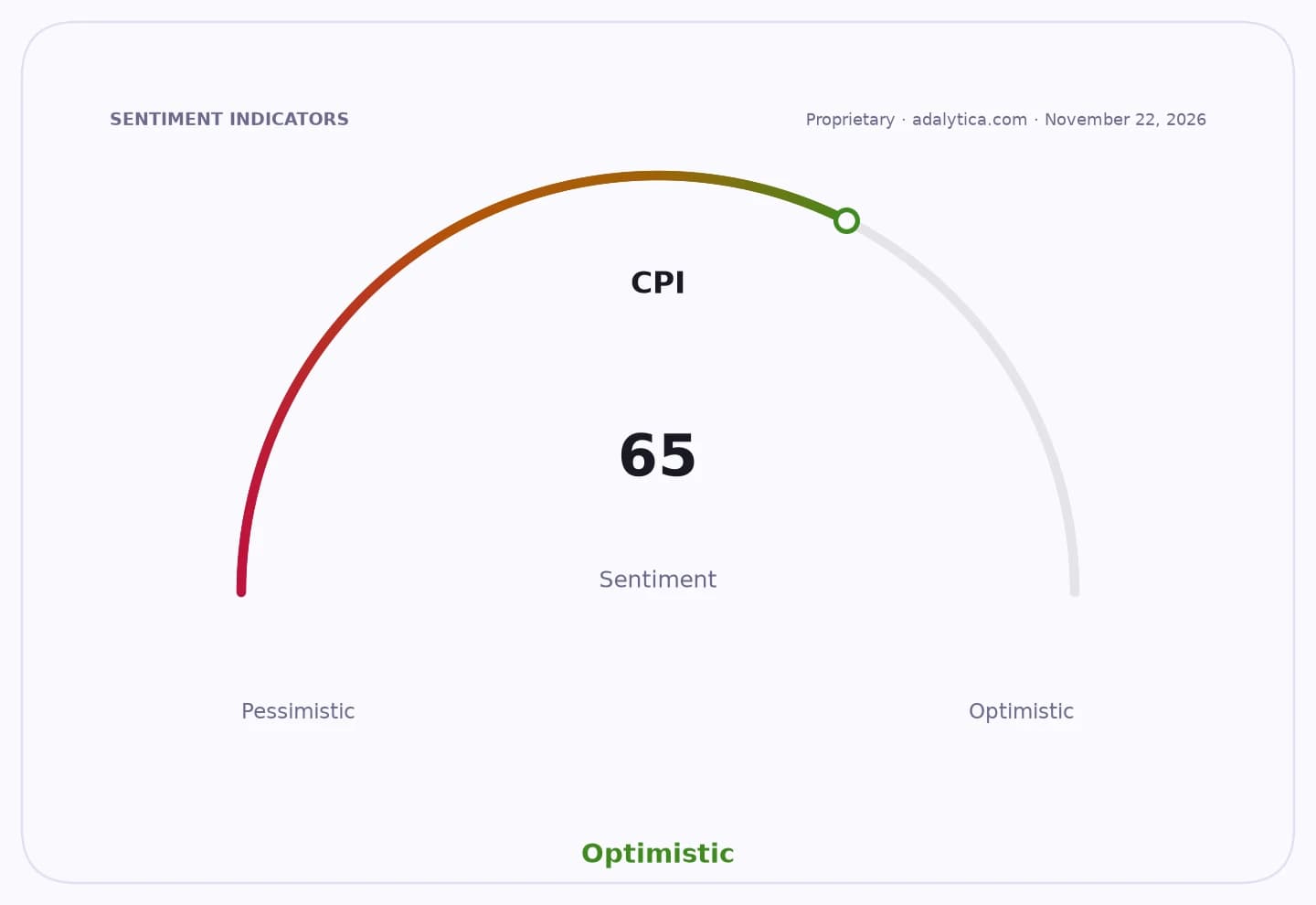
Sentiment Indicators
This is the market’s warning that institutional paralysis now has a price. Capital Economics said the confrontation is undermining investor confidence and could further weaken public finances, while the European Bank for Reconstruction and Development flagged Poland’s budget position despite growth of 3.5%. The EU sees the deficit at 7.1% of GDP and debt rising to 73.5%, both well beyond Maastricht thresholds, while inflation is expected to accelerate to 4.4% next year.
The problem is not simply fiscal slippage. It is that the political fight is blocking the very policy tools needed to close the gap. Nawrocki has vetoed legislation to raise alcohol and corporate taxes, and his standoff with Tusk has spread to appointments at the central bank and constitutional court. That means fewer levers to stabilize the budget, more uncertainty around policy continuity and a greater chance that Brussels reopens rule-of-law tensions that once froze billions in EU funds.
For bondholders, the message is clear: Poland’s sovereign risk premium has room to widen if the deadlock persists. For equity investors, the mix of a weaker currency, stickier inflation and possible tax and regulatory fights argues for caution on domestically focused Polish assets, especially banks, retailers and leveraged consumer names. Exporters with hard-currency revenue may fare better, but the broader market has lost the clean growth story that made Poland a regional favorite.
The bigger thesis is that Poland is moving from a convergence trade to a governance trade. As long as the presidency and government remain locked in institutional trench warfare, the market will discount not just the deficit path but the durability of reform. That makes the złoty vulnerable, keeps borrowing costs elevated and leaves upside for investors only in pockets that can benefit from volatility rather than fear it.
| Entity | Gains | Losses |
|---|---|---|
| Exporters with euro revenue | ▲Weaker złoty boost | ▼Domestic costs rise |
| Polish government bonds | ▲Higher yields for buyers | ▼Price pressure |
| Domestic banks and retailers | ▲— | ▼Slower growth, weaker currency |
| Foreign investors in Poland | ▲Cheaper entry points | ▼Higher political risk |