Czech millionaires are more worried about Europe’s fading competitiveness and weak state institutions than about inflation, and that is the real economic message for investors: domestic capital is increasingly being judged on the quality of the region’s long-term growth model, not on short-term price pressures.
Wealthy Czechs Worry About Europe Competitiveness
A survey cited by J&T Banka shows 42% of wealthy Czechs fear poor state functioning and 38% worry about Europe losing ground to the U.S. and China, making structural stagnation the top concern ahead of day-to-day costs. That matters because it points to a quiet but important shift in how affluent households allocate money: they are not preparing to flee, but they are becoming more selective about where capital is put to work.
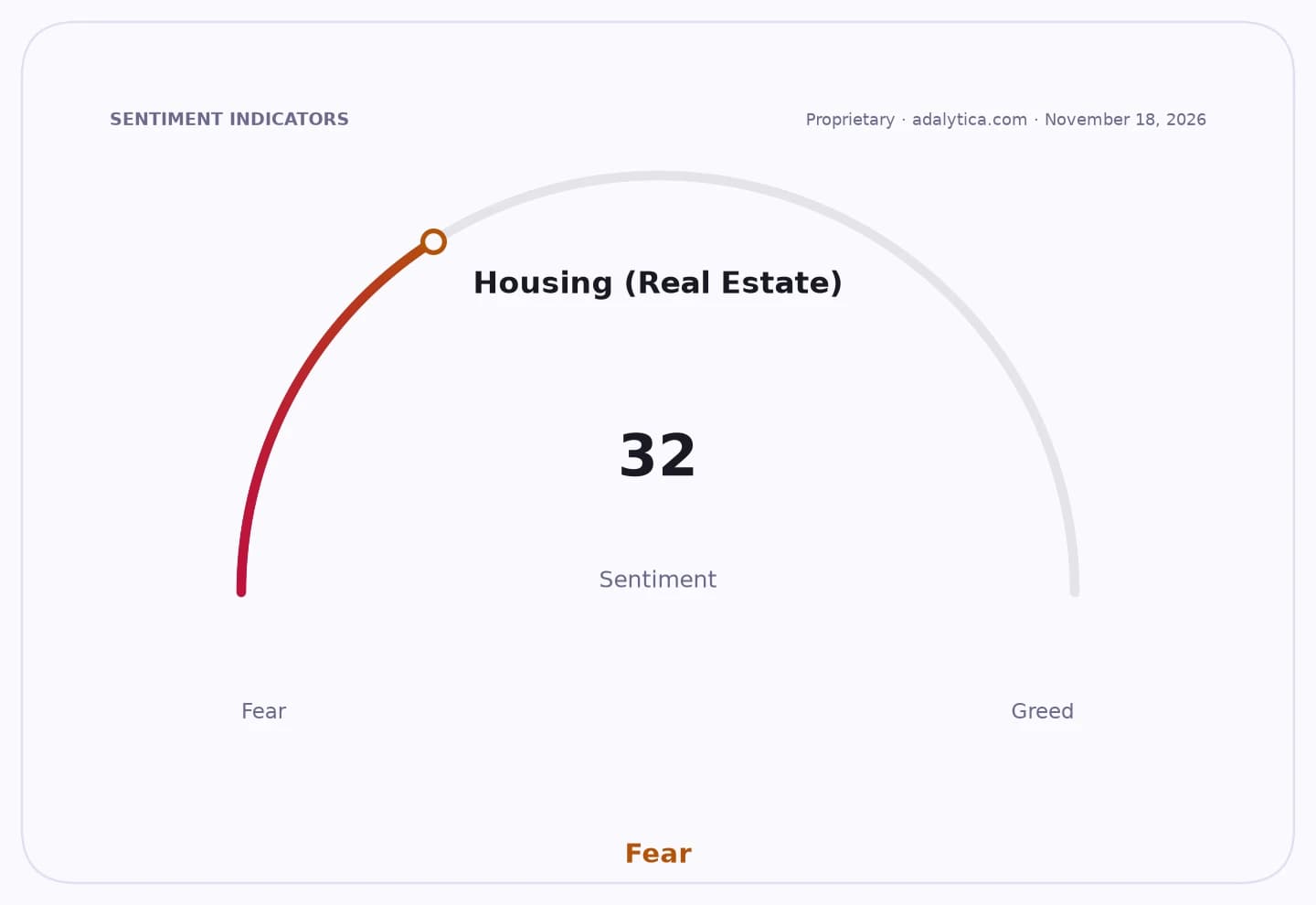
Sentiment Indicators
The numbers suggest caution, not panic. Only 13% of wealthy Czechs have or are considering a second passport or foreign residency, and fewer than two in five hold part of their wealth in foreign currencies. Just one-third are spreading investments across more countries, yet most wealth still remains in the Czech Republic. That makes this less a capital flight story than a warning sign for Europe’s investment appeal: domestic money is hedging, not exiting, because the underlying assets are still rooted in local business networks and operating conditions.
For investors, that is a signal to focus on the firms and assets best insulated from Europe’s competitiveness problem. The market is underestimating the value of companies with global revenue, pricing power and exposure to secular capex rather than sluggish domestic demand. In Europe, that means infrastructure, defense, industrial automation, grid spending and energy-security names have a stronger case than broad consumer or purely local cyclicals. The lesson is similar in Czechia: wealth is likely to favor exporters, hard-asset owners and listed companies with non-EU earnings over businesses tethered to a slow-growth home market.
The survey also shows how little inflation now dominates the wealthy mindset. Higher incomes and equity exposure make them less vulnerable to price shocks than the broader public, where inflation and energy costs remain bigger fears. That divergence matters economically because it suggests affluent capital is looking past transitory macro noise and toward a more durable question: whether Europe can still generate real returns after years of weak productivity, regulatory friction and geopolitical strain.
That is the narrative investors should trade. Europe’s challenge is no longer just inflation or energy prices; it is whether the region can regain credibility as a place to compound capital. Until that changes, the best opportunities will likely sit with the companies that profit from Europe’s need to catch up — not the ones most exposed to its drift.
| Entity | Gains | Losses |
|---|---|---|
| Exporters | ▲foreign demand, FX diversification | ▼weak local growth |
| Infrastructure & defense firms | ▲capex tailwind | ▼domestic cyclicals |
| Czech wealthy investors | ▲capital preservation | ▼home-market concentration risk |
| Europe’s broad economy | ▲— | ▼competitiveness premium |