Russia’s latest air attack on Ukraine prompted Poland to scramble military aircraft and triggered a sharp move in oil-linked assets, underscoring how quickly the war can still spill into NATO territory and commodity pricing even as diplomatic talks remain in play.
Poland Scrambles Jets as Oil ETF Rises on Ukraine Strike
Poland’s Operational Command said the step was precautionary after a Russian strike on Ukrainian territory and that Polish aviation was operating in the country’s airspace. The warning, relayed by the government’s RCB emergency system to residents in Podkarpackie province, illustrates how border states continue to bear the immediate security burden from the conflict.
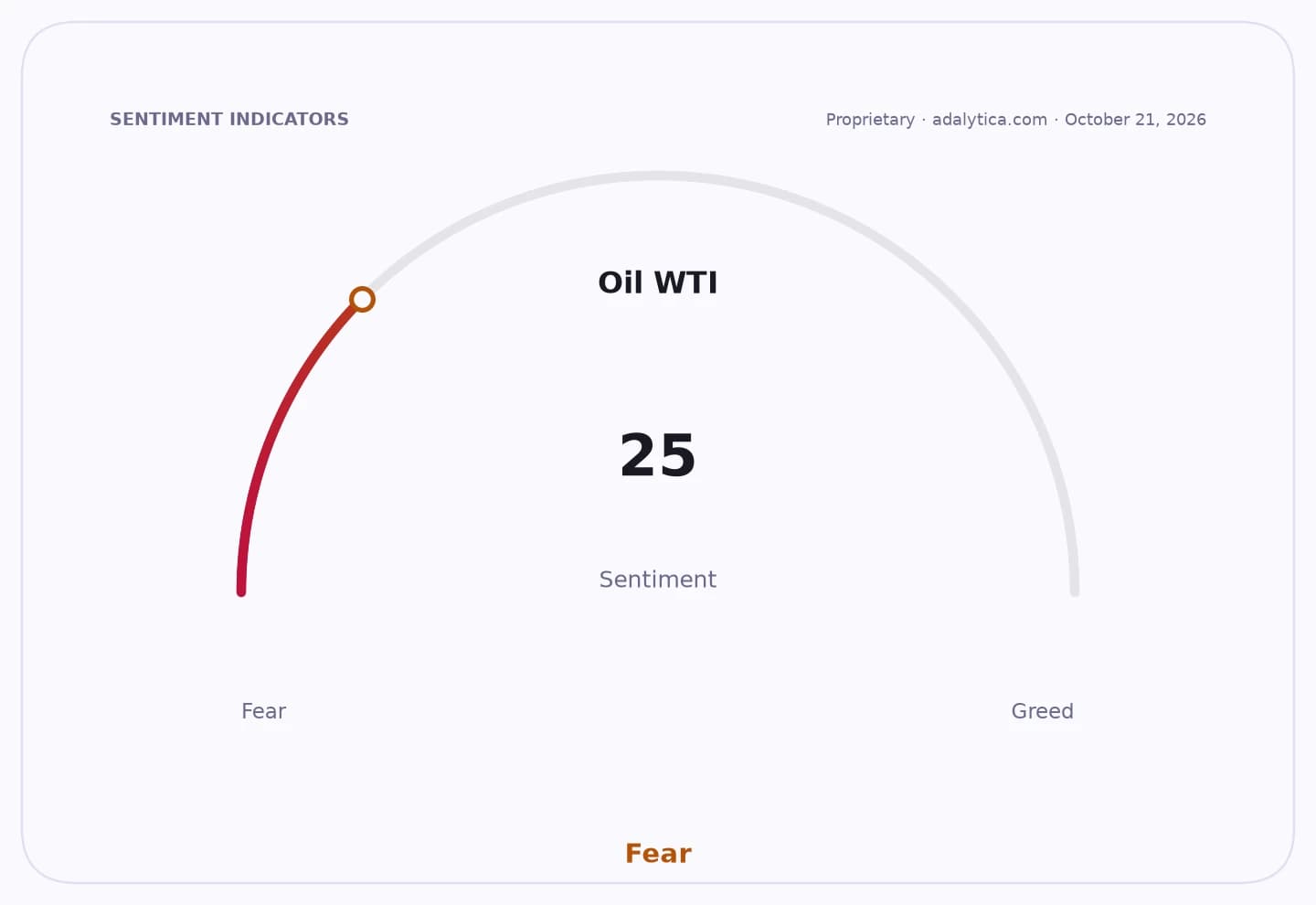
Sentiment IndicatorsⓘProprietary · adalytica.com · October 21, 2026
This is a snapshot — live sentiment, awareness and momentum for 130+ markets update continuously in the dashboard.Open AlphaPulse
The market reaction was visible in crude exposure. The USO oil ETF rose to $159.76 on Oct. 21, close to its recent highs and well above its 50-day moving average of $144.88 and 200-day moving average of $120.63. The move came alongside an RSI reading of 67.5 and a MACD line still above its signal, signs that momentum remains stretched but intact. Adalytica’s Oil WTI Trade Signals gauge showed sentiment at 25, or “Fear,” even as awareness remained neutral, highlighting a market that is still reacting to headline risk rather than a clean shift in fundamentals.
That matters because geopolitical shocks in Eastern Europe can reprice crude quickly, even when the underlying supply picture is unchanged. A Russian strike near NATO’s eastern flank raises the odds of tighter risk premia in energy, especially if investors start to factor in the possibility of broader disruption to regional logistics, sanctions enforcement or retaliatory measures. For producers, that can mean firmer realized prices and stronger cash flow; for refiners, airlines and other fuel consumers, it raises hedging costs and squeezes margins.
Geopolitical Risk — 30-day sentimentadalytica.com
Explore this data interactively — full history, time series and cross-market comparisons.Open AlphaPulse
European equities tied to the region were less dramatic. The iShares MSCI United Kingdom ETF, EWU, finished at $47.69, roughly in line with its 50-day average and above its 200-day average, suggesting investors were not pricing in immediate macro spillover into the UK market. The iShares MSCI Poland ETF, EPOL, rose to $45.08 and sat above both its 50-day and 200-day averages, but the move was modest relative to the security backdrop, implying investors are watching rather than abandoning Polish assets.
The broader geopolitical narrative is that the war remains volatile enough to move markets even as Russia signals interest in talks and Washington pushes mediation. Adalytica’s Global Stability Sentiment gauge spiked to 86, or “Extreme Greed,” but its awareness reading stayed at just 4, or “Extreme Fear,” a split that suggests markets are broadly aware of easing diplomatic expectations while remaining highly sensitive to sudden military escalation.
For investors, the immediate question is whether the attack becomes another isolated flare-up or a catalyst for a more durable risk premium in energy and defense-related assets. If strikes continue near Poland’s border, oil could keep attracting haven flows, while European defense and security spending themes may gain further support. If diplomacy progresses without wider escalation, the premium could unwind as quickly as it arrived.
| Entity | Gains | Losses |
|---|---|---|
| Oil producers | ▲Higher crude pricing | ▼Fuel consumers |
| Poland and NATO defense assets | ▲Security urgency | ▼Regional calm |
| USO and energy longs | ▲Geopolitical bid | ▼Shorts in crude |
| European refiners and airlines | ▲None | ▼Margin pressure |