Poland is launching a national media-literacy program that will teach students aged 10 to 19 how to spot fake news, manipulation and AI-generated deepfakes, a move that reflects how misinformation has become a policy issue with economic and political consequences, not just a classroom concern.
Poland launches media literacy program for students

The program, funded mostly by the culture ministry and due to begin on Sept. 17, will run through 2028 at an estimated cost of 3 million euros. That spending is small in budget terms, but the policy stakes are much larger: governments across Europe are trying to harden societies against synthetic media that can distort elections, damage institutions, and amplify public distrust at scale.
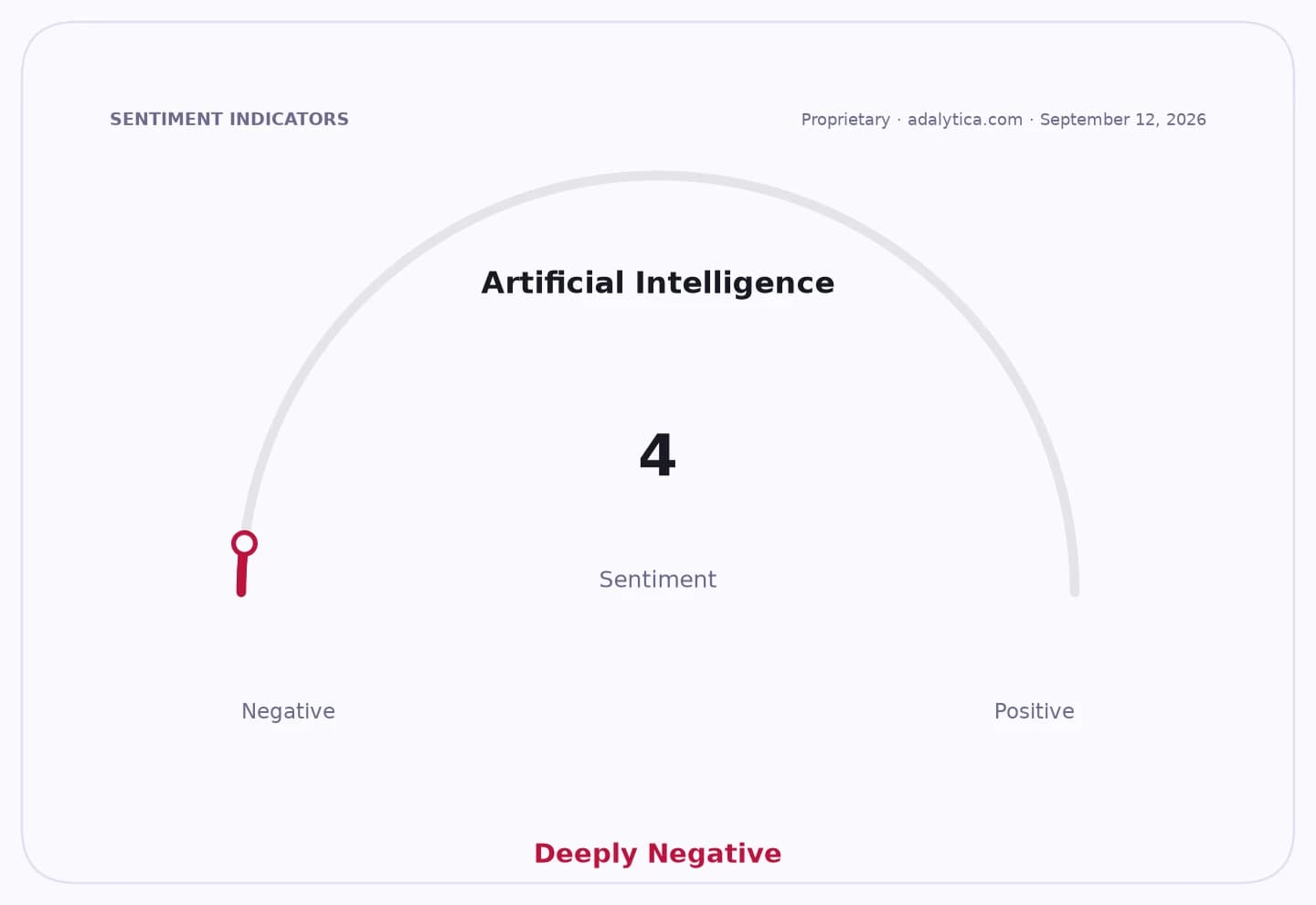
Sentiment IndicatorsⓘProprietary · adalytica.com · September 6, 2026
This is a snapshot — live sentiment, awareness and momentum for 130+ markets update continuously in the dashboard.Open AlphaPulse
For investors, the relevance extends beyond education. The move reinforces a broader regulatory and social response to artificial intelligence, a field where the cost of misuse is rising alongside the commercial value of generative tools. As AI adoption accelerates, policymakers are being forced to address the downside risk — fraud, disinformation, reputational harm and compliance burdens — that can affect platform operators, media groups and AI developers alike.
Poland’s plan also shows how fast the debate has shifted from content moderation to resilience training. Rather than relying only on tech platforms to filter false material, authorities are trying to build user-side defenses by teaching students to check sources, understand context and recognize manipulation techniques. The program includes lectures, film screenings and hands-on workshops on media manipulation, as well as lessons on the history of propaganda and censorship in Polish cinema.
That matters economically because misinformation can carry direct costs. It can undermine confidence in institutions, distort consumer and voter behavior, and force companies and governments to spend more on verification, cybersecurity and communications defense. In countries where elections or social tensions are already delicate, deepfakes can also raise the premium on trust — and the cost of losing it.
The program’s relatively modest price tag suggests Poland is treating media literacy as a preventative investment rather than a large-scale intervention. The bull case is that early education reduces the long-term social and economic damage from manipulated media. The bear case is that classroom instruction alone will lag a technology that is improving faster than traditional curriculum design.
For markets, the broader message is that AI’s commercial upside is increasingly accompanied by governance risk. Platforms such as Google, Meta and Nvidia benefit from the expansion of AI tools and distribution, but they also face a world in which governments are more likely to impose safeguards, scrutiny and liability expectations around synthetic content. Poland’s move is another sign that the policy response is moving from reactive content takedowns toward longer-term public resilience.
The key watchpoint is whether this kind of education policy spreads across Europe and into other regions facing election risk. If it does, the cost of misinformation may increasingly show up not only in public trust metrics, but in regulation, compliance spending and the valuation discount investors assign to parts of the digital media and AI stack.
| Entity | Gains | Losses |
|---|---|---|
| Polish students | ▲Better media literacy | ▼Exposure to manipulation |
| Poland government | ▲Stronger civic resilience | ▼Higher policy burden |
| AI platforms | ▲Clearer standards | ▼More scrutiny and compliance |
| Disinformation actors | ▲— | ▼Reduced reach and credibility |