Poland’s state treasury debt climbed to about 2.269 trillion zloty at the end of September, underscoring how quickly public borrowing is still expanding even as the government faces mounting political scrutiny over the country’s finances.
Poland State Treasury Debt Reaches 2.269 Trillion Zloty

The Ministry of Finance said the debt rose 20 billion zloty, or 0.9%, from August. Domestic debt accounted for about 1.827 trillion zloty, while foreign debt reached 442.4 billion zloty, or 19.5% of the total.
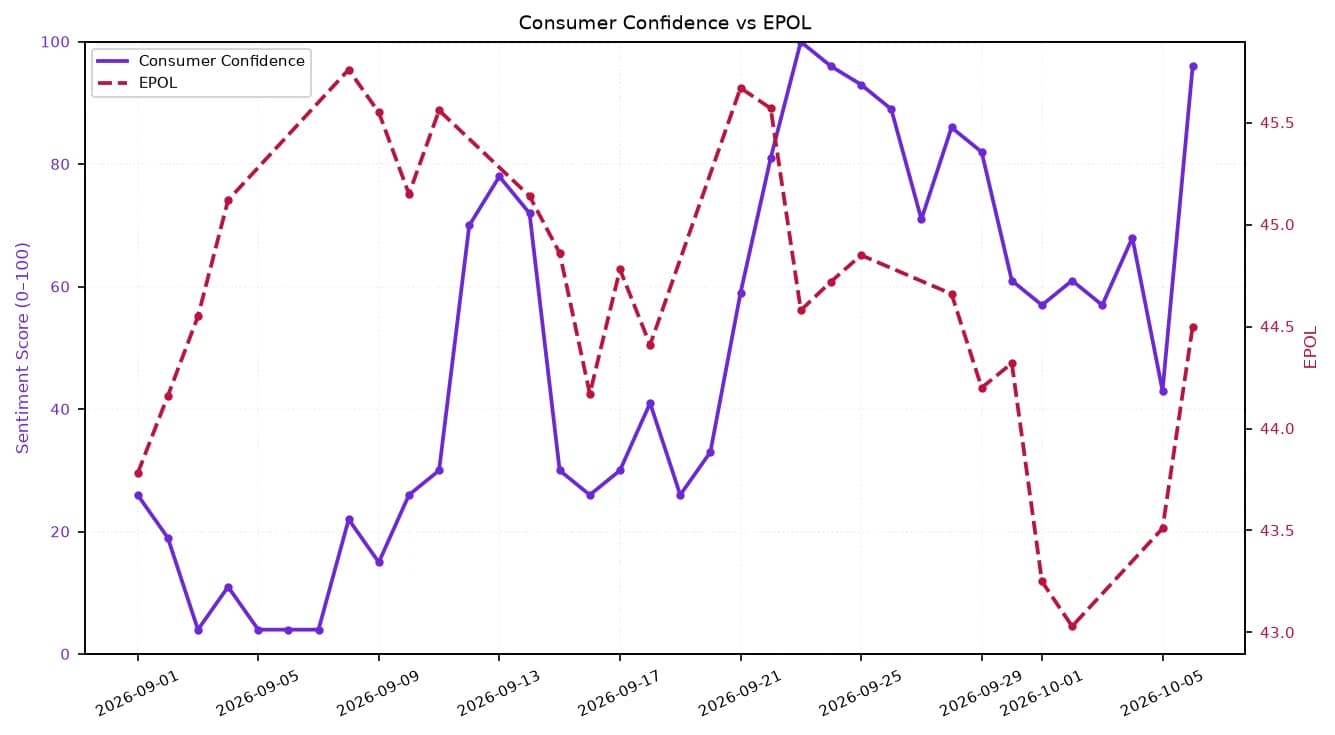
Sentiment IndicatorsⓘProprietary · adalytica.com · October 25, 2026
This is a snapshot — live sentiment, awareness and momentum for 130+ markets update continuously in the dashboard.Open AlphaPulse

The increase matters because Poland is financing a large budget gap, refinancing maturing obligations and absorbing a higher debt burden left by previous crisis-era spending. Deputy Finance Minister Hanna Majszczyk said the state’s debt path has been shaped by years of earlier decisions, including the repayment of borrowing linked to the pandemic fund, which she said came to almost 80 billion zloty in 2024-2026 alone.
For investors, the key issue is not the monthly rise itself but the direction of travel. A debt stock above 2.2 trillion zloty means the sovereign remains a large and persistent issuer in the local bond market, with implications for yield levels, auction supply and the government’s financing flexibility. The fact that nearly one-fifth of the debt is foreign also keeps currency and external funding conditions relevant, especially if global rates remain elevated.
The figures were published on the same day parliament debated a no-confidence motion against Finance Minister Andrzej Domański, highlighting how fiscal policy has become a political fault line. Opposition lawmakers accused the ministry of pushing public finances toward crisis, while the government argued that the debt burden reflects both current borrowing needs and legacy liabilities from earlier administrations.
For bondholders, the near-term focus is whether Poland can keep funding costs contained while deficits remain wide. For the government, the challenge is to convince markets that debt growth remains manageable and that the financing mix will not become more expensive just as growth, rates and fiscal politics turn less forgiving.
| Entity | Gains | Losses |
|---|---|---|
| Polish government | ▲Funds deficits and refinancing | ▼Higher debt burden |
| Bond investors | ▲More sovereign supply | ▼Greater fiscal risk |
| Domestic creditors | ▲Regular issuance opportunities | ▼Crowding-out risk |
| Opposition lawmakers | ▲Political leverage | ▼Less credibility if finances stabilize |