France’s borrowing costs are under renewed pressure after a senior fiscal watchdog warned the country faces a risk of “financial suffocation” if debt is not brought under control, with the 10-year yield premium over Germany widening to 144 basis points, its highest since 2012.
France 10-Year Yield Spread Hits 2012 High

The warning from Cour des comptes president Amélie de Montchalin lands at a fragile moment for French public finances and for markets that are already pricing in political and social strain. Her message is simple: without a credible path to lower deficits, debt-service costs can compound quickly and crowd out other spending, eroding fiscal room to maneuver and, ultimately, investor confidence.
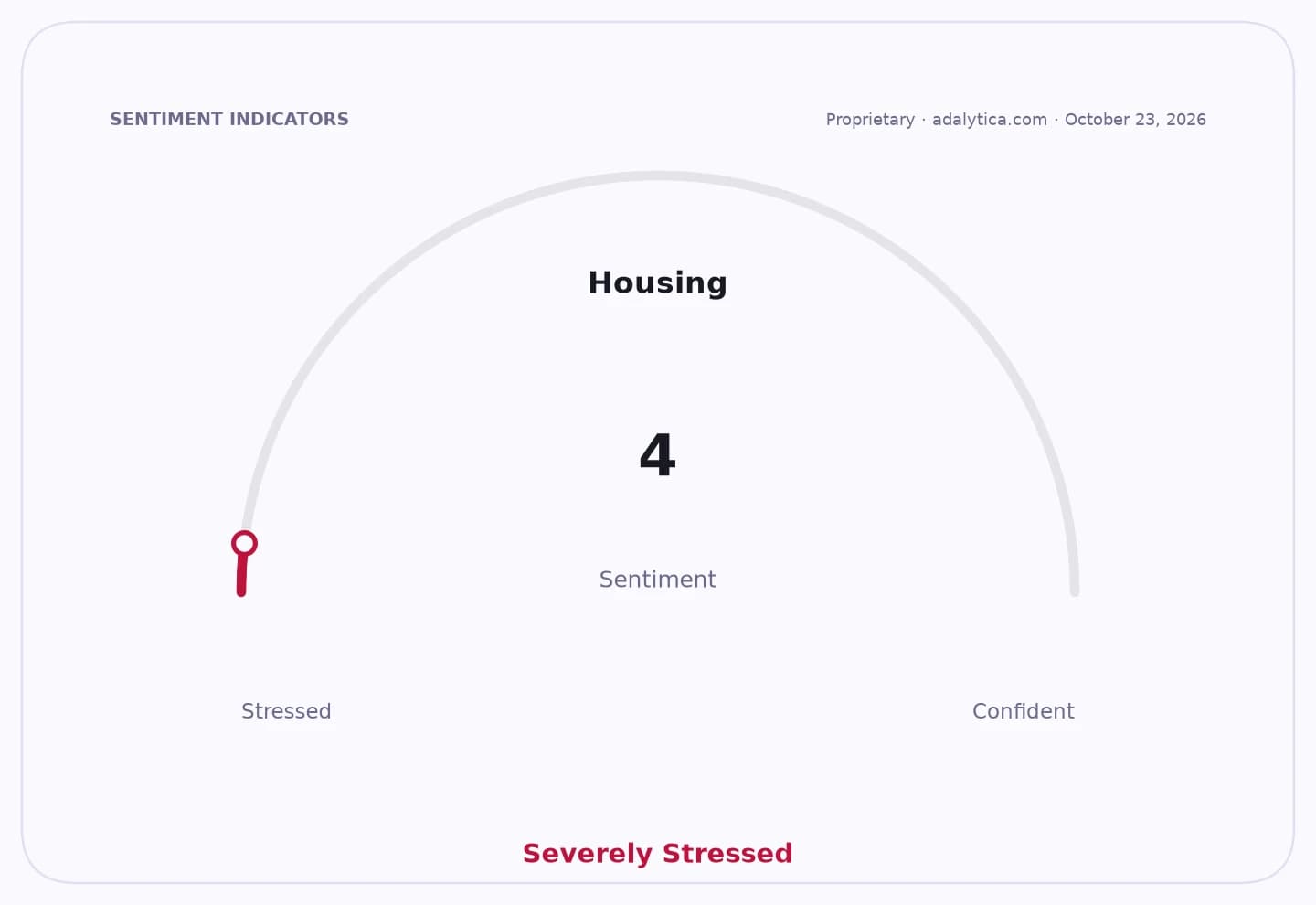
Sentiment IndicatorsⓘProprietary · adalytica.com · October 25, 2026
This is a snapshot — live sentiment, awareness and momentum for 130+ markets update continuously in the dashboard.Open AlphaPulse
That is not a theoretical risk. Montchalin said debt servicing will already reach 90 billion euros next year, and argued that a 100-basis-point rise in rates would add 40 billion euros a year to the budget after seven years — roughly three times the annual Justice Ministry budget. For a government trying to force through a budget that aims to trim the deficit to 5% of GDP in 2027 from 5.4% in 2026, the arithmetic underscores how quickly refinancing costs can overwhelm fiscal consolidation.
Markets are reacting to more than the numbers. Violence over the weekend across France, including widespread damage to shops and public property, has sharpened concern that social unrest could make austerity harder to deliver. Traders typically punish that combination of political fragmentation and weaker fiscal credibility by demanding a higher risk premium, and that is visible in French bonds this week. Deutsche Bank strategists said the violence would not help the international community feel comfortable buying OATs, while Kathleen Brooks of XTB said the spread could widen toward 150 basis points as political and social pressures build.
The broader backdrop is equally unforgiving. French debt remains financeable — Economy Minister Roland Lescure said markets are still willing to absorb issuance — but at a rising cost. That distinction matters. As long as the state can sell bonds, there is no immediate funding crisis; but if the cost of rolling over debt keeps climbing, debt dynamics can deteriorate even without a shutdown in market access.
Investors are now focused on whether policymakers can pass the budget measures needed to stabilize the deficit and whether that effort survives the run-up to the presidential election. Moody’s review later this week adds another catalyst, especially because the agency still rates France in the double-A category, unlike some peers that have already been downgraded. Any negative signal would reinforce the argument that France’s fiscal path is becoming more difficult to defend.
For bondholders, the risk is that France is shifting from a story about high but manageable debt to one about persistent political resistance to adjustment. For equities and broader European risk assets, a further rise in French yields could tighten financial conditions at the margin, especially if markets begin to question whether the euro zone’s second-largest economy can deliver the budget discipline investors are being asked to price in.
| Entity | Gains | Losses |
|---|---|---|
| French government fiscal conservatives | ▲Credibility if deficit falls | ▼Political capital if austerity deepens |
| Bond investors demanding higher yields | ▲Higher carry on OATs | ▼Capital losses if spreads widen further |
| France’s public services and households | ▲— | ▼Budget squeeze and weaker spending room |
| Germany / Bunds | ▲Safe-haven demand | ▼— |