Poland’s economy is growing faster than Germany’s and that gap is becoming harder for investors to ignore, but the Warsaw Stock Exchange still looks more like a tactical allocation than a core holding.
Polish Stocks Outgrow Germany as Warsaw Rallies

The country expanded 3.8% in 2025, underscoring a divergence with Europe’s largest economy that has widened on the back of Poland’s earlier reforms, a more diversified industrial base and heavy EU funding for infrastructure. For global investors, that mix matters because it supports earnings growth, domestic demand and capex-led activity in a market that has often been dismissed as a peripheral play on Central and Eastern Europe.
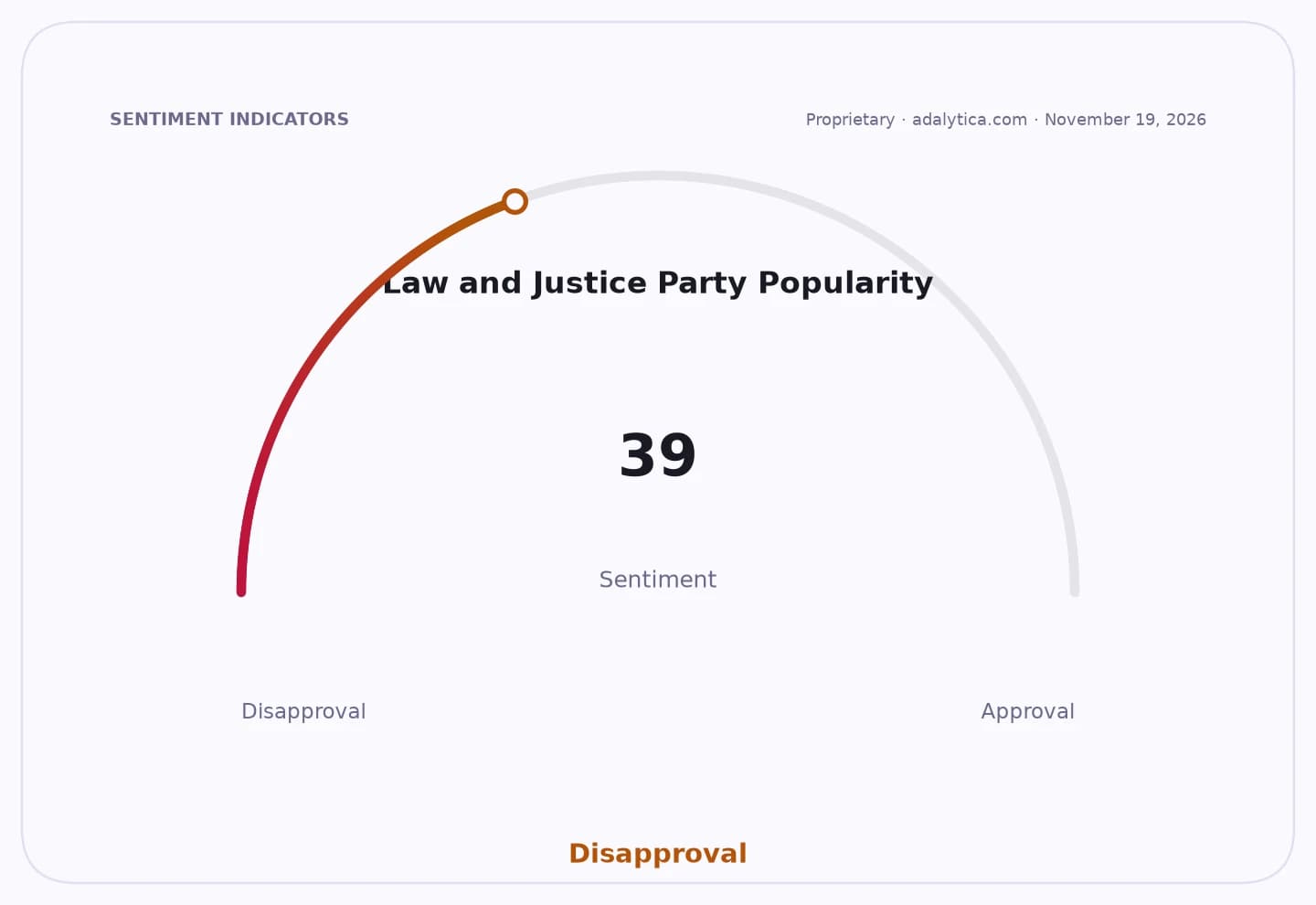
Sentiment Indicators
The appeal is not just macro. Poland has built a more modern operating environment than Germany in several areas, with faster permitting, more digitalized administration and a logistics network that increasingly positions the country as a regional hub. That should support listed firms tied to banking, logistics, industrials and the domestic consumption cycle. It also helps explain why Poland has been able to attract talent and foster a startup scene that could broaden the market beyond its traditional bank-heavy profile.
Still, the case for buying Warsaw is not straightforward. The MSCI Poland index remains dominated by financials, so performance is tied heavily to the banking cycle, regulation and domestic rates rather than a broad cross-section of global exporters. Valuation work should focus on standard measures such as price-to-earnings and, for banks, price-to-book relative to both history and peers in other eastern European markets. That is where investors can judge whether the growth premium is already reflected in prices.
The ETF that tracks Polish equities, the iShares MSCI Poland ETF, has rallied sharply this year but has also shown how quickly sentiment can reverse. EPOL closed at $39.83 on Nov. 20, below its 50-day moving average of $43.91 and with an RSI of 33.4, suggesting the fund has moved into technically oversold territory after recent selling. Deutsche Bank shares, a proxy for broader European financial risk appetite, were also lower at $31.40, while EWG, the Germany ETF, fell to $39.17, reinforcing the contrast between the two markets but also highlighting a broader risk-off tone.
For euro-based investors, currency remains a key variable. The zloty is less volatile than in the past, but a weaker exchange rate can still erode returns if exposure is left unhedged. That makes Poland more suitable as a diversification sleeve than a standalone bet, especially for investors who want exposure to faster growth without taking concentrated country risk.
The broader backdrop is geopolitically supportive. Poland’s push to become a regional gas gateway and its continuing investment in energy security strengthen the investment case by reducing some of the infrastructure and supply-chain fragilities that once weighed on the market. If that translates into more predictable growth and stronger corporate cash generation, Warsaw could continue to draw incremental capital from investors looking beyond Germany.
For now, the bull case is simple: Poland offers stronger growth, better infrastructure momentum and a more favourable medium-term domestic story than Germany. The bear case is that the market is narrow, bank-heavy and still vulnerable to currency swings and policy changes. That makes the Warsaw Stock Exchange worth considering, but as a selective position rather than an all-in replacement for broader European exposure.
| Entity | Gains | Losses |
|---|---|---|
| Polish equities | ▲Faster earnings growth | ▼Broad-market diversification risk |
| Banks in Poland | ▲Higher index support | ▼Concentration risk for investors |
| Germany equities | ▲Relative value seekers | ▼Growth comparison with Poland |
| Euro-based investors | ▲Exposure to higher growth | ▼Zloty currency swings |