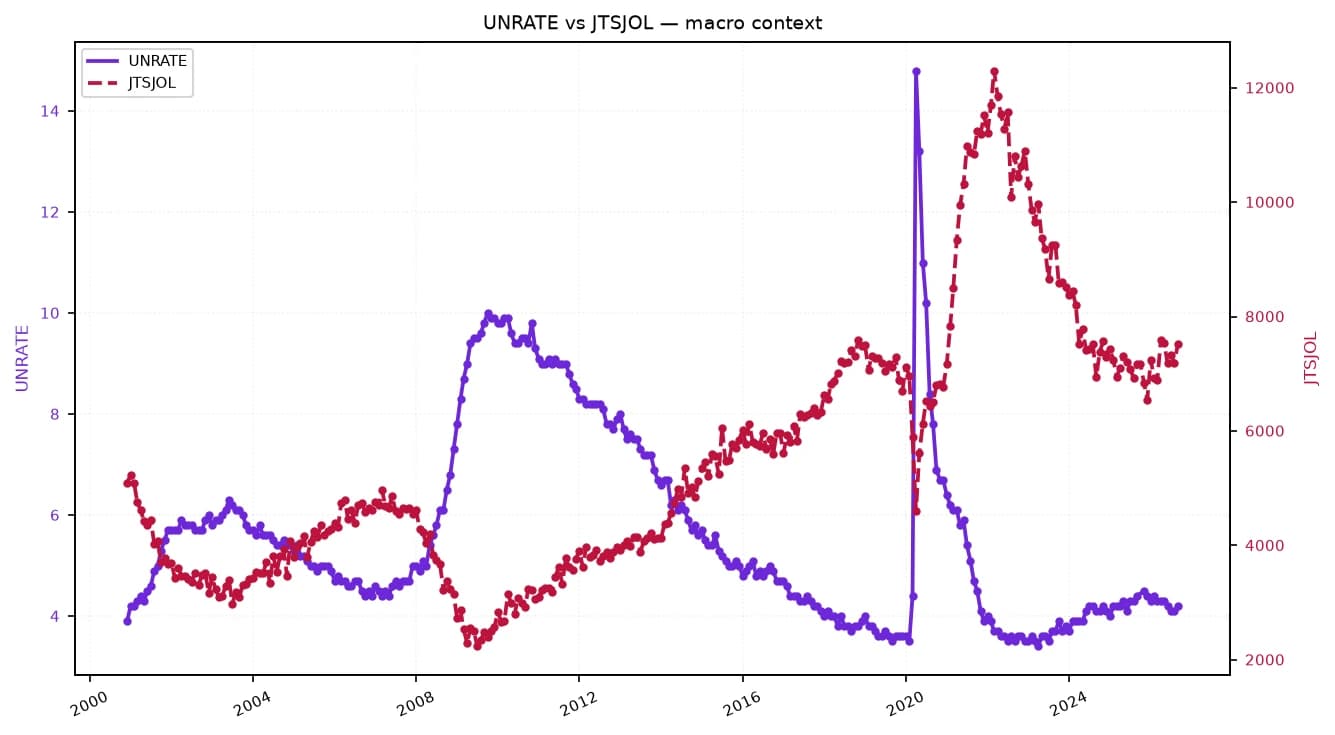
Poland’s labor market is showing a quieter but more worrying kind of weakness: unemployment is stuck at 5.8% while employers are posting fewer jobs, a combination that suggests hiring momentum is fading even without a sharp rise in layoffs.
Poland unemployment holds at 5.8% as job offers fall
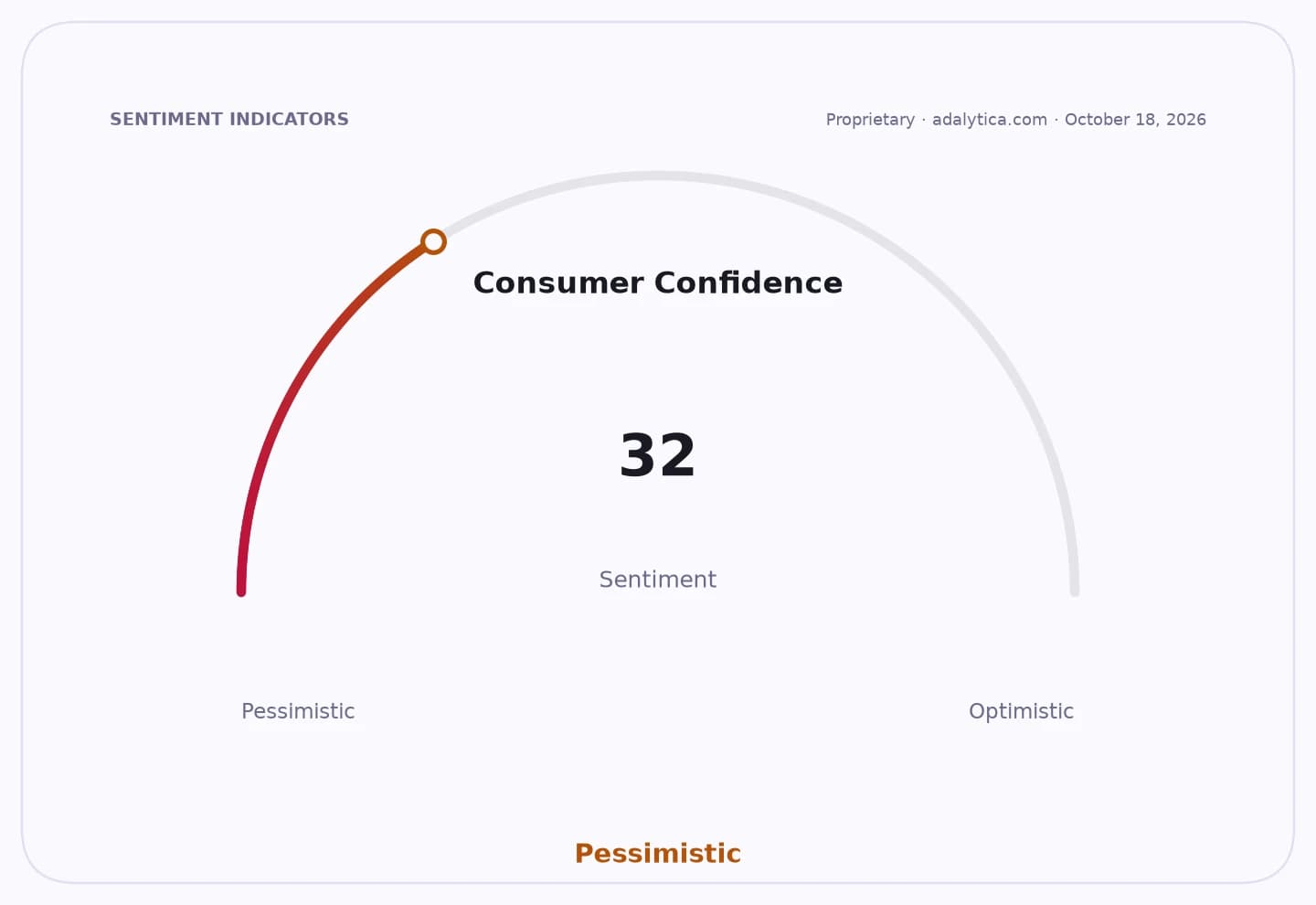
Consumer Confidence
That matters because a stable headline unemployment rate can hide a softer underlying economy. In October, the number of registered unemployed stood at 906,500, down slightly from September but still 39,200 higher than a year earlier. At the same time, new job offers filed with labor offices fell to 35,000, down 4,800 from the previous month and 1,400 from a year earlier. For workers, that means the search for a new role is getting harder. For policymakers, it means the economy may be losing some of the resilience that kept unemployment from worsening earlier in the year.
Sentiment Indicators
Consumer Confidence
The picture is not one of crisis, but of stagnation. Poland’s unemployment rate has held at the same level since June, which on the surface looks steady. But the year-on-year increase in registered jobless claims shows the labor market is no longer improving. That is often how slowdowns begin: not with a sudden spike in unemployment, but with fewer openings, longer job searches and weaker bargaining power for workers.
The decline in vacancies is especially important. Labor offices reported fewer listings across the board, with employers mainly looking for warehouse workers, production staff, construction workers and office employees. Those are the kinds of roles that tend to reflect broader business activity, so a drop in demand for them can be an early warning that companies are becoming more cautious about growth, investment or replacement hiring.
There are also clear regional and sector gaps. Wielkopolskie posted the lowest unemployment rate at 3.8%, while Warmińsko-Mazurskie remained the weakest region at 9.3%. That unevenness matters for investors because it points to a labor market that is still functioning, but not uniformly. Some areas and industries are clearly holding up better than others, which can affect everything from consumer spending to wage pressure and local demand for housing, retail and services.
The data also hint that not every registration at a labor office reflects an immediate job search. More than 41% of respondents cited access to health insurance as a reason for registering, slightly above the 39.8% who said they wanted help finding work. That detail does not weaken the broader message; it reinforces it. A flat unemployment rate is not the same as a healthy labor market if people are registering for administrative reasons and job creation is slowing.
For investors, the takeaway is straightforward. A labor market that is no longer tightening can ease wage pressure over time, which is usually helpful for inflation and eventually for interest rates. But if job offers continue to fall, it can also be an early sign that household demand will soften. That is why this kind of “stuck” unemployment reading matters: it can be the middle stage between a strong economy and a weaker one.
The next few months will show whether this is just a pause or the start of a more durable cooling. Until then, Poland’s job market looks stable on the surface but less dynamic underneath — a setup worth watching for anyone focused on consumer demand, corporate hiring plans and the broader growth outlook.
| Entity | Gains | Losses |
|---|---|---|
| Employers | ▲Easier wage discipline | ▼Less hiring flexibility |
| Job seekers | ▲Fewer bidding wars for workers | ▼Fewer openings to choose from |
| Policymakers | ▲Softer inflation pressure | ▼Signs of slower growth |
| Consumer-facing companies | ▲Potential easing of labor costs | ▼Weaker household spending |