A jobseeker’s account of 175 applications, 55 interviews and 25 final-round rejections without a single offer is a blunt reminder that the labor market can feel far weaker to workers than headline unemployment suggests.
U.S. Labor Market Feels Tough Despite Low Unemployment
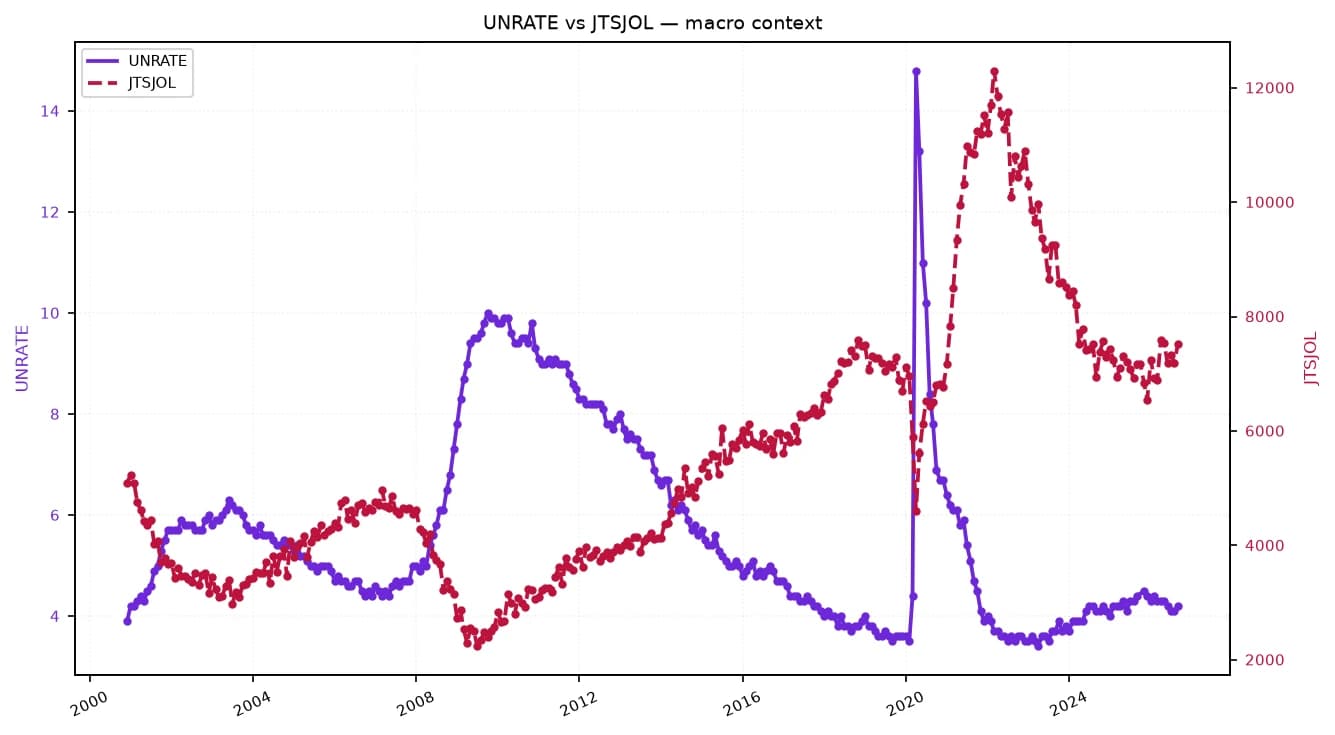
The story matters because it captures a key feature of the current hiring environment: companies are still adding jobs, but the path from application to offer has become longer, more selective and more punishing for candidates. The U.S. unemployment rate is still around 4.1% to 4.2%, yet job openings have cooled from their pandemic-era peak, with vacancies at 7.523 million in September after 7.190 million in August. That is far below the 12.3 million opening peak in 2022, and it points to a market where employers still hire, but with less urgency.
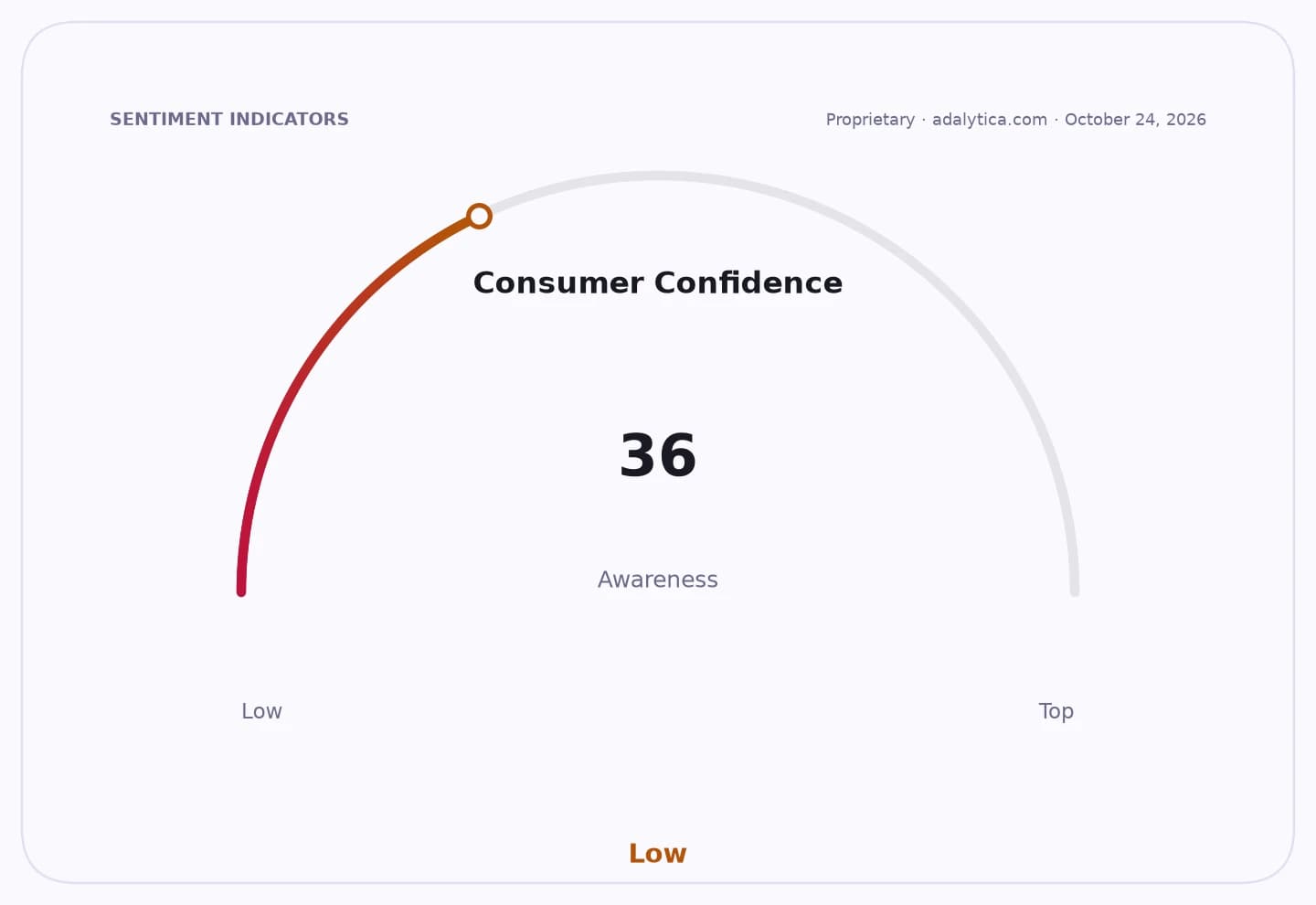
Sentiment Indicators
Consumer Confidence
For workers, that means more rounds, more waiting and more bargaining power on the employer side. The jobseeker in the post said unemployment benefits had run out and that they were considering contract work or jobs paying about $20,000 less than their previous salary. That kind of forced compromise is economically important because it can drag down wage growth for displaced professionals and weaken consumer spending at the margin, especially when savings are already thin.
The data backdrop is mixed rather than outright recessionary. Payrolls remain near record highs at 159.293 million, and the latest forecast points to further modest gains. But the persistence of a “brutal” search experience fits with softer labor demand in white-collar and professional segments, where firms can afford to be choosier. Recruitment and staffing companies such as ManpowerGroup and Robert Half have said hiring conditions remain tied to broader economic confidence, while the firms themselves have been navigating uneven demand for permanent and contract placements.
That makes this less a single internet anecdote than a sign of how the labor market has normalized after years of excess demand. In 2021 and 2022, jobseekers could often move quickly from one employer to the next. Now, even candidates making it to final rounds can be screened out by internal applicants, narrower skill requirements or delayed headcount approvals. The result is a labor market that is still functioning, but no longer forgiving.
Investors should care because a weaker hiring process can eventually feed into slower consumption, more cautious corporate spending and less pricing power for job seekers. It also matters for staffing firms, whose revenue depends on turnover, vacancy filling and employer urgency. If openings continue to ease and job-seeker frustration deepens, the benefits flow to employers and the pressure shifts to workers, especially those seeking better pay or a career reset.
The bigger narrative is that headline labor data can obscure the lived reality beneath it. A 4.1% unemployment rate does not tell you how hard it is to land a job after 55 interviews. For markets, the gap between official strength and worker distress is worth watching because it often closes only when hiring weakens further or the economy accelerates again.
| Entity | Gains | Losses |
|---|---|---|
| Employers | ▲More hiring leverage | ▼Less wage pressure |
| Jobseekers | ▲AI tools and targeted search | ▼Longer searches, lower offers |
| Staffing firms | ▲More contract demand | ▼Weaker permanent hiring |
| Consumers | ▲Stable payrolls | ▼Slower income growth |