Portugal’s labor market is about to become more transparent, and that matters because pay secrecy has long made it harder for workers to know whether they are being treated fairly.
Portugal Salary Transparency Law and Employer Reporting
A new European directive on salary transparency will force companies to open up more of the logic behind pay decisions, while giving job seekers and current employees better access to information about remuneration and career progression. For workers, that means a clearer view of starting salaries, pay bands and the criteria behind raises. For employers, it means more scrutiny, more paperwork and a higher bar to justify wage gaps.
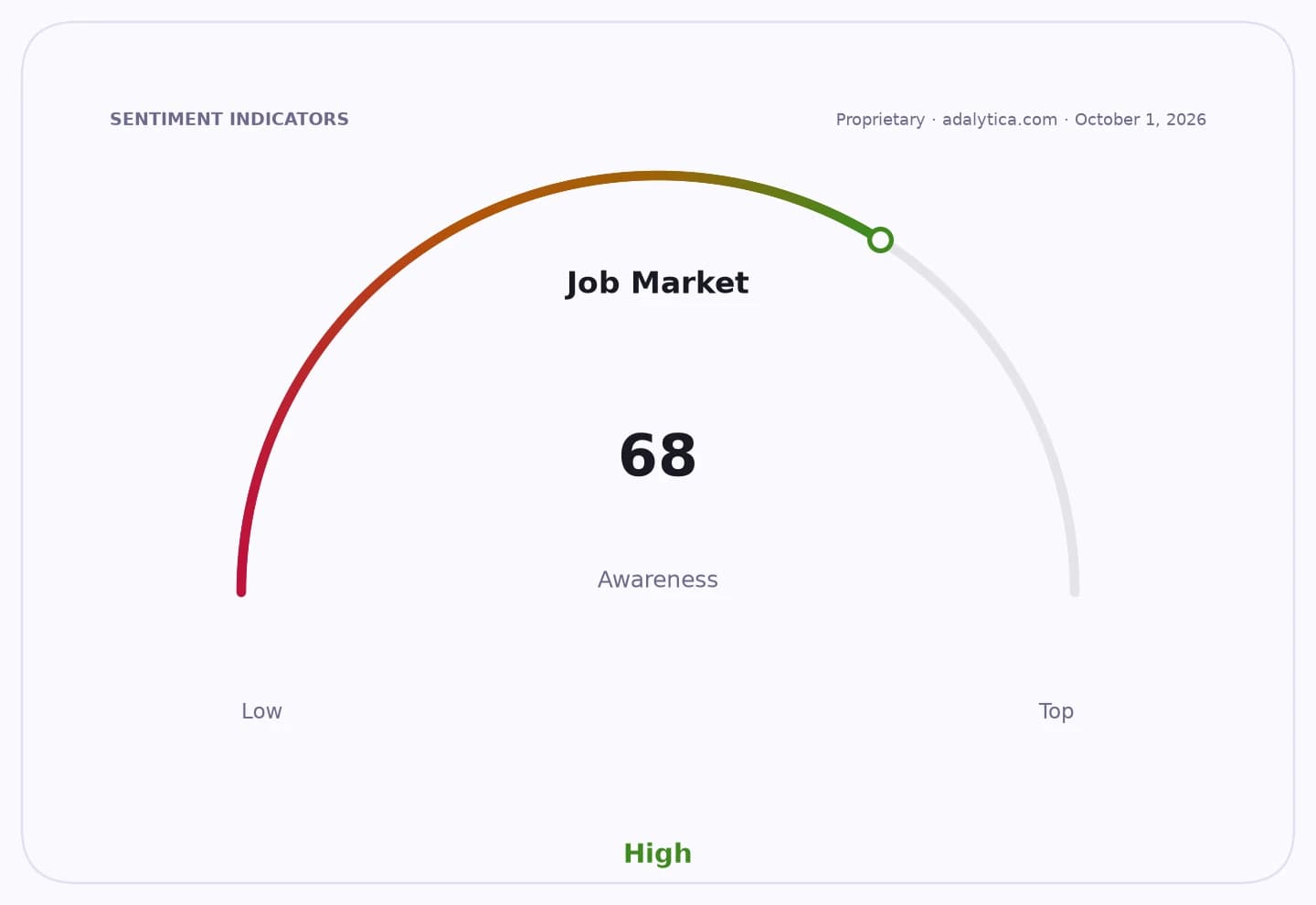
Sentiment IndicatorsⓘProprietary · adalytica.com · September 29, 2026
This is a snapshot — live sentiment, awareness and momentum for 130+ markets update continuously in the dashboard.Open AlphaPulse
That is economically important because pay is one of the biggest costs in any business and one of the biggest drivers of household income. If employees can better compare pay for equal work, firms will face more pressure to narrow unjustified gaps, especially between men and women. The result should be a labor market that is a little less opaque and, over time, potentially more efficient. Companies that already use structured compensation frameworks may barely notice the change. Those that rely on ad hoc decisions could face sharper challenges recruiting and retaining talent.
The practical shift starts with hiring. Job candidates will not necessarily see salary posted in every ad, but they will be entitled to know the starting pay or a salary range before a contract is signed. Employers will also be barred from asking what a candidate earned in a previous job, a simple but meaningful change that could help stop low pay from following workers from one role to the next.
That matters for investors because labor costs and hiring friction can both affect margins. Firms that compete for skilled workers in tight labor markets may need to explain pay more clearly and potentially raise offers to stay competitive. Over time, that could compress some salary dispersion, but it could also improve trust, reduce turnover and make recruitment faster. In other words, transparency can be a cost at first, but it may also become a productivity tool.
Current employees will gain new rights too. They will be able to ask for information about their own pay level, average pay by category and gender, and the objective criteria used to set wages and promotions. Companies will still not be required to hand over individual colleagues’ pay slips, which protects privacy. But they will need to be able to defend differences with neutral, objective reasons such as night work, language skills or other relevant responsibilities.
The biggest obligation falls on larger employers. Companies with 100 or more workers will have to report gender pay gaps on a recurring basis, with the frequency depending on size. Smaller firms are not automatically covered, though member states can widen the rule. Portugal is already late in transposing the directive, despite a deadline of June 7, and the government has only recently advanced a draft law.
For long-term investors, the key point is not the legal detail but the direction of travel. Europe is moving toward a labor market in which compensation must be easier to explain, easier to compare and harder to hide. That is good for workers, likely manageable for well-run companies, and most useful for investors who prefer businesses with disciplined compensation systems and low employee churn. It is worth watching whether Portuguese employers adapt quickly — because the firms that treat transparency as a management upgrade, not just a compliance burden, may come out stronger.
| Entity | Gains | Losses |
|---|---|---|
| Job seekers | ▲More pay visibility | ▼Less negotiating asymmetry |
| Current employees | ▲Better rights and comparisons | ▼Opaque pay practices |
| Large employers | ▲Clearer compensation systems | ▼Higher reporting burden |
| Workers facing pay gaps | ▲Stronger case for fairness | ▼Firms justifying disparities |