The body before the resume is still deciding careers before skills ever get a chance.
Weight bias in hiring and wages
That is the real economic story in the labor market: weight stigma is acting like an invisible tax on hiring, pay and advancement, shutting qualified workers out of jobs and pushing some to quit altogether. For investors, that matters because discrimination is not just a social failure — it is a productivity drag, a retention problem and a cost line that employers, staffing firms and HR software providers cannot ignore.
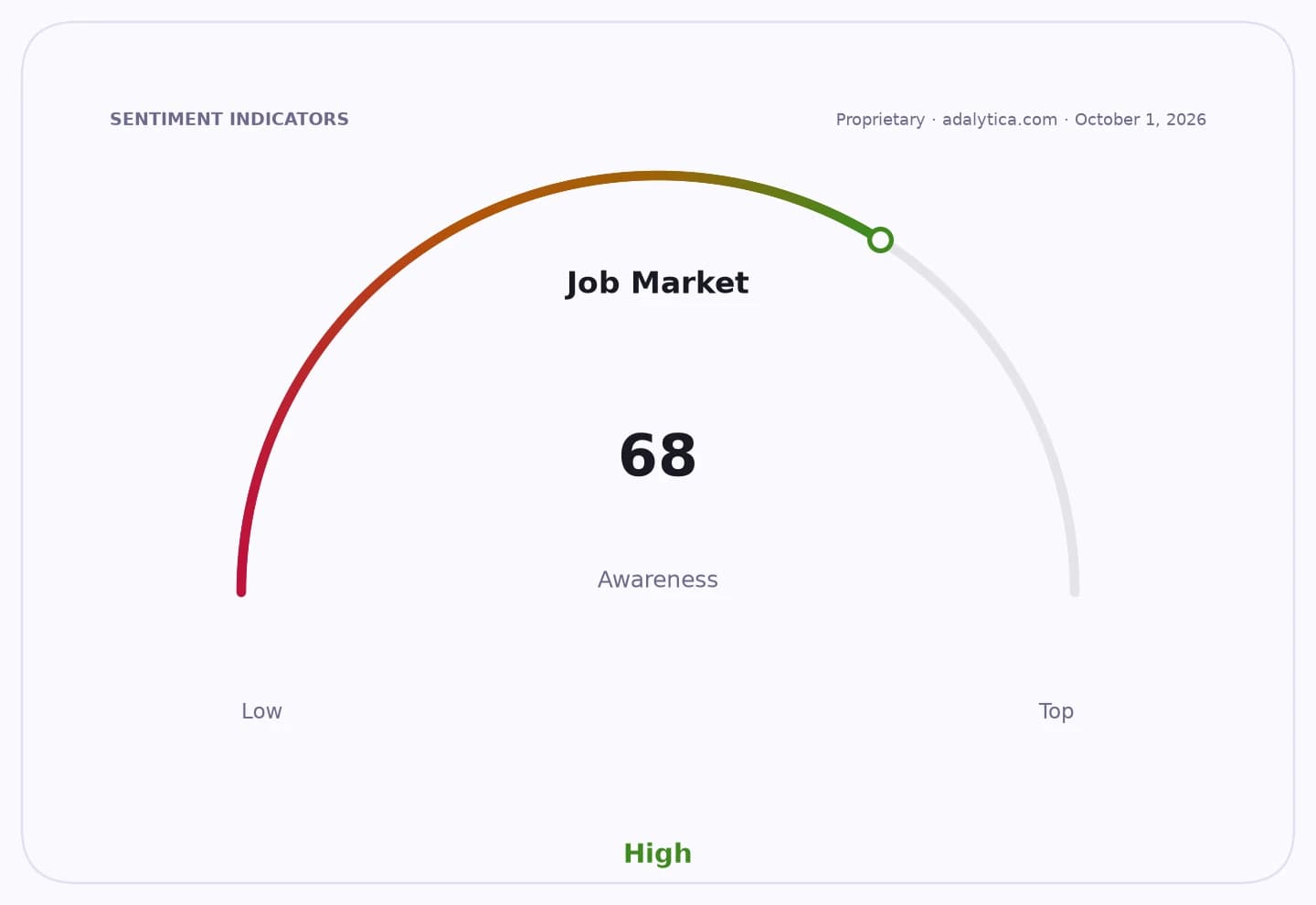
Sentiment IndicatorsⓘProprietary · adalytica.com · October 1, 2026
This is a snapshot — live sentiment, awareness and momentum for 130+ markets update continuously in the dashboard.Open AlphaPulse
The data suggest this is not a fringe issue. SHRM figures cited in the report show half of managers prefer interacting with workers of “healthy” or “normal” weight, while 11% of recruiting professionals say body weight is a decisive factor in hiring. In the U.K., 45% of employers said they were less likely to hire candidates with obesity. Women bear the heaviest burden: NEDA data indicate only 15.6% of hiring managers would seriously consider a woman with a larger body size.
The impact goes well beyond the interview room. The report says overweight women face a wage penalty, earning less for the same role and productivity, while applicants are steered away from customer-facing jobs in the name of “brand image.” Once hired, they can be judged more harshly and even have routine mistakes read as laziness or lack of motivation. That kind of bias is expensive. It narrows the talent pool, raises turnover and undermines the return on every dollar spent recruiting and training staff.
The problem is also hard to measure, which helps it persist. In Greece, the article notes there are no specialized official statistics or categorized complaints tracking weight discrimination in the workplace, and the country’s anti-violence law does not explicitly name body weight as a protected category. When something is not measured, it is easier for companies to dismiss it and for regulators to overlook it. For investors, that usually means slow change unless reputational pressure, legal risk or labor shortages force the issue.
The silence around the problem is striking. A Pearn Kandola report cited in the article found 70% of workers see weight discrimination happening often, but only 11% of incidents are reported to HR. Among those who stay quiet, 40% said they believed HR would not treat it as serious enough. That creates a familiar corporate risk: bad behavior remains hidden until it shows up in attrition, weak morale or lawsuits. The article says 32% of people with higher weight report bullying at work, and 11% of workers who resigned said negative comments about their bodies played a decisive role.
For employers, the answer is not cosmetic inclusion messaging. Some are turning to blind hiring, stripping photos and personal details from early-stage applications. That may help at the margin, but the deeper fix is cultural: evaluate people on skills, experience and performance, not appearance. In a labor market where competition for talent remains intense, companies that reduce bias should be better at retention, broader at hiring and more productive over time.
For investors, this is a reminder that the best businesses are often the ones that can recruit from the widest possible talent pool and keep those people engaged. Staffing firms, HR platforms and outsourcing companies should have incentives to help clients professionalize hiring and reduce bias. The broader opportunity is long term: workplaces that become more merit-based should see lower churn, better execution and a stronger employer brand. That makes weight stigma more than a social issue — it is a real business inefficiency worth watching.
| Entity | Gains | Losses |
|---|---|---|
| Employers with blind hiring | ▲Better talent screening | ▼Bias-driven hiring |
| Workers with larger bodies | ▲Fairer access to jobs | ▼Wage penalties, exclusion |
| HR software and staffing firms | ▲More demand for screening tools | ▼Reputationally weak practices |
| Companies relying on image-based hiring | ▲Little in the short term | ▼Productivity and retention |