Pound Sterling slipped after the Bank of England delivered a surprise 6-3 split for keeping rates on hold, because traders decided the vote count mattered less than the message that policymakers still want to wait for clearer evidence of inflation persistence.
Pound Sterling Falls After Bank of England Holds Rates
The Bank left Bank Rate unchanged at 3.75%, and the three-way dissent from Huw Pill, Megan Greene and Catherine Mann briefly lifted the currency. But that move faded quickly as the market focused on the guidance embedded in the minutes: the committee said there was “little evidence so far” of stronger second-round inflation effects and “continued to be clear signs of underlying disinflation in recent data.”
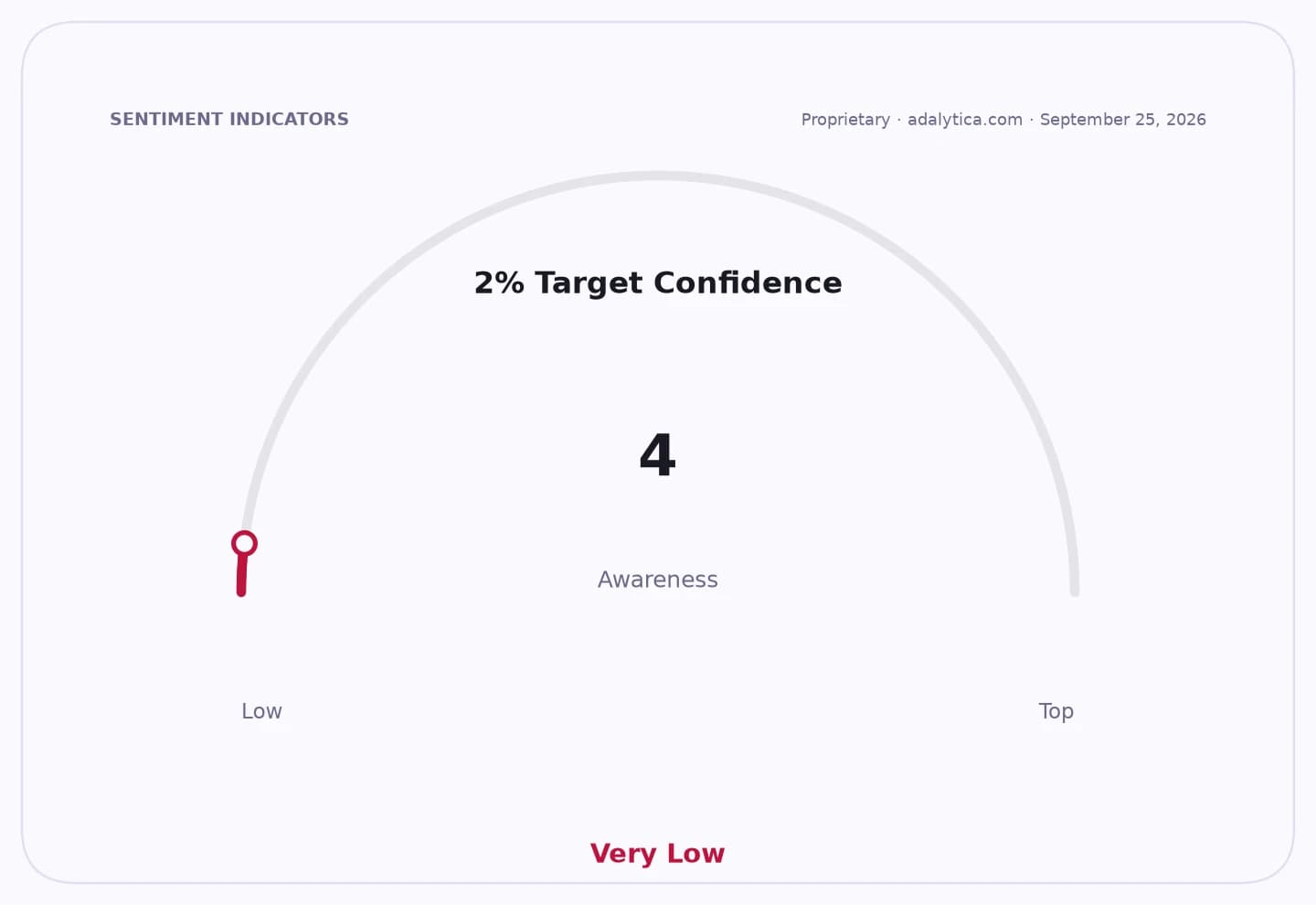
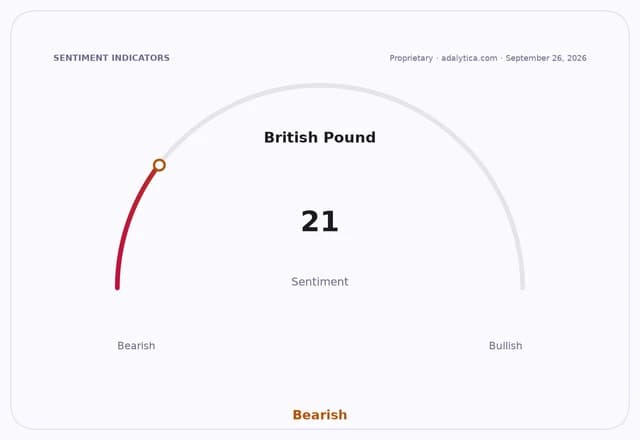
Sentiment IndicatorsⓘProprietary · adalytica.com · September 26, 2026
This is a snapshot — live sentiment, awareness and momentum for 130+ markets update continuously in the dashboard.Open AlphaPulse

That combination matters for the UK economy because it suggests the BoE is still balancing upside inflation risks against signs that price pressure is easing underneath the surface. For sterling, that is a weaker signal than a clean hawkish pivot. A divided vote can support a currency if it foreshadows tighter policy, but here the dissent was not enough to change the broader stance. Rabobank argued the committee was “content to keep waiting,” and that the guidance was “slightly less hawkish” than the vote implied.
The price action showed how fast that distinction fed through to markets. Sterling initially rose on the surprise split, then reversed as investors concluded that the dissent was not a firm commitment to higher rates. GBP/USD was still only about 0.2% firmer at around 1.3394 in the immediate aftermath, helped by post-Fed dollar weakness, while GBP/EUR edged lower. Later, the currency weakened across tracked crosses as the market treated the vote as noise and the guidance as the real policy signal.
That matters to investors because it narrows the case for an imminent BoE hike even as it limits the odds of aggressive easing. Rabobank said September looks unlikely for a move and sees little in the communication to justify pricing much chance of one at that meeting, despite the market assigning roughly a 43% probability. November is more plausible, but not Rabobank’s base case. Its central forecast is for rates to stay at 3.75% through end-2027, underscoring that sterling may have support from a reluctance to cut, but not enough to sustain a strong repricing higher.
The broader macro narrative is that sterling is trapped between two forces: a central bank that still fears inflation spillovers, and a committee that wants more proof before acting. That leaves the pound vulnerable whenever the market decides the BoE is talking tough but not yet ready to deliver. For now, the vote gave sterling a brief lift; the guidance took it away.
| Entity | Gains | Losses |
|---|---|---|
| BoE hawks | ▲Policy credibility | ▼Immediate market traction |
| Pound bulls | ▲Support from no-cut bias | ▼Hike hopes fading |
| Dollar | ▲Relative strength on reversals | ▼Post-Fed weakness |
| UK borrowers | ▲Short-term rate stability | ▼No relief from high rates |