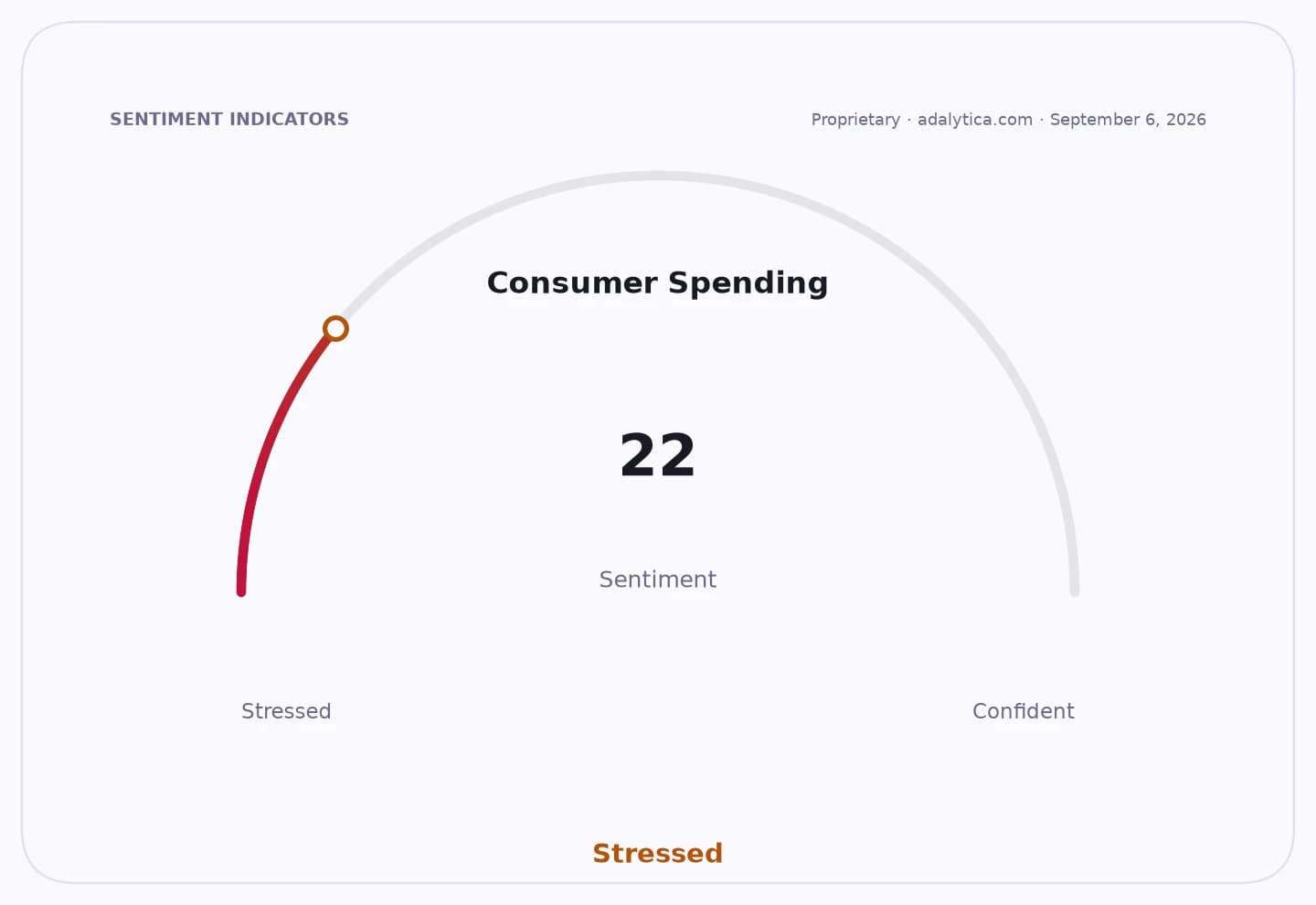
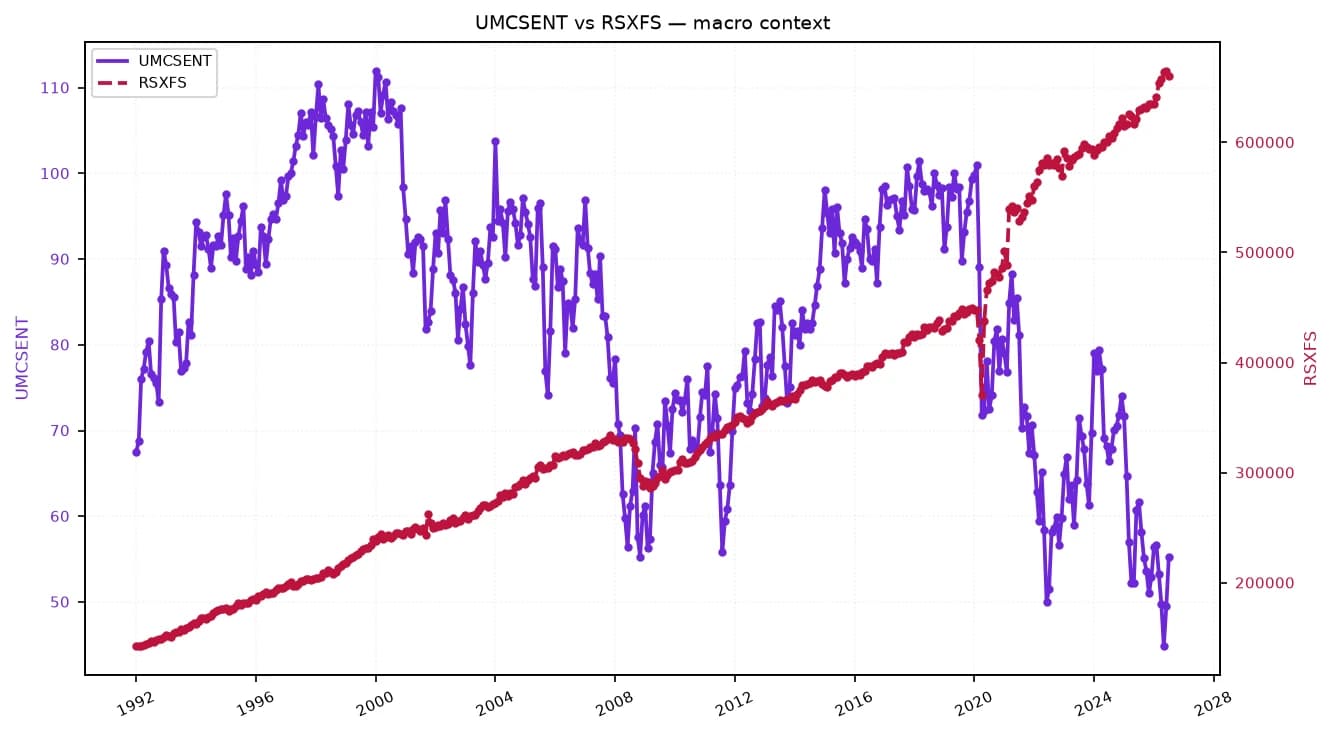
Poundland’s widening loss and looming sale underline how brutally the discount retail model is being squeezed by weak consumer demand, rising costs and fierce price competition.
Poundland sale follows widening loss
The UK chain, long seen as a bellwether for budget-conscious shoppers, is still attracting customers hunting for bargains, but the economics of doing so have deteriorated sharply. A business that once thrived on simple value positioning is now struggling to turn footfall into profit, and the doubling of losses suggests the gap between revenue and operating costs has become harder to close.
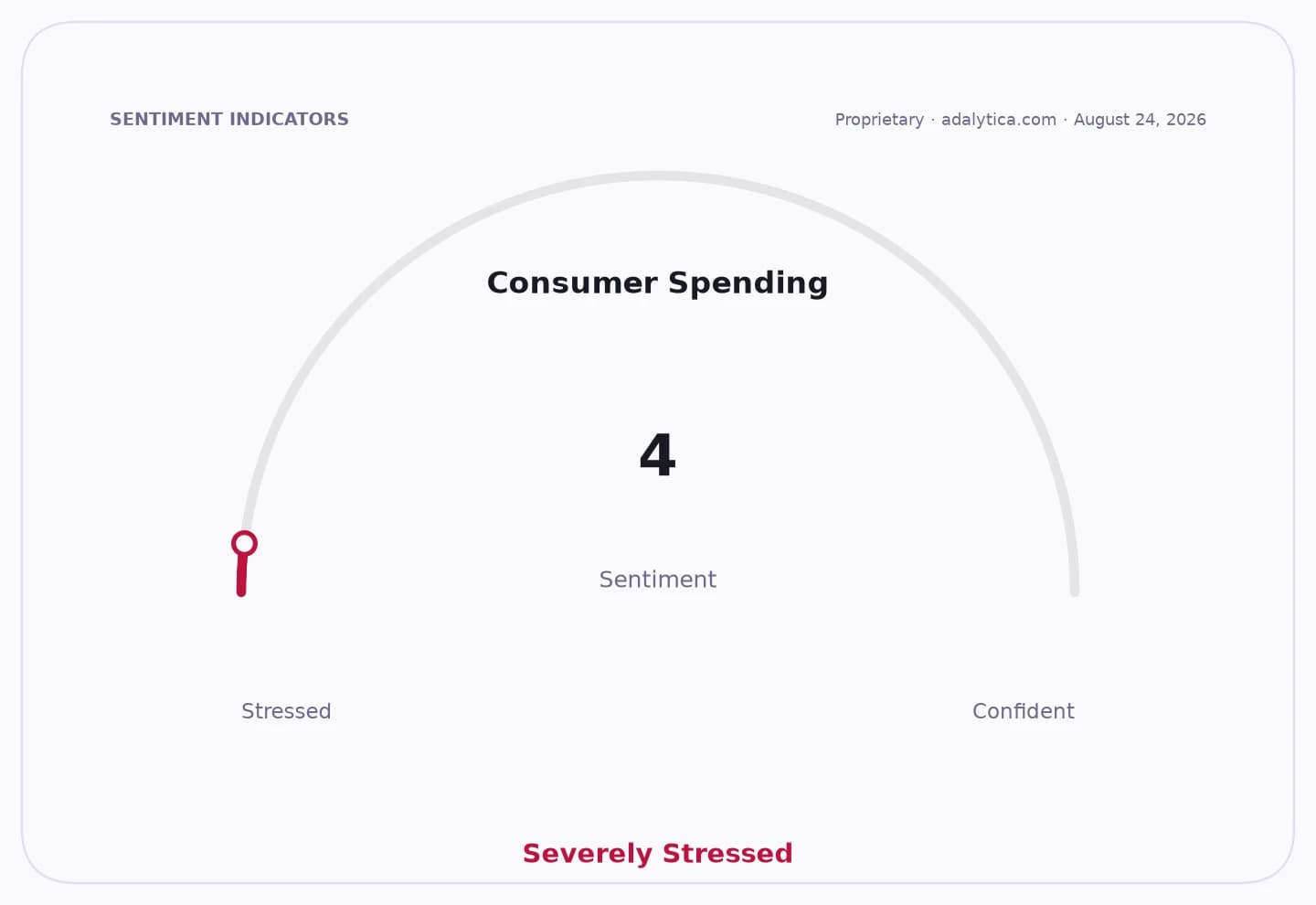
Sentiment IndicatorsⓘProprietary · adalytica.com · August 24, 2026
This is a snapshot — live sentiment, awareness and momentum for 130+ markets update continuously in the dashboard.Open AlphaPulse
That matters beyond one retailer. Value chains often benefit when households are under pressure, but the current environment is more complicated: shoppers are trading down, yet they are also more selective, more promotional and increasingly able to compare prices online. For operators like Poundland, that means higher volumes do not automatically translate into stronger margins. It also leaves fewer levers for a seller trying to secure an acceptable price in a transaction market that has grown more cautious about distressed retail assets.
The sale process comes at a time when the broader discount sector remains active, but not uniformly healthy. Legacy operators with heavy store estates and thin margins are being forced to shut sites, cut jobs and rethink formats. Investors will read Poundland’s loss doubling as a warning that scale alone is not enough if a retailer lacks pricing power, supply-chain efficiency and a differentiated proposition. Buyers, meanwhile, may see an opportunity to pick up a recognizable brand at a discount, but only if they believe they can rationalize the store base and improve operating discipline quickly.
For listed peers and landlords, the message is mixed. A weaker Poundland can intensify competition for every bargain-seeking shopper, pressuring other value chains to hold prices down. But it can also reinforce the case that the most efficient operators will gain share as weaker rivals retreat. The key question now is whether any buyer can impose enough strategic change to restore profitability without damaging the very low-price appeal that makes the business relevant in the first place.
| Entity | Gains | Losses |
|---|---|---|
| Potential buyer | ▲Turnaround opportunity | ▼Integration risk |
| Poundland | ▲Sale proceeds | ▼Earnings pressure |
| Rival discount chains | ▲Possible share gains | ▼Tougher price competition |
| Landlords and employees | ▲Limited upside | ▼Store closures, job losses |