Gold and silver prices fell again on July 29, with silver dropping by about Rs. 5,000 and rates in Hyderabad and Vijayawada now matching, a sign that the recent fever in precious metals is easing just as investors reassess how much fear is still priced into the market.
Precious Metals Cool After Sharp Rally
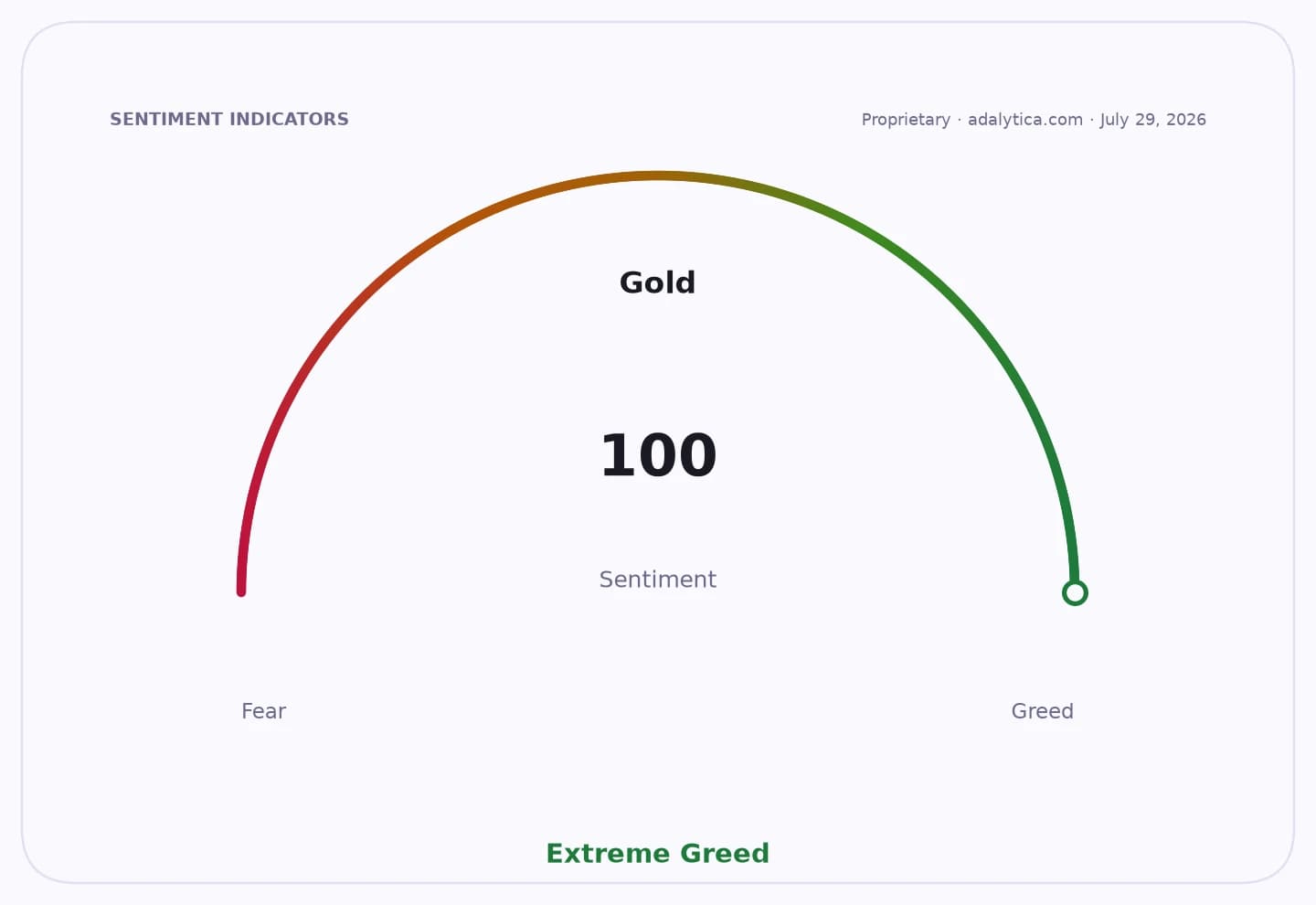
That matters because gold and silver have not been moving in a vacuum. They are tied to expectations for inflation, interest rates and risk appetite, and when those forces shift, the price of bullion can move fast. Gold is still close to elevated levels, but the latest pullback suggests the market may be stepping back from an “extreme greed” phase in the gold trade, according to Adalytica’s Gold Fear & Greed Index, even as the broader mood remains constructive. For long-term investors, that is a reminder that even strong secular themes do not rise in a straight line.
The pressure is showing up in market data. Gold-backed GLD slipped to $369.37 on July 28, below both its 50-day moving average and its 200-day moving average, while silver ETF SLV fell to $51.70 and remained under its 50-day average as well. The mining shares proxy, GDX, also eased to $74.21. These are the kinds of moves that tell you the easy part of a rally may be over for now. Technically, gold and silver are no longer overextended the way they were during the earlier surge, and that often brings a cooling-off period rather than a collapse.
For investors, the bigger takeaway is not whether gold or silver wobble on a given day, but what is driving demand over years. Precious metals still appeal as portfolio insurance when uncertainty rises, and that role does not disappear because prices slip for a few sessions. But when rates stay firm and the market grows more comfortable with risk, the urgency to own bullion tends to fade. The recent drop in prices, plus the flattening of local rates across major Indian cities, suggests buyers may finally be seeing a more balanced market after a sharp run-up.
That does not make precious metals unimportant. It makes them more usable. Gold can still serve as a diversifier, and silver retains industrial demand tied to manufacturing and clean-energy uses. But investors should be wary of chasing momentum after a powerful advance. A better approach is to treat gold and silver as part of a diversified portfolio rather than a bet on ever-higher prices. For most long-term investors, that means keeping position sizes sensible, staying patient and thinking in years, not days.
If this pullback continues, it could give disciplined buyers a better entry point. For now, the message from the market is simple: precious metals remain important, but the rally has become less one-sided, and that is exactly the kind of pause long-term investors can use to their advantage.
| Entity | Gains | Losses |
|---|---|---|
| Long-term buyers | ▲Better entry points | ▼Missed momentum gains |
| Recent bullion speculators | ▲Profit-taking opportunity | ▼Near-term price pressure |
| Jewelry buyers in India | ▲Slightly softer prices | ▼Less urgency to buy |
| Gold and silver miners | ▲Stable strategic demand | ▼Weaker spot prices |