Publishers are heading into the most important distribution reset since the move from print to digital, and the danger is that AI platforms could turn premium journalism into bargain-bin inventory.
Publishers Negotiate AI Licensing Deals
That is the core message from media operators now negotiating with AI companies: the money is real, but the pricing power is not. Steve Marcinuk, co-founder and chief executive of KeyCrew, said many publishers are already seeing offers “fractions of a penny” per use — a reminder that if the terms are loose, AI can accelerate the same revenue erosion that gutted print advertising years ago.
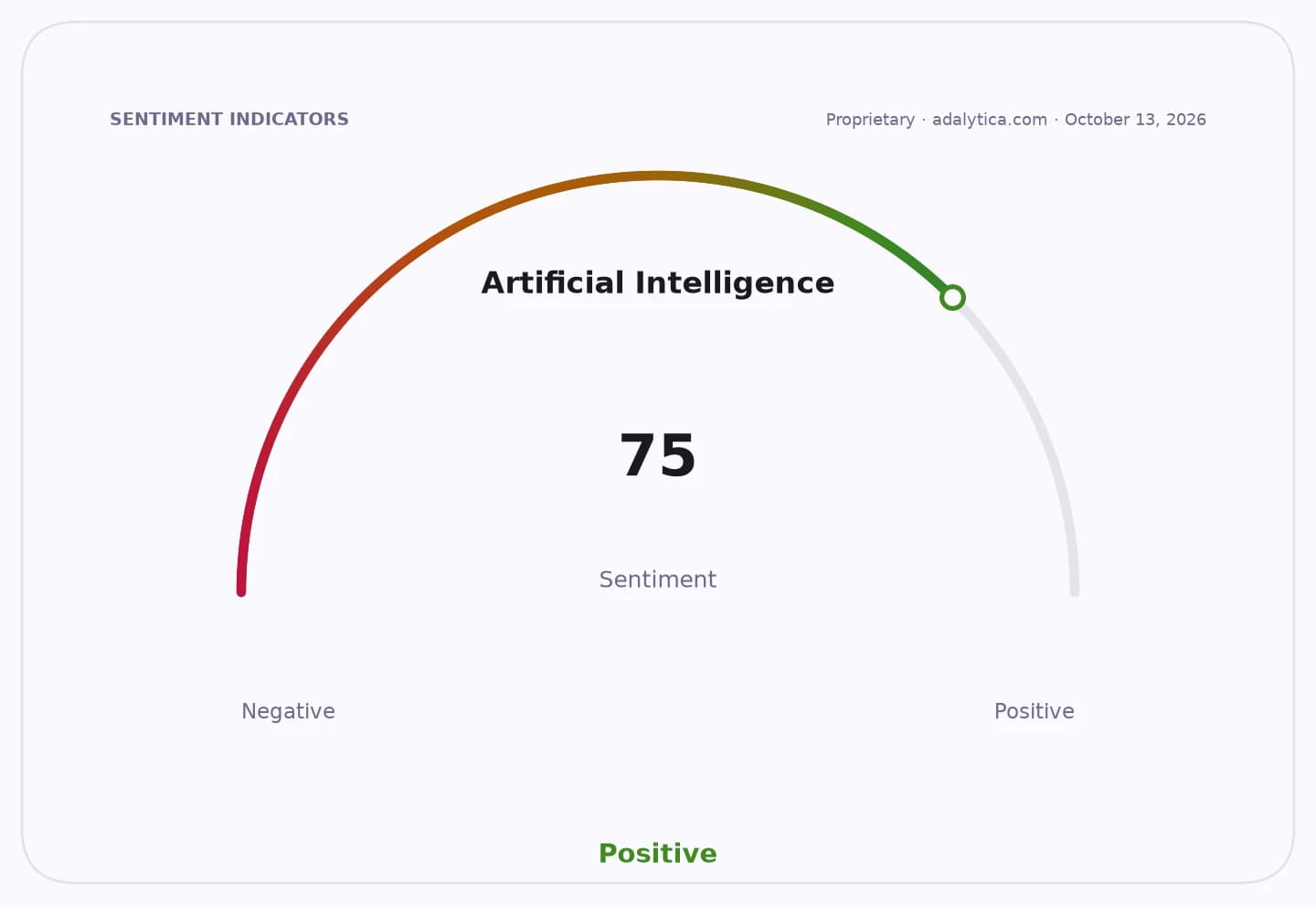
Sentiment IndicatorsⓘProprietary · adalytica.com · October 13, 2026
This is a snapshot — live sentiment, awareness and momentum for 130+ markets update continuously in the dashboard.Open AlphaPulse
For investors, the stakes go beyond the media industry’s bruised margins. Whoever controls the doorway to content in AI answers, assistants and agents will control the economics of distribution. That creates a classic toll-road opportunity for publishers that can protect, price and package their work intelligently — and a trap for those that treat licensing as an easy monetization check.
The shift matters because websites are no longer the only place readers consume information. As users increasingly ask ChatGPT, Claude and similar tools for answers, the article itself becomes just one layer in a larger machine-readable supply chain. If publishers cannot see who is using their content, cannot limit access and cannot prove the value of each license, they risk giving away their intellectual property before a real market price forms.
KeyCrew’s playbook points to where the industry may be headed. Rather than block AI outright, it treats AI as another distribution channel, but with controls. The company is leaning on Model Context Protocols, or MCPs, which can function like a more granular API, allowing publishers to grant paid subscribers access inside AI platforms while deciding exactly what gets shown and to whom. That model is economically attractive because it preserves scarcity — the one thing content owners still own — while opening a new route to audience and revenue.
That is why the current negotiation phase matters so much to investors in publishing and adjacent information businesses. The market underestimates how quickly AI answer engines could compress referral traffic and weaken direct-to-site monetization, especially for news, research and niche expertise. But it also underestimates the upside for companies that become indispensable data suppliers with enforceable usage rights, subscription verification and pricing discipline.
The public-market read-through is mixed. New York Times Co. has already signaled how seriously publishers are taking AI risk, including litigation against Perplexity. Its shares have been volatile, with the stock closing at $67.62 on Oct. 13, below its 200-day moving average of $73.02 even after a sharp bounce from early August lows. News Corp, parent of Dow Jones and The Wall Street Journal, has also been pressing the case for stronger content protection and monetization, with the stock at $29.59, just above its 200-day moving average of $26.56. Alphabet, meanwhile, remains the most important gatekeeper because it sits on both sides of the trade — as an AI platform developer and a distribution behemoth — and its shares finished at $356.33, near the top of their recent range.
The real catalyst now is bargaining power. Publishers that know where their content is being scraped, can quantify its value versus current revenue, and can route access through controlled systems like MCPs will be in position to extract recurring fees instead of one-time crumbs. Those that rush into broad, open-ended deals could lock in underpriced economics just as AI becomes the default interface for information.
My view is simple: the winners in AI content licensing will not be the publishers that say yes fastest, but the ones that say yes with leverage. The trade is to favor content owners with scarce brands, legal discipline and distribution control, while staying wary of companies that are exposed to traffic loss but have no pricing power. This is one of those inflection points where patience, not enthusiasm, will define the best returns.
| Entity | Gains | Losses |
|---|---|---|
| Publishers with controlled licensing | ▲Recurring AI fees | ▼Traffic leakage |
| AI platforms | ▲Cheaper content access | ▼Higher license costs |
| New York Times Co. | ▲Legal leverage | ▼Referral dependence |
| Readers and subscribers | ▲Faster AI access | ▼Less free content |