Putin’s claim that Europe’s protests stem from “their own mistakes” is as much a geopolitical attack as it is an economic argument, aimed at exploiting weak growth, heavy sovereign debt and social strain across the bloc.
Putin Uses Europe Debt and Protests in Critique
The Russian president’s comments land at a sensitive moment for Europe, where fiscal credibility, migration politics and energy policy are already under pressure. He singled out Italy, saying its debt reached 139% of output, close to Eurostat’s latest 139.9% reading, and contrasted that with Russia’s far lower indebtedness. He also pointed to France, Belgium and Spain, where debt ratios remain above or near 100% of GDP, and cited budget deficits in France and Belgium of 5.1% and 5.2% respectively. The message is clear: Europe’s political unrest, in Moscow’s telling, is a symptom of fiscal overreach and policy failure rather than external interference.
Sentiment Indicators
That narrative matters economically because governments with high debt and persistent deficits have less room to absorb shocks from weak growth, higher borrowing costs or social unrest. It also matters because protests tied to migration, living standards and climate policy can harden opposition to unpopular reforms, making it harder for leaders to consolidate budgets or sustain energy-transition spending. Putin’s framing tries to turn Europe’s internal divisions into evidence of strategic decline.
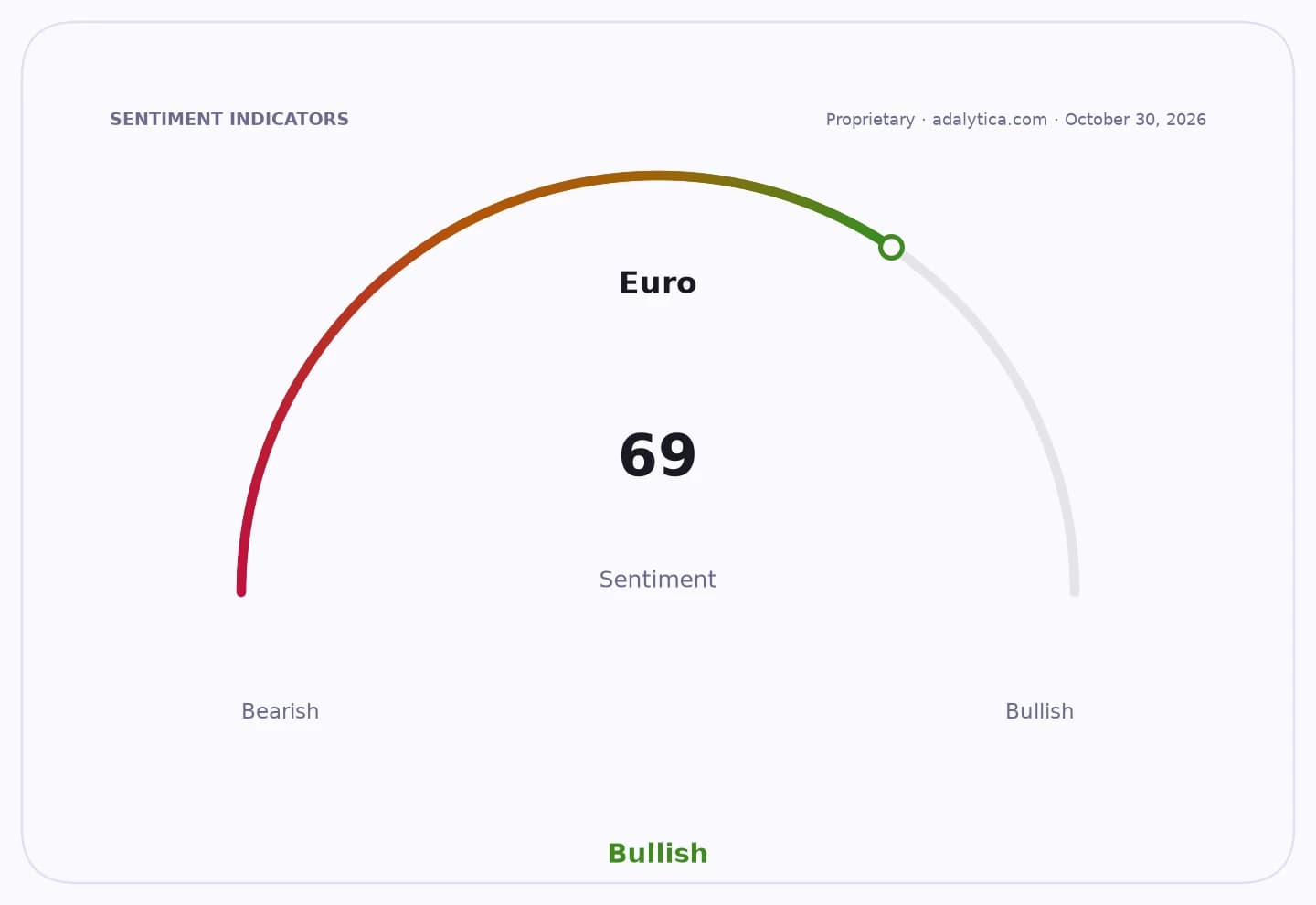
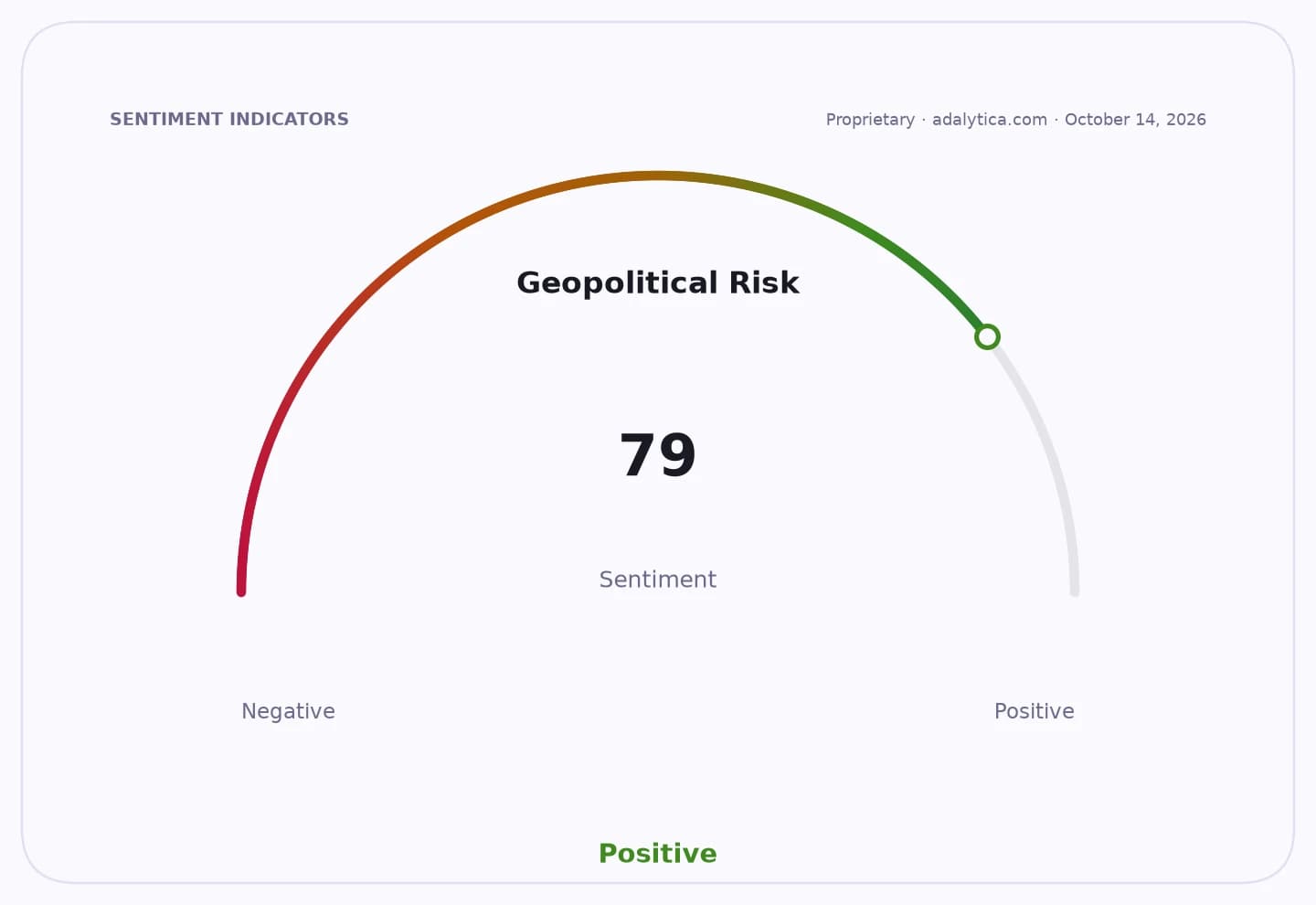
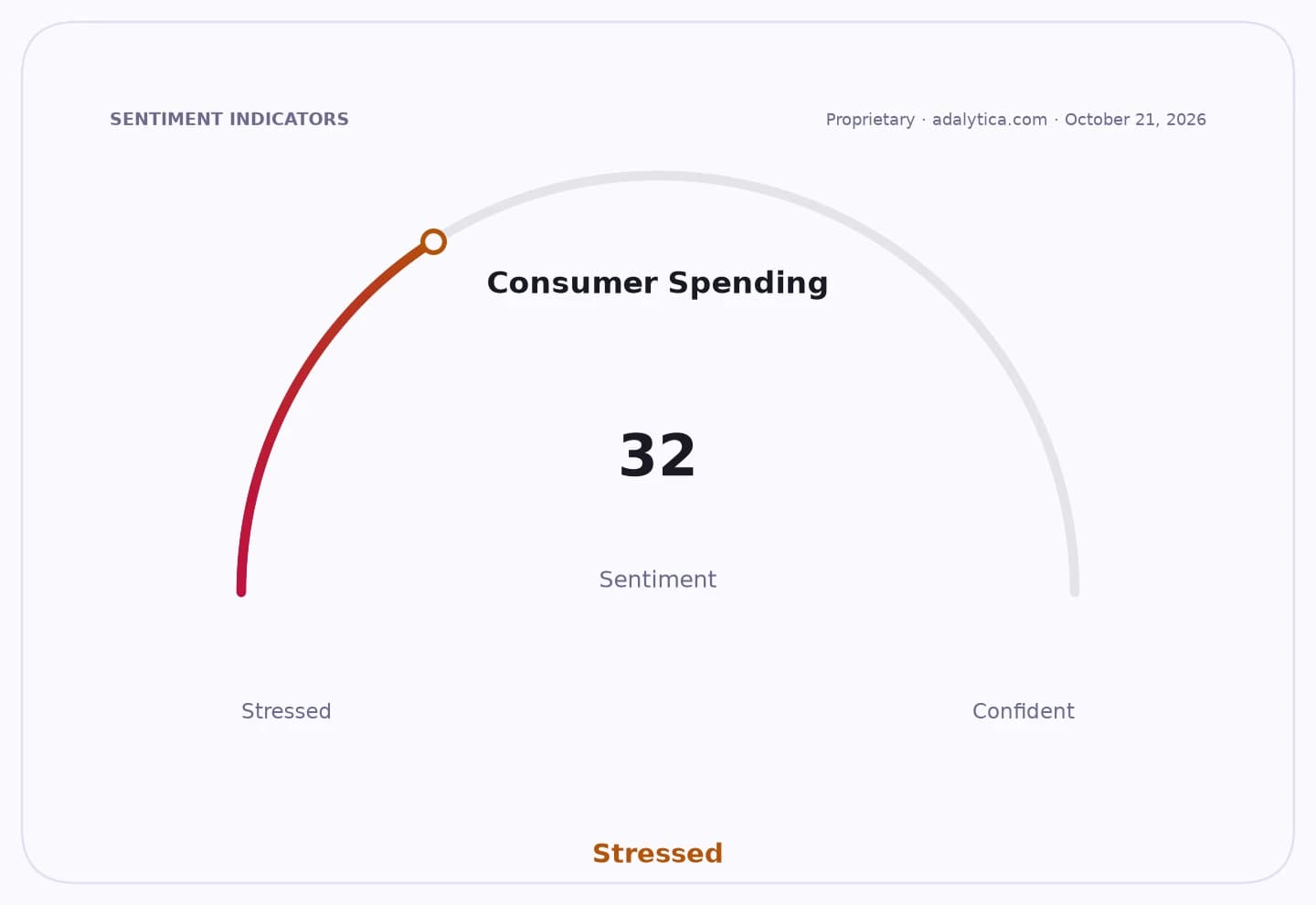
For investors, the immediate relevance is to European risk premia, the euro and sector rotation within the region. Persistent unrest can pressure consumer confidence, delay fiscal tightening and keep attention on sovereign spreads in the most indebted economies. Europe’s main equity benchmarks have been resilient, but the contrast between stronger risk appetite in markets and the fragility of the political backdrop is becoming harder to ignore. Adalytica’s Euro Trade Signals shows sentiment at 93, labeled “Extreme Greed,” while global stability sentiment is also elevated, suggesting investors are still underpricing the risk of political spillovers.
Euro — 30-day sentimentadalytica.com
Explore this data interactively — full history, time series and cross-market comparisons.
The energy dimension is equally important. Putin said Europe chose to cut itself off from Russian oil, gas, coal and uranium, even as Russian liquefied natural gas still accounts for about 20% of the European market. That keeps the energy question alive for utilities, industrials and policymakers, even as Europe tries to diversify supply and accelerate green investments. Moscow’s argument is designed to suggest that Europe’s energy transition is not only costly but politically destabilizing.
The broader trade-off for Europe is between fiscal discipline, social cohesion and strategic autonomy. If protests deepen, governments may be pushed toward looser spending, slower reforms or tougher policing — each with different implications for bond markets, the euro and domestic politics. For now, Putin is using Europe’s unrest to make a wider case that the bloc’s vulnerabilities are self-inflicted, even as markets remain more focused on growth and rate expectations than on the political costs of that imbalance.
| Entity | Gains | Losses |
|---|---|---|
| Russia | ▲Political messaging leverage | ▼Nothing immediate economically |
| European governments | ▲— | ▼Higher unrest, weaker policy room |
| Eurozone sovereign bonds | ▲Safe-haven demand if unrest spreads | ▼Wider risk premia in stressed states |
| European equities | ▲Select exporters if euro softens | ▼Domestically exposed sectors |