Australia’s latest rate increase is landing on far larger mortgage balances than it did a decade ago, making the Reserve Bank’s anti-inflation campaign far more painful for households and more dangerous for the economy.
RBA Rate Hike Hits Larger Mortgages
The Reserve Bank of Australia lifted the cash rate by 25 basis points to 4.60%, its highest level since 2011, and signaled it remains prepared to do more if inflation stays stubborn. On the surface, the move is another incremental tightening step. In practice, it carries outsized consequences because the average new owner-occupier mortgage has roughly doubled since the last time rates were at these levels, while wages have not kept pace.
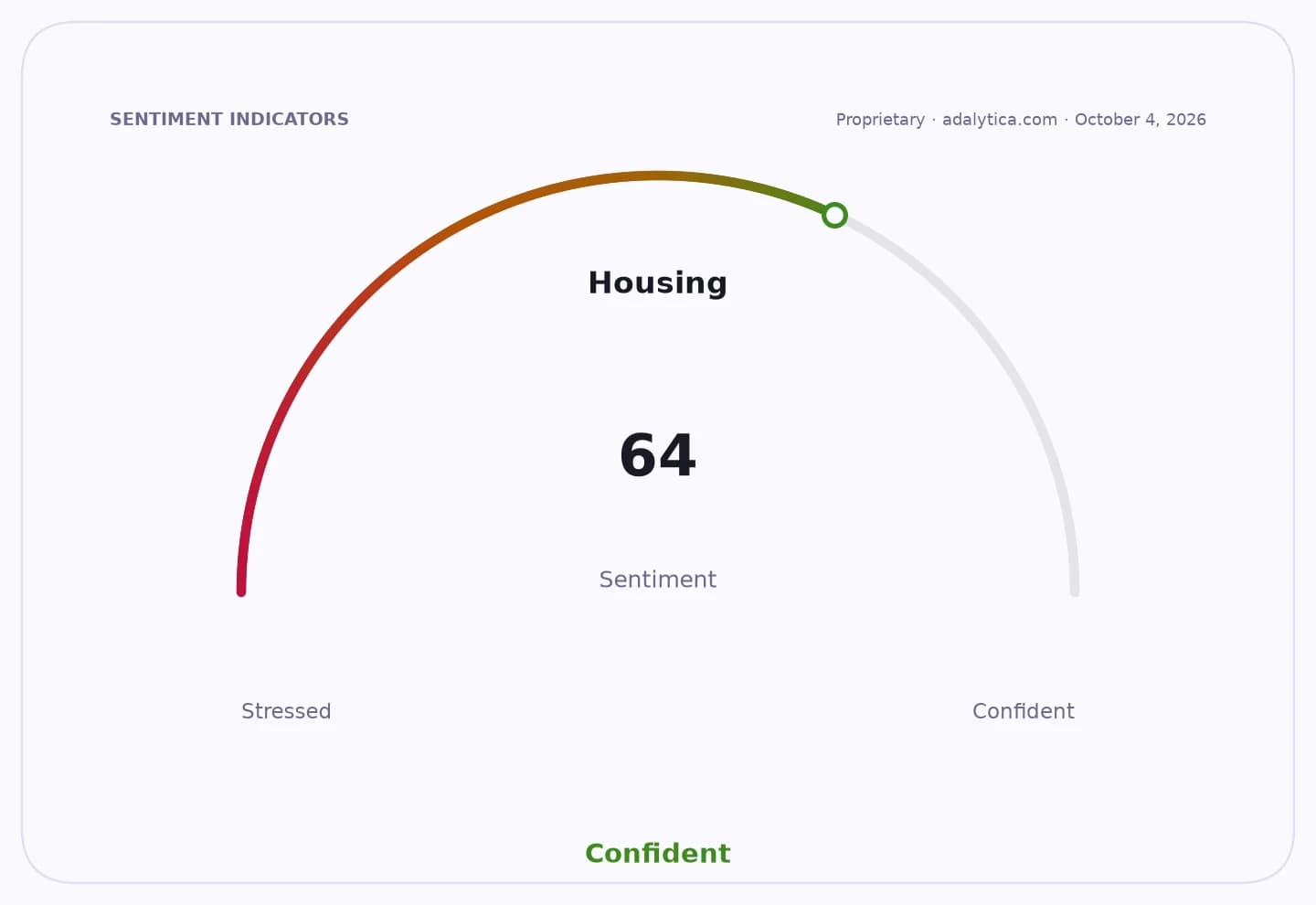
Sentiment IndicatorsⓘProprietary · adalytica.com · October 9, 2026
This is a snapshot — live sentiment, awareness and momentum for 130+ markets update continuously in the dashboard.Open AlphaPulse
That shift matters economically because the same policy move now extracts much more cash from household budgets than it did in the past. A further quarter-point increase would add about A$125 a month, or A$1,500 a year, to repayments on a A$750,000 mortgage if fully passed through. For a borrower already managing a larger loan and higher living costs, that is not a marginal adjustment — it is a direct squeeze on disposable income, consumption and savings.
The RBA is trying to reassert control over inflation, which rose to 4% in August, up from 3.5% in July, while trimmed mean inflation remained at 3.6%, still above target. But the central bank is also confronting a weak transmission environment: rate rises bite faster and harder in a mortgage market dominated by variable loans, and about 35% of Australian households carry a mortgage. That makes housing finance the main channel through which monetary policy slows demand.
The problem for policymakers is that inflation pressures are not purely domestic. Higher energy and fuel costs linked to the Middle East conflict, supply-chain disruptions, rising labour expenses and stubborn housing shortages are all keeping price growth elevated. The RBA has also warned that public spending has supported demand, complicating the inflation fight. That leaves the bank with a blunt instrument — higher rates — being used against a mix of supply-side and demand-side pressures.
For investors, the implications are broader than housing. More rate increases raise the risk of a sharper consumer slowdown, weaker retail spending and slower business investment as borrowing costs climb. That is negative for domestic cyclicals, construction-related names and banks exposed to mortgage stress, even if lenders continue to benefit from wider net interest margins. The longer rates stay restrictive, the greater the risk that households cut spending more sharply than markets expect.
The market is now focused on whether the RBA has done enough or whether another move in November is still coming. Bulls on the economy will argue that unemployment remains resilient and that the system can absorb one more hike. Bears will point to the growing drag from debt service, the slowing domestic economy and the fact that each additional rate rise now lands on a much larger mortgage base than in prior cycles.
For mortgage holders, the message is simple: the inflation fight is still being paid for in monthly repayments, and the cost of that fight is rising. If inflation does not ease soon, the RBA may have to choose between restoring price stability and imposing yet more strain on households already carrying record debt.
| Entity | Gains | Losses |
|---|---|---|
| RBA | ▲Inflation credibility | ▼Household demand |
| Mortgage holders | ▲— | ▼Higher repayments |
| Banks | ▲Wider lending margins | ▼Loan stress risk |
| Retailers & cyclicals | ▲— | ▼Weaker consumer spending |