Royal Bank of Canada is gaining share in one of Canada’s most competitive businesses, and that matters because mortgage growth is the cleanest proof yet that the country’s largest lender can still expand in a slower housing market without blowing up credit quality.
RBC Mortgage Balances Rise 5% in Q3

Residential mortgage balances rose 1.8% from the previous quarter and 5% from a year earlier to $439 billion in the third quarter, the fastest pace since RBC bought HSBC Canada. Including home equity lines of credit, the bank’s Canadian real estate secured lending portfolio climbed to $479 billion from $456 billion a year earlier. Chief Executive Dave McKay said stronger retention and more borrowers switching to RBC drove the acceleration, underscoring that the bank is still taking share even as mortgage competition stays intense.
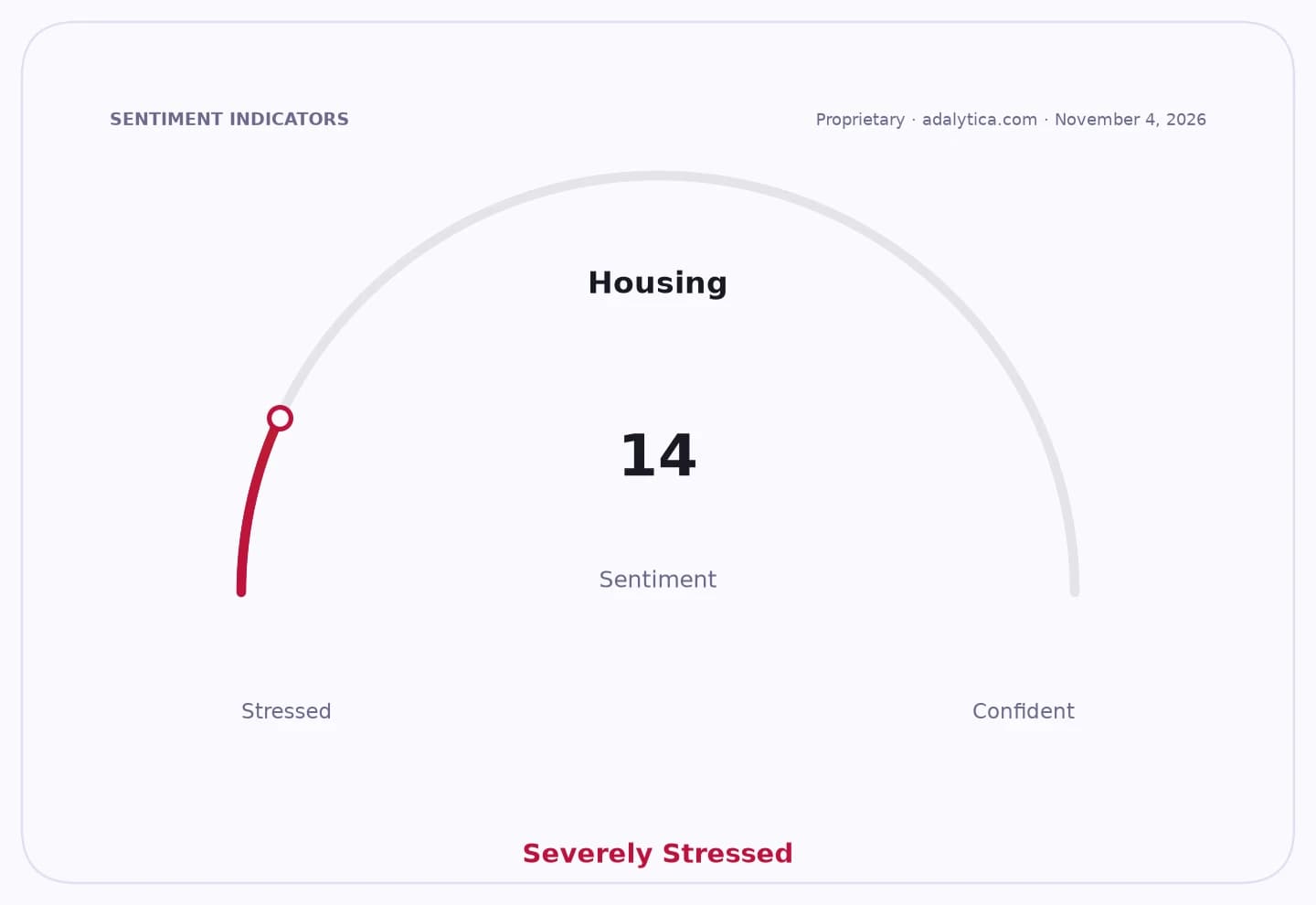
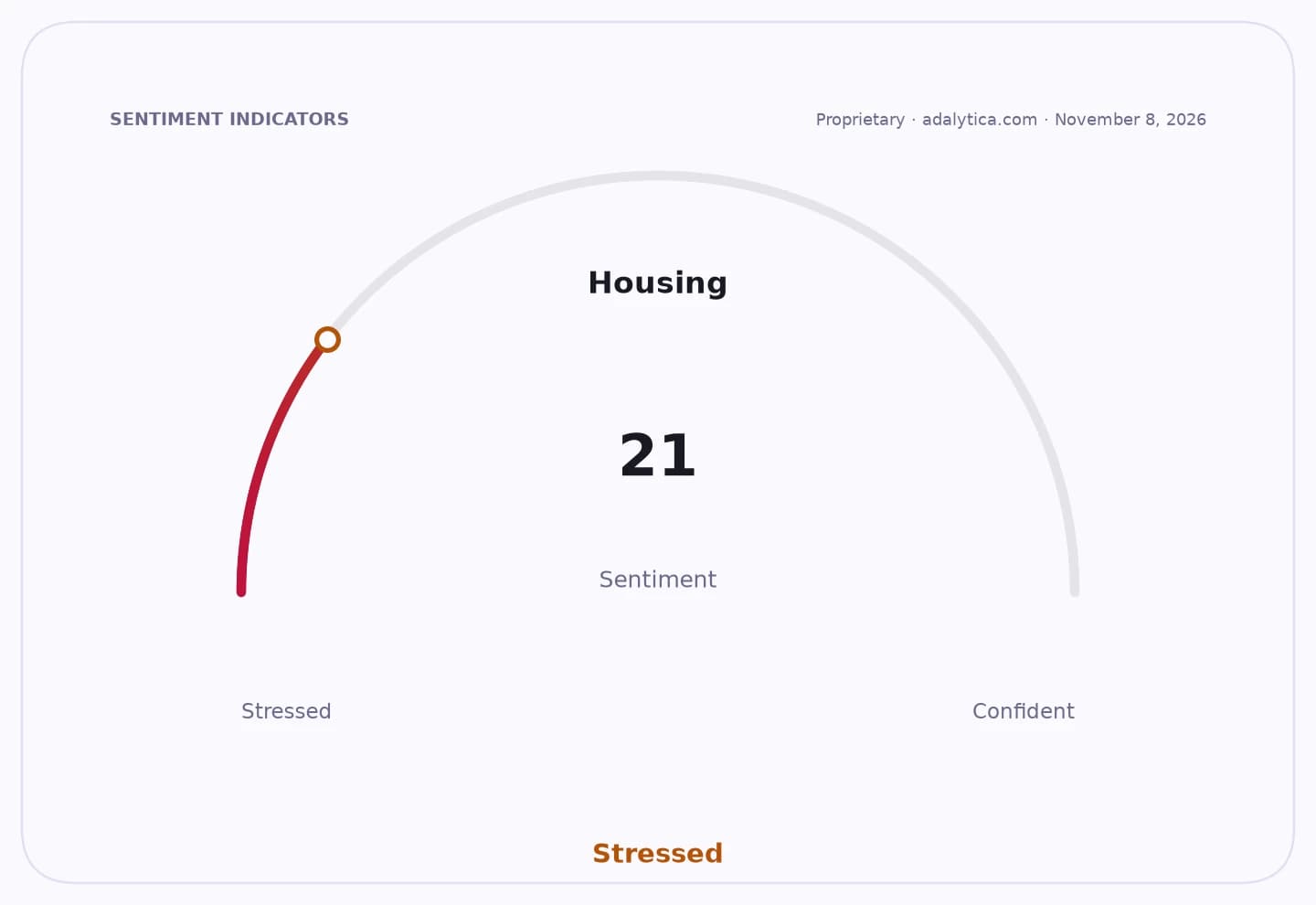
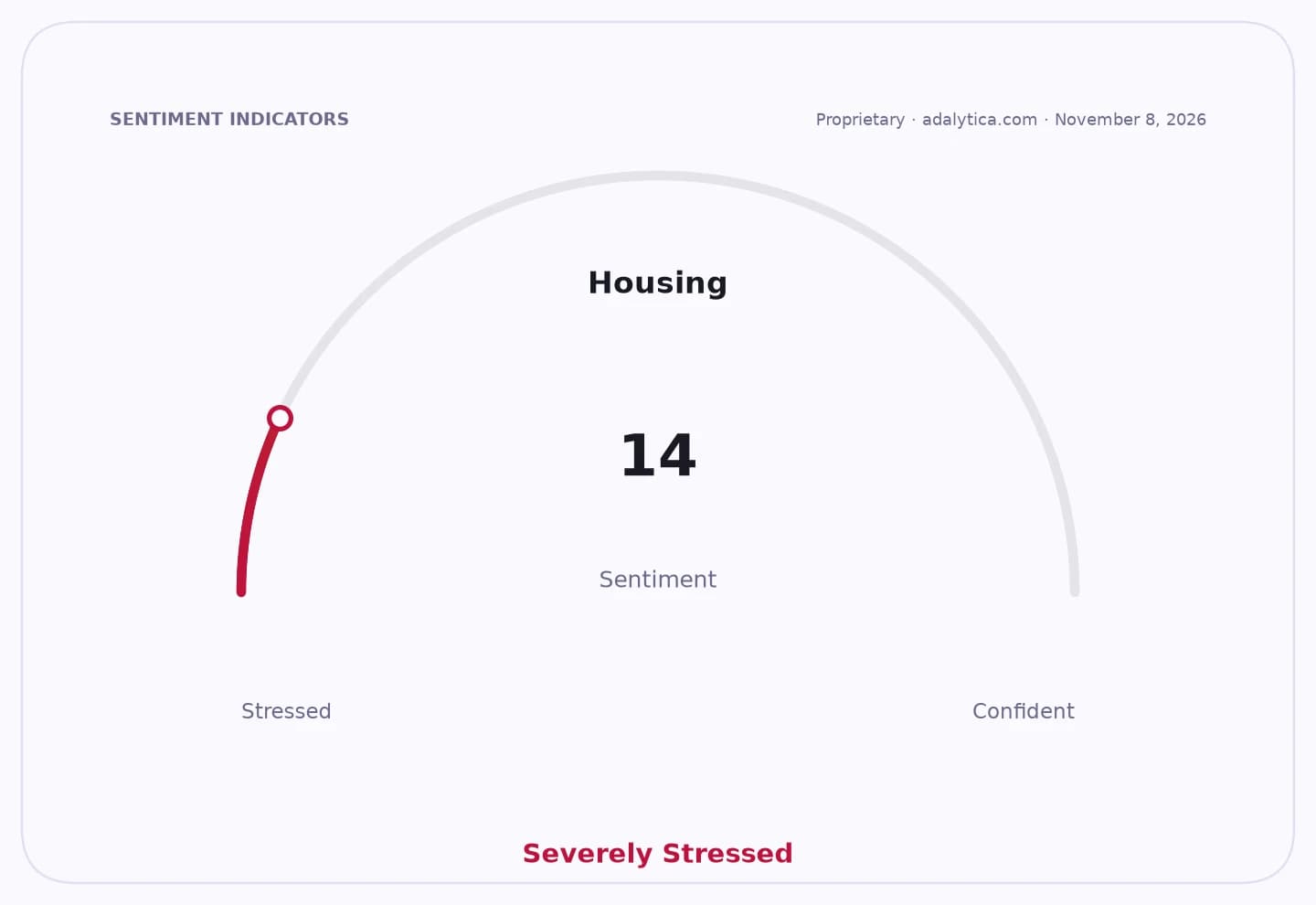
Sentiment Indicators
That growth is economically important because Canadian banks are entering a phase where volume matters more than pricing power. RBC’s Canadian banking net interest margin was 2.96%, up from a year earlier but down from the prior quarter, while management said it expects margins to stay relatively stable as structural tailwinds are offset by pressure on mortgages and term deposits. In other words, RBC is winning more business, but not without paying up for it.
For investors, the key question is whether this is the start of a durable share-gain cycle or just a temporary burst from integration after HSBC Canada. The answer is likely somewhere in between, but the market should not dismiss the franchise value here. RBC is showing it can keep growing in a mature, highly penetrated market while still producing adjusted net income of $6.10 billion, up 10%, and lifting its common equity tier 1 ratio to 13.5%. That combination of scale, capital and cross-selling power is exactly what long-term bank investors pay for.
There are caveats. Credit metrics weakened from a year earlier, with the calculated loan-to-value ratio rising to 56% from 52% and the share of the portfolio with an LTV above 80% increasing to 14% from 8%. Mortgages at least 90 days past due rose to 41 basis points from 31 basis points, with greater pressure in the Greater Toronto Area and Greater Vancouver. But RBC said retail credit conditions have recently stabilized, borrower credit scores remained high at 820, and provisions, while higher, are still manageable at a bank of this size.
The bigger narrative is that Canada’s mortgage market is not frozen; it is being reshuffled. RBC’s growth suggests borrowers are still shopping for rate, service and convenience, and that the winners in a tighter credit environment are the banks with the strongest deposit bases, the best retention and the most room to cross-sell. If housing activity firms and rates continue to ease, that could extend the runway. If competition stays ferocious, RBC still looks better positioned than most to defend share and earnings.
| Entity | Gains | Losses |
|---|---|---|
| RBC | ▲Mortgage share gains | ▼Margin compression |
| Borrowers switching lenders | ▲Better offers, service | ▼Higher renewal pressure |
| Rival Canadian banks | ▲— | ▼Lost mortgage share |
| RBC shareholders | ▲Scale-driven earnings growth | ▼Rising credit risk |