The Reserve Bank of India’s early redemption price for Sovereign Gold Bond 2020-21 Series VI has turned a Rs.1 lakh investment into about Rs.3.04 lakh, underscoring how strongly the sovereign-backed instrument has tracked the bullion rally and why it remains one of the most lucrative retail gold bets in India.
RBI sets SGB 2020-21 Series VI redemption at Rs.15,384
The central bank fixed the redemption value at Rs.15,384 per gram for redemption from Sept. 8, 2026, based on the simple average of 999-purity gold closing prices over the three business days before the date. That compares with the issue price of Rs.5,067 a gram for online buyers, or Rs.5,117 for investors who bought offline, implying a capital gain of roughly 203.6%, before adding the 2.5% annual coupon.
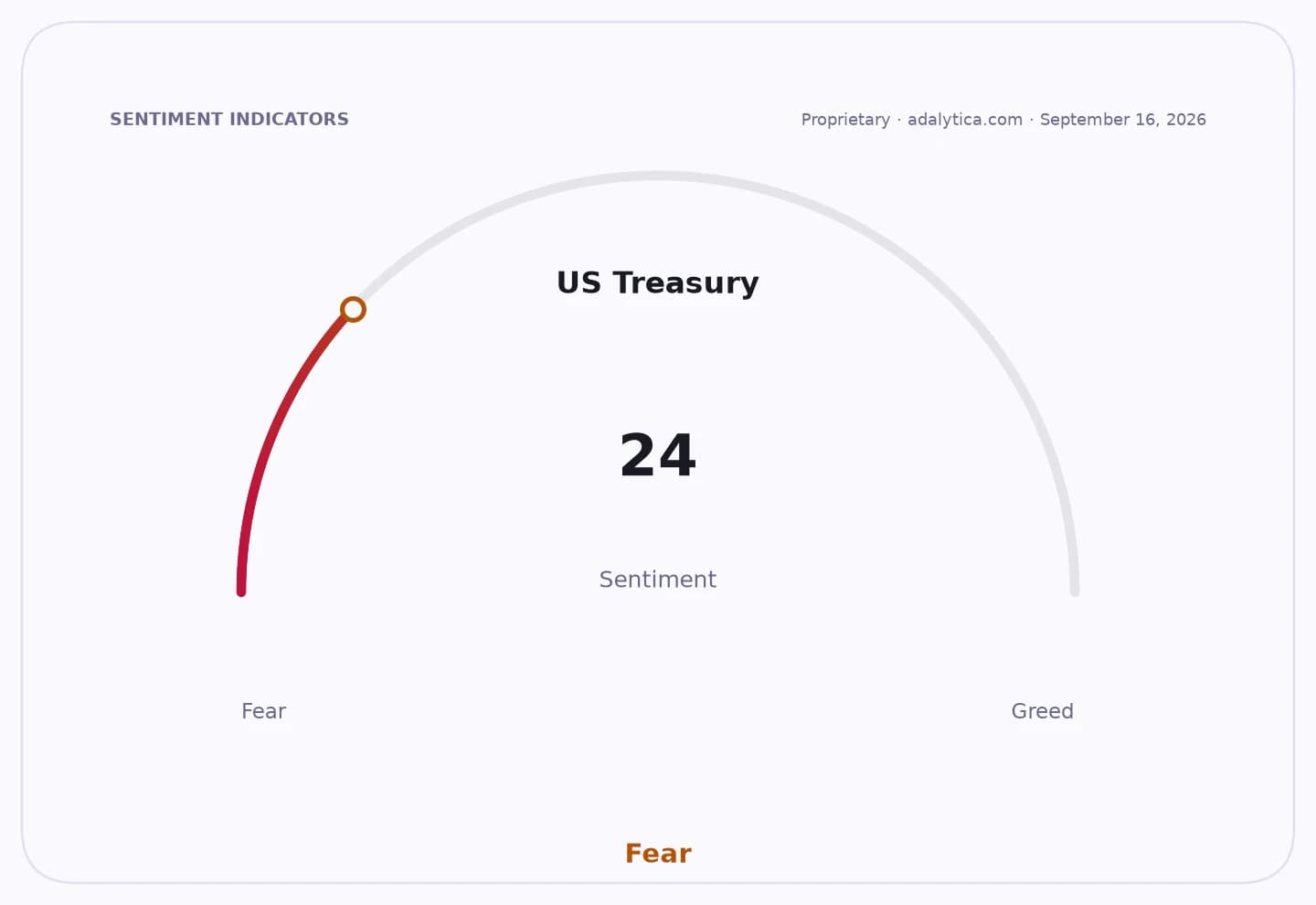
Sentiment IndicatorsⓘProprietary · adalytica.com · September 7, 2026
This is a snapshot — live sentiment, awareness and momentum for 130+ markets update continuously in the dashboard.Open AlphaPulse
For a retail investor, the math is straightforward: a Rs.1 lakh allocation at issuance would now be worth roughly Rs.3.04 lakh at early redemption, excluding interest payments received over the holding period. The payout reflects not only the rise in domestic gold prices but also the design of the sovereign gold bond programme, which linked returns to bullion without requiring investors to hold physical metal.
The timing matters because gold has been back in demand globally as US Treasury yields eased and the dollar weakened, helping prices rebound above $4,400 an ounce after a recent pullback. In India, where sovereign gold bonds were pitched as a cheaper and cleaner alternative to jewellery or bars, the redemption price reinforces the product’s appeal as both a wealth-preservation tool and a hedge against currency and market stress.
But the gains come with a caveat for investors weighing redemption or future issues: tax treatment has changed. From April 1, the capital-gains exemption at maturity applies only to bonds bought in the primary issue and held to maturity. Investors who redeem early, even if they bought in the initial issue, may face tax, while those who bought SGBs in the secondary market no longer get tax-free redemption at maturity.
That policy shift changes the investment case. The bull argument for SGBs remains intact for long-term primary subscribers: they still get gold-linked upside, sovereign credit backing and periodic interest. The bear case is that the product is less attractive for short-term traders and secondary-market buyers, especially now that the tax shield is narrower and India’s gold-linked investments are competing with a backdrop of higher global volatility.
For investors, the key takeaway is that this redemption is a reminder of how powerful the combination of gold price appreciation and a fixed issue price can be. For policymakers, it also highlights the cost of a popular scheme that delivered outsized returns in a strong bullion cycle while forcing a sharper distinction between long-term household savings and opportunistic gold trading.
What comes next will depend on gold’s path, which remains tied to US rate expectations, the dollar and geopolitical risk. If bullion stays firm, earlier SGB tranches will keep paying out well; if prices cool, future redemptions will look less dramatic. Either way, the latest RBI fix confirms that for investors who entered the scheme early, sovereign gold bonds have done exactly what they were designed to do.
| Entity | Gains | Losses |
|---|---|---|
| SGB 2020-21 Series VI holders | ▲204% capital gain | ▼Lower future upside from fresh issues |
| Primary issue investors | ▲Tax-free maturity benefit, coupon income | ▼Tax risk if redeemed early |
| Secondary-market buyers | ▲Underlying gold exposure | ▼No tax-free redemption benefit |
| RBI / government | ▲Strong proof of product success | ▼Higher redemption payout obligation |