Rice prices are rising across Asia as weather-driven supply concerns and steady overseas demand tighten a market that had already been under pressure from falling exports and limited domestic availability.
Rice Prices Rise Across Asia on Supply Concerns

The clearest signal is coming from India, where exporters say domestic supplies are constrained and crop output has been hurt by lower-than-normal rainfall in several states. That is pushing export offers higher just as buyers in the region look to secure coverage ahead of year-end, amplifying the effect of El Niño-related weather risks on a staple food that remains politically sensitive across Asia.
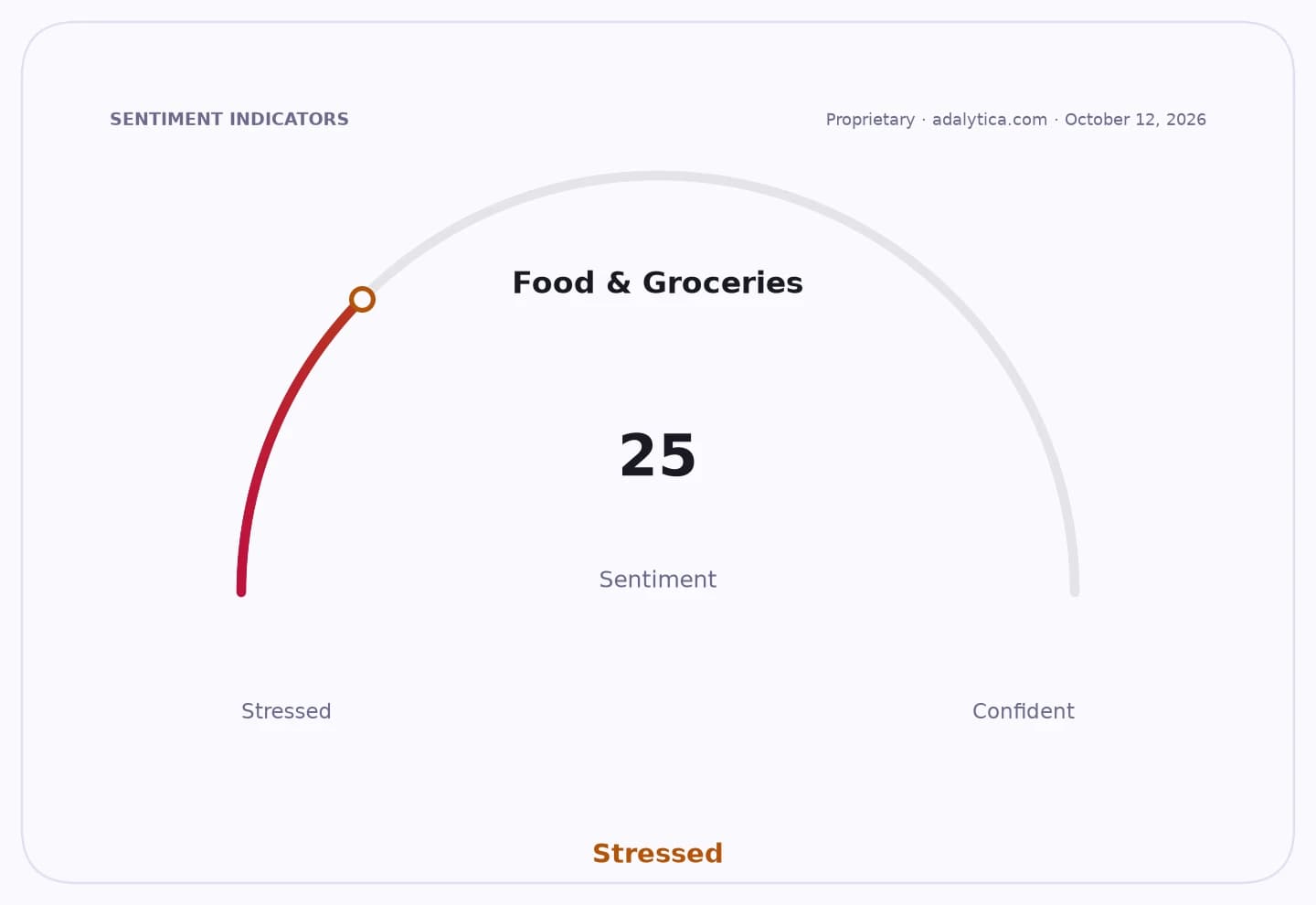
Sentiment IndicatorsⓘProprietary · adalytica.com · October 19, 2026
This is a snapshot — live sentiment, awareness and momentum for 130+ markets update continuously in the dashboard.Open AlphaPulse

In the international market, Vietnamese 5% broken rice has climbed to $440-$450 a tonne from $420-$430 a week earlier, the highest since Aug. 21, after expectations that the Philippines may resume purchases in November added support. Thai 5% broken rice has risen to $480 a tonne from $465-$468 last week, helped by vessel delays, extra buying and flood-related loading disruptions. Thailand’s exporters now see a risk it will miss its 7 million-tonne export target this year as competition from India and Pakistan weighs on demand.
Bangladesh is also seeing consumer prices edge higher, with fine rice rising to 74-75 taka a kilogram from 72 taka as fuel and paddy costs increase. For households already dealing with elevated living costs, the move adds another layer of inflationary pressure in a food category that tends to filter quickly into broader price expectations.
The macro significance is larger than the rice market alone. Rice is one of the most widely consumed grains in Asia, so even modest changes in export availability can spill over into food inflation, policy scrutiny and import demand. The context matters for central banks as well: food price shocks can complicate disinflation just as many economies are trying to preserve growth.
For investors, the trade is showing up in both physical markets and listed grain funds. The Teucrium Wheat ETF has fallen to $23.87 from a recent peak near $26, while its 50-day moving average remains above the latest close and RSI has softened to 32.4, suggesting momentum has cooled even as the broader grain backdrop stays firm. The Teucrium Agriculture Fund is holding around $28.18, with prices still above the 200-day moving average, indicating the broader ag complex remains supported. Adalytica’s CPI sentiment gauge is neutral but has fallen sharply over the past week, reflecting the risk that higher rice prices could feed back into inflation expectations.
The bull case is that supply constraints, weather disruptions and the return of regional import demand keep rice prices elevated into the next buying cycle. The bear case is that Indian exports, if they remain available in volume, can cap the rally and prevent a sharper shortage. Either way, the market is entering a phase where weather, policy and buyer behavior matter more than usual, and that makes rice one of the more important food price stories to watch in Asia over the coming months.
| Entity | Gains | Losses |
|---|---|---|
| Indian rice exporters | ▲Higher export prices | ▼Domestic supply tightness |
| Asian importers | ▲Secured supply early | ▼Higher procurement costs |
| Rice farmers | ▲Better farmgate prices | ▼Weather-related yield risk |
| Consumers in Bangladesh and Asia | ▲— | ▼Higher food inflation |