Wheat is turning into a scarcity trade again, and that is the real story behind the ₹26.5-a-kilogram quote for A-grade quality wheat in Ghazipur.
Wheat prices rise in Ghazipur on supply squeeze
What looks like a local price notice is really a window into a wider squeeze in the global wheat market, where Black Sea disruption, tighter export flows and uneven harvests are pushing up replacement costs across Asia. For Indian buyers, that matters because wheat is not just a farm commodity — it is a politically sensitive food input that feeds into millers’ margins, retail flour prices and, ultimately, inflation expectations.
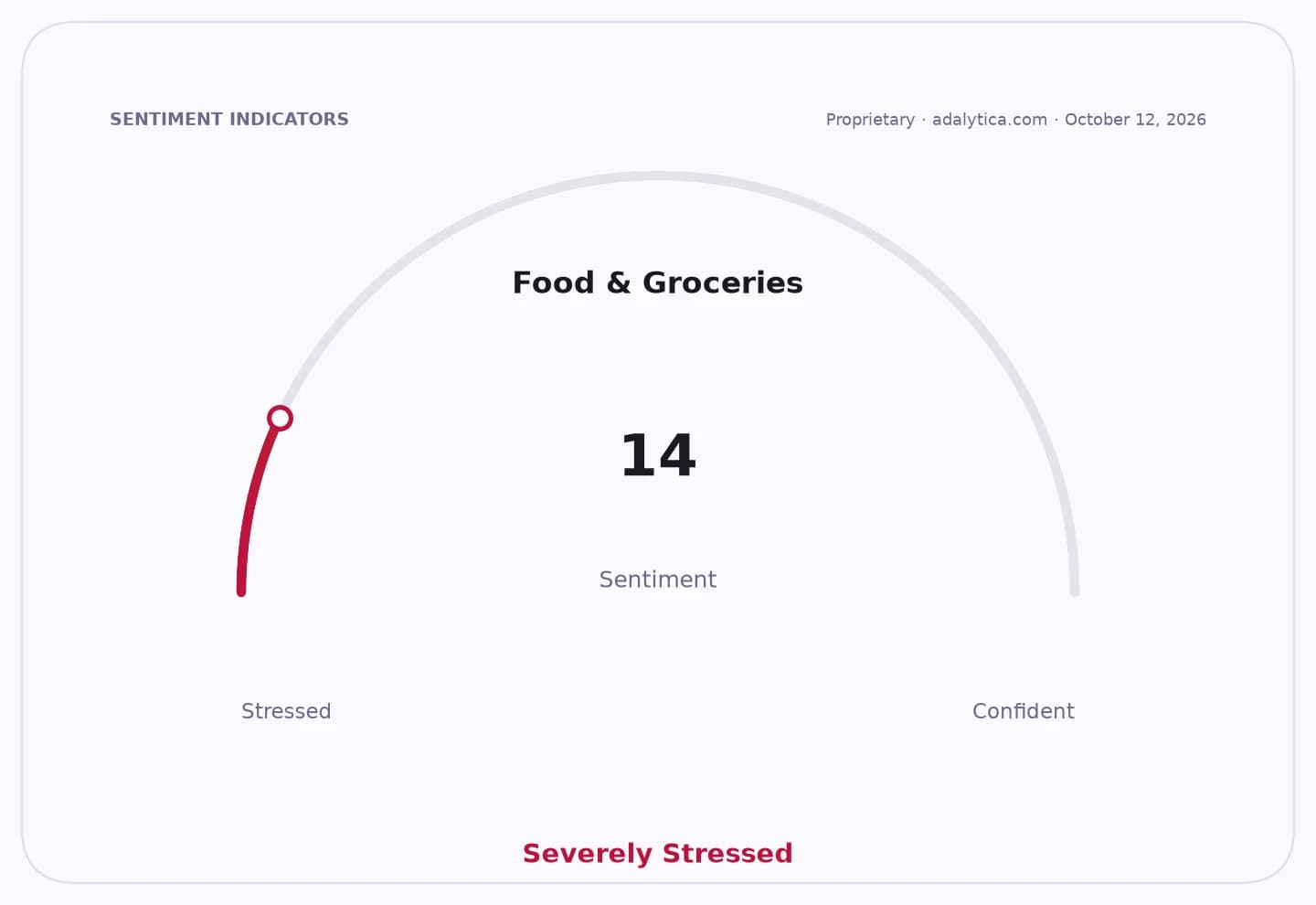
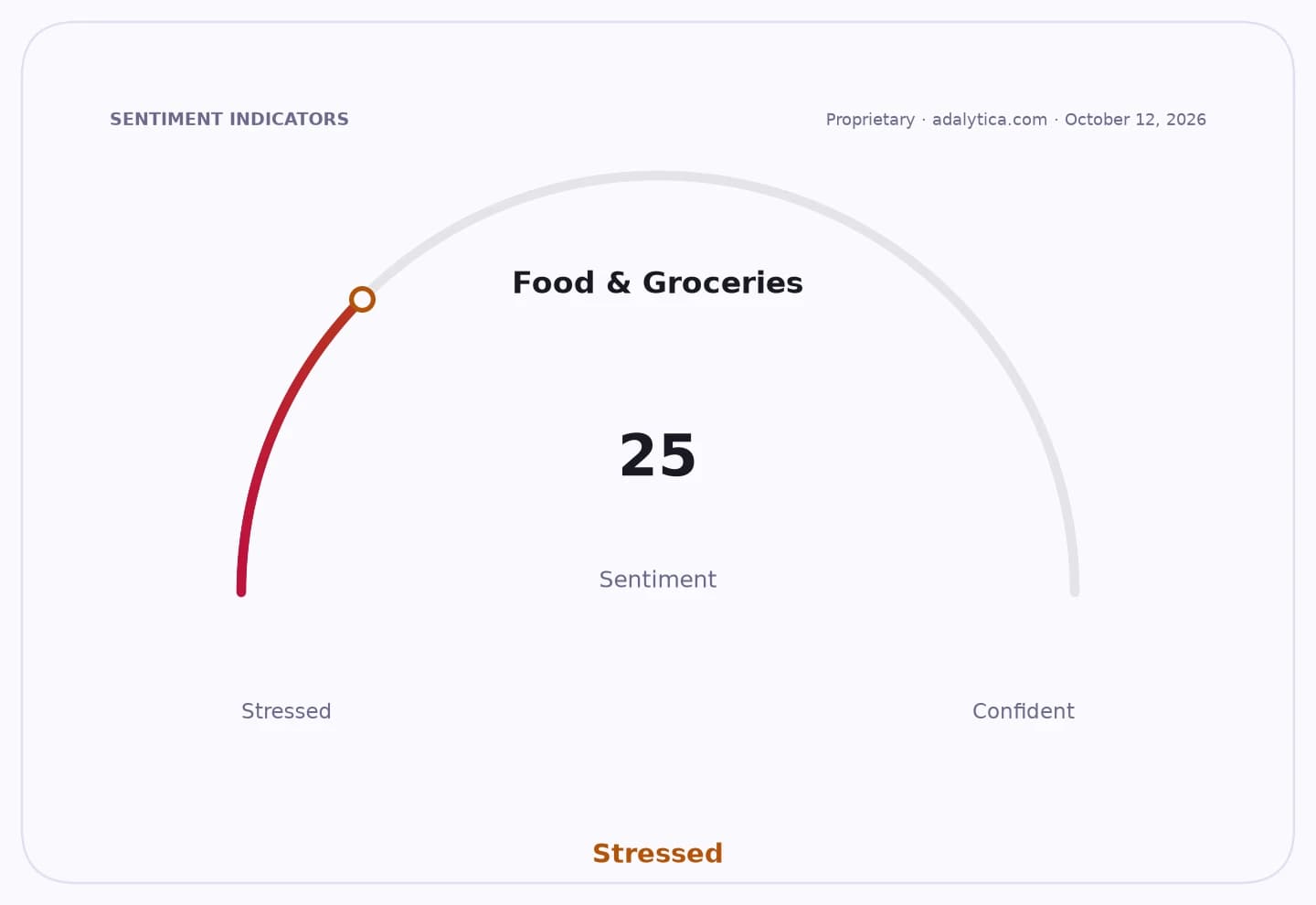
Sentiment IndicatorsⓘProprietary · adalytica.com · October 12, 2026
This is a snapshot — live sentiment, awareness and momentum for 130+ markets update continuously in the dashboard.Open AlphaPulse
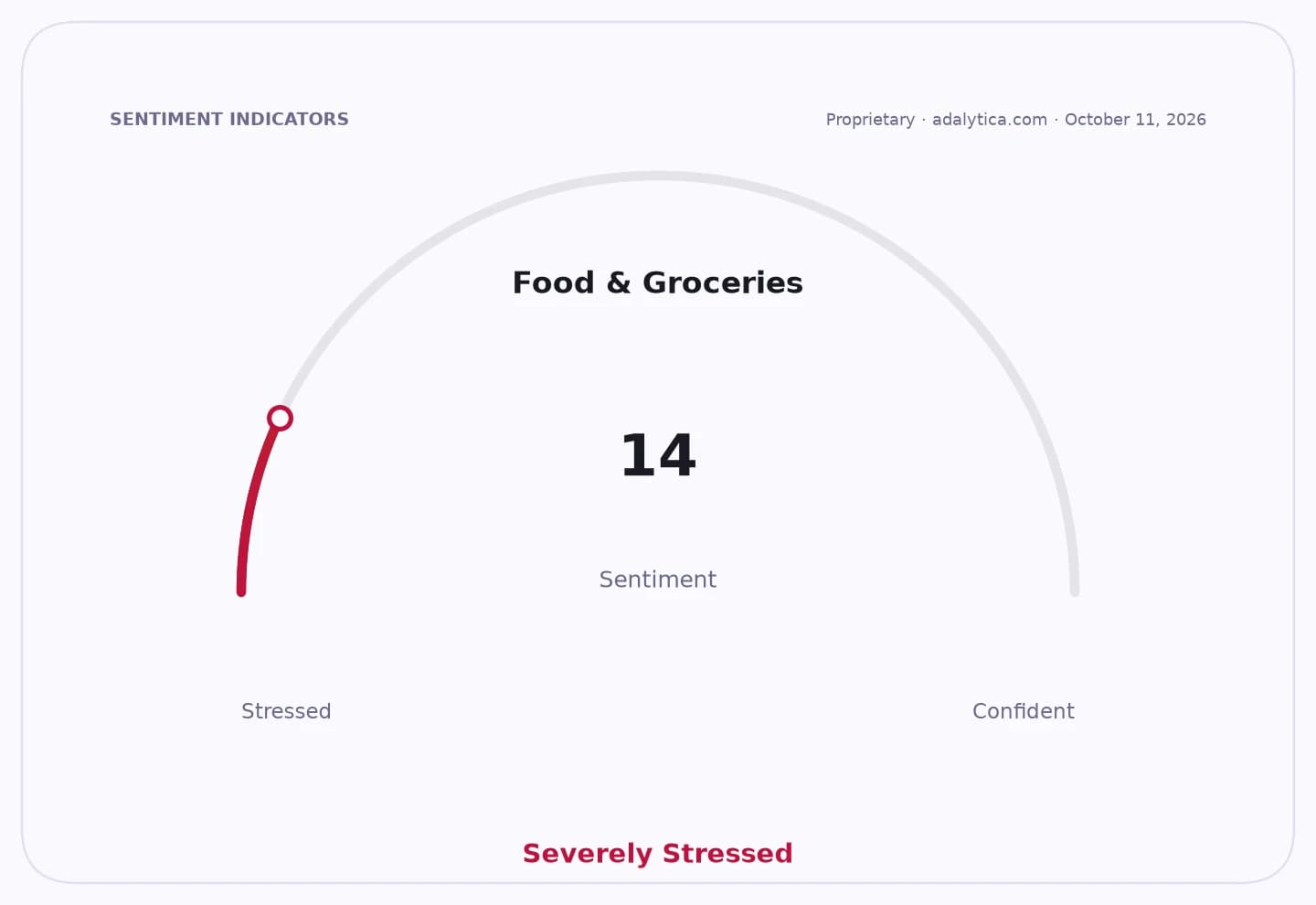
The strain is showing up in sentiment as well. Adalytica’s Food and Grocery Spending Sentiment gauge is in “Fear,” reflecting the kind of consumer caution that tends to follow food-price pressure. That is important for policymakers and investors alike: when staples get more expensive, household budgets tighten, demand shifts and the market starts to price in possible intervention from governments trying to protect consumers.
The broader global backdrop explains why a local rate in Ghazipur deserves attention. Pakistan has warned of a sharp rise in wheat prices as Black Sea export disruptions ripple through the region, while European wheat has found support on better export prospects and supply-route worries. U.S. wheat futures have been softer at times on a stronger dollar and technical selling, but that does not erase the underlying squeeze in physical markets. When buyers in Asia scramble for supply, the pressure tends to show up first in cash prices for higher-quality grain.
For investors, the implication is straightforward: the market underestimates how quickly food inflation can reassert itself when geopolitics collides with harvest uncertainty. That creates opportunity not just in wheat-linked exposure such as the Teucrium Wheat Fund, but also in the downstream winners — grain handlers, storage operators, commodity traders, freight names and packaged-food companies with strong pricing power. The losers are more obvious: flour millers with weak hedges, consumer staples companies with thin margins and governments forced to balance subsidy costs against inflation control.
India’s domestic wheat market will be watched closely from here because any sustained climb in premium grades can spill into flour and bread costs before the broader CPI basket fully reflects it. If Black Sea flows stay volatile and Asian demand remains firm, this is less a temporary price pop than the start of a new inflation pulse in global staples.
In that setup, the best position is to stay with the infrastructure around the commodity, not the commodity alone. The market may be treating wheat as a headline, but the higher-probability trade is the chain of businesses that profit when food security becomes a priority again.
| Entity | Gains | Losses |
|---|---|---|
| Wheat producers | ▲Higher realized prices | ▼Buyers seeking cheaper supply |
| Grain traders / handlers | ▲Wider trading opportunities | ▼Margins if volatility eases |
| Flour millers | ▲Limited | ▼Input-cost pressure |
| Consumers / households | ▲Little | ▼Higher food bills |