Chicago Board of Trade wheat extended its slide on Wednesday as a firmer dollar, weaker corn and soybeans and renewed technical selling combined to drag the market lower, even as global wheat supply remains vulnerable to Black Sea disruptions.
CBOT wheat falls as dollar and corn weaken

The move matters because wheat is being pulled in two directions at once: bearish cross-market pressure in Chicago is colliding with the risk that geopolitics and export interruptions tighten supplies elsewhere. For now, the dollar and the broader grain complex are dominating price discovery in the U.S. futures market, outweighing the more supportive headlines coming from overseas buyers and the Black Sea.
Sentiment IndicatorsⓘProprietary · adalytica.com · October 10, 2026
This is a snapshot — live sentiment, awareness and momentum for 130+ markets update continuously in the dashboard.Open AlphaPulse

CBOT wheat for December settlement slipped to 671.0 cents a bushel in the latest trading, down from 683.25 cents a day earlier and well below its recent highs. The contract has now dropped back under its 50-day moving average of 694.27 cents, while momentum indicators have turned softer, with RSI readings of 26.9 suggesting the market has moved into technically oversold territory. That does not guarantee a rebound, but it does show the selloff has already removed some near-term froth.
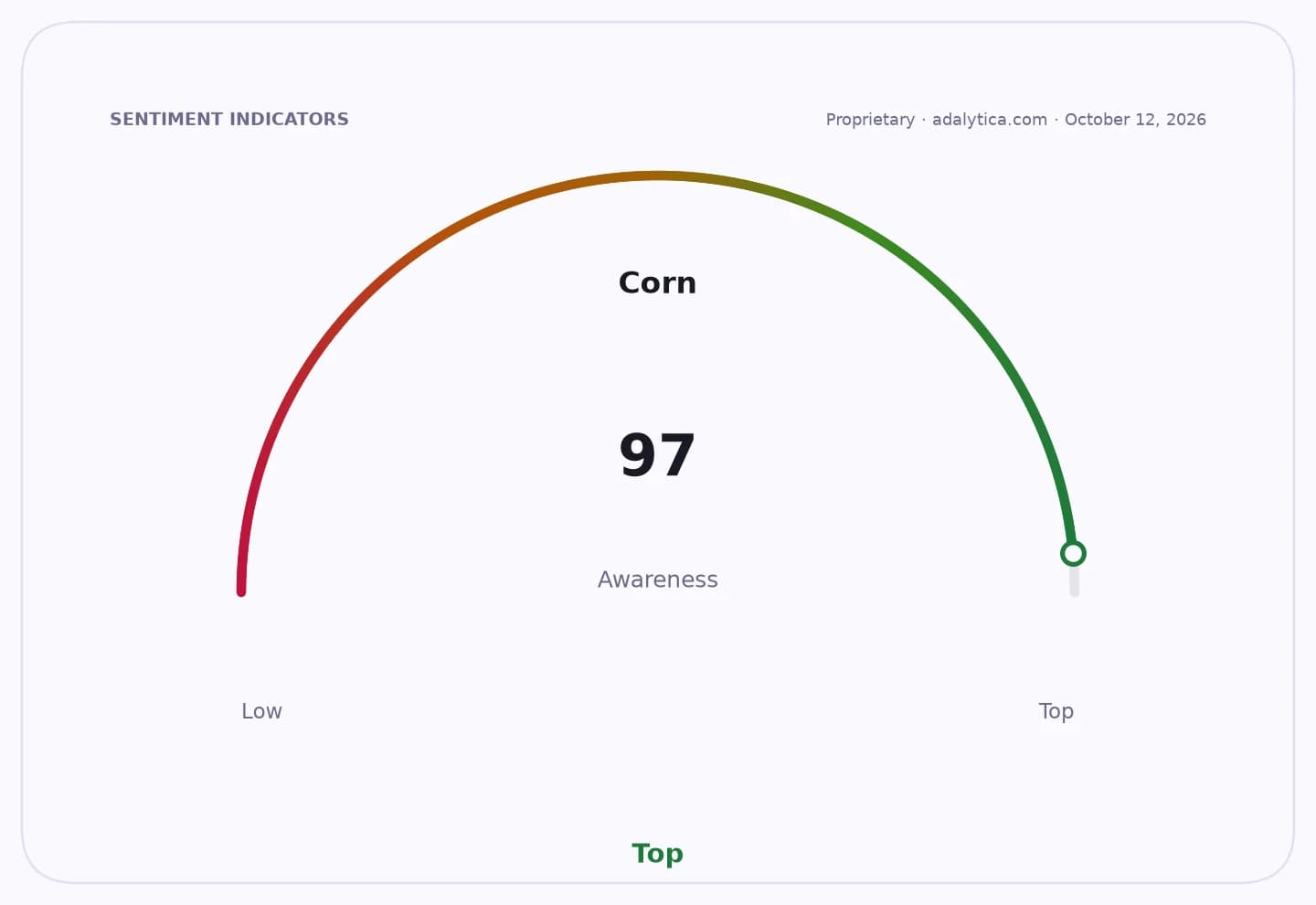
The broader grain complex is helping drive the decline. Corn futures fell to 479.75 cents a bushel, down sharply from 500.25 cents, while soybeans eased to 1,292 cents from 1,287.5 cents. When corn weakens, feed demand expectations and relative value support for wheat often fade with it, leaving wheat exposed to additional liquidation. The pattern is familiar in grain trading: once the leadership crop rolls over, funds frequently trim longs across the complex rather than isolate one contract.
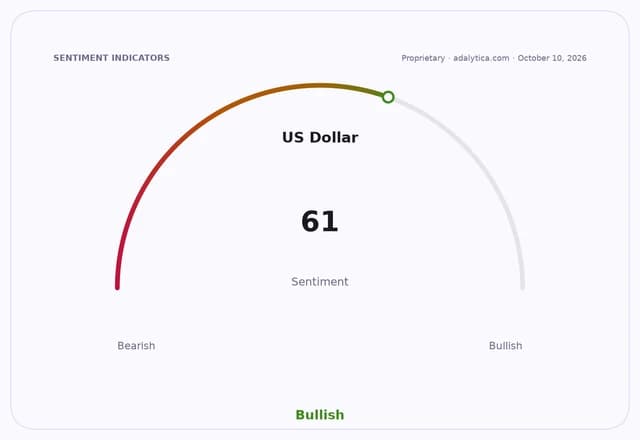
The dollar is the other key macro weight. A stronger U.S. currency makes American grain less competitive for global buyers and can encourage traders to take profits in export-sensitive commodities. Adalytica’s U.S. dollar trade signals showed sentiment at 61, with awareness in “greed” territory, underscoring how the greenback has re-entered the market conversation as a headwind for commodities priced in dollars.
That leaves wheat caught between macro pressure and fundamental support. News flow has highlighted disruptions in the Black Sea region, where Russian threats to escalate the war in Ukraine have raised concerns about export corridors and helped support European wheat prices. Saudi Arabia’s tender activity and Taiwanese purchases of U.S. wheat also point to ongoing demand. But in Chicago, those developments have been secondary to the immediate effect of a stronger dollar and the softer tone in corn and soybeans.
For investors, the key question is whether this is a short-lived flush or the start of a deeper retracement. The bullish case is that wheat remains highly sensitive to supply shocks, and any further deterioration in Black Sea logistics could quickly tighten export availability. The bearish case is that with corn under pressure and momentum indicators weakening, managed money may continue to pare exposure before USDA data or new geopolitics provide a catalyst.
Near term, traders will watch whether CBOT wheat can stabilize above the low-670s and reclaim its 50-day average. Failure to do so would leave the market vulnerable to another leg lower, especially if the dollar stays firm and corn remains on the defensive.
| Entity | Gains | Losses |
|---|---|---|
| Dollar | ▲Export competitiveness, pricing power | ▼Commodity importers |
| Corn and soybeans | ▲Relative value from cross-commodity flows | ▼Wheat via spillover selling |
| Wheat consumers | ▲Lower input costs | ▼Grain producers and long futures holders |
| Black Sea exporters at risk | ▲Support from supply fears | ▼Market share if disruptions deepen |