The U.S. Department of Agriculture kept its outlook for Brazil’s 2025/26 and 2026/27 soybean and corn crops unchanged, underscoring expectations that the world’s biggest exporter of the oilseed will stay on track for another record harvest even as planting begins.
USDA keeps Brazil soybean and corn forecasts unchanged
That matters because Brazil’s crop size is a central input for global grain and oilseed pricing, shaping export competition, processing margins and feed costs from China to Europe. By leaving its forecasts steady, the USDA is effectively signaling that near-term weather and planting conditions have not yet altered the supply picture in a meaningful way, reducing the odds of an immediate bullish shock for soybeans and corn.
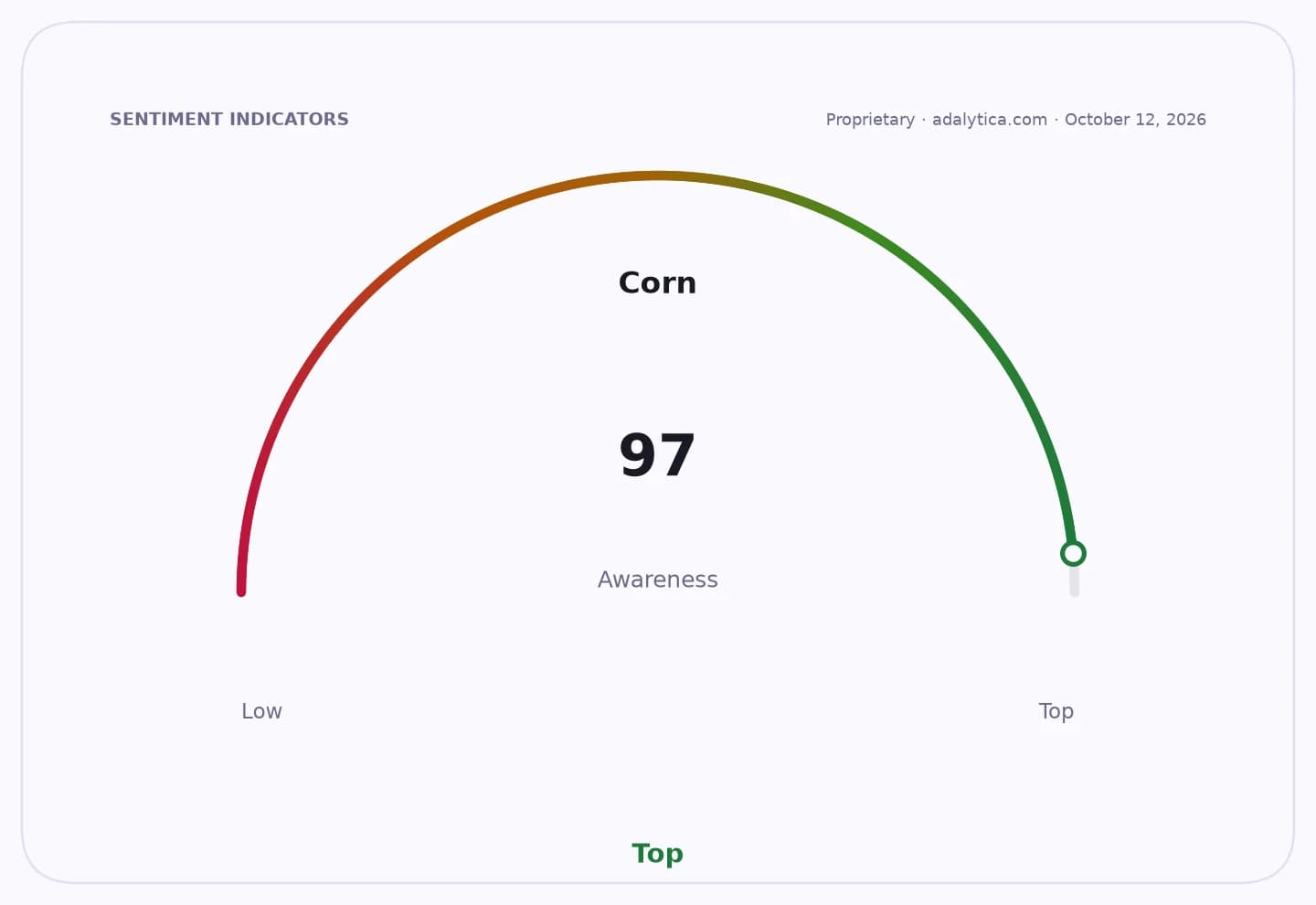
Sentiment IndicatorsⓘProprietary · adalytica.com · October 12, 2026
This is a snapshot — live sentiment, awareness and momentum for 130+ markets update continuously in the dashboard.Open AlphaPulse
The agency sees Brazil’s 2026/27 soybean crop reaching 186 million metric tons, above an estimated 180.5 million tons for 2025/26. The unchanged forecast points to a market that is still calibrated to abundant South American supply, a backdrop that tends to cap upside in Chicago futures and pressure rivals such as U.S. exporters if Brazil continues to dominate overseas sales.
For corn, the USDA kept its estimate for Brazil’s 2025/26 harvest at 141 million tons and its 2026/27 crop at 139 million tons. While those figures imply a slight dip in the following season, they still leave Brazil with an exceptionally large corn surplus at a time when importers are watching freight, biofuel demand and feed demand closely.
Investor positioning already shows how much supply expectations matter. Corn and soybean futures have both been volatile, with recent price action suggesting traders are sensitive to any change in the South American weather or planting pace, while technical readings such as the 50-day moving average and RSI on both contracts indicate the market has swung between overbought and oversold conditions as funds react to fresh headlines. Corn and soybean-linked products have also drawn stronger trading interest, reinforcing the view that crop forecasts remain a key macro driver for agricultural assets.
The USDA’s decision to hold forecasts steady is constructive for grain users and food processors that benefit from abundant supply, but less helpful for farmers and bullish holders betting on tighter balances. The bigger question now is whether early-season planting progresses smoothly enough to validate the record soybean outlook — or whether dryness, delayed planting or weather losses force the market to reprice Brazil’s dominance later in the season.
| Entity | Gains | Losses |
|---|---|---|
| Grain users and importers | ▲Lower supply risk | ▼Less upside protection |
| Brazilian exporters | ▲Strong export prospects | ▼Margin pressure |
| U.S. farmers | ▲None from stable Brazil supply | ▼Weaker price support |
| Soybean and corn bulls | ▲More time for rally | ▼Record crop overhang |