Corn futures fell sharply as the U.S. harvest gathered pace and money managers continued to liquidate bullish bets before the USDA’s monthly supply-and-demand report, putting the market back under pressure after a volatile late-summer rally.
Corn Futures Fall Ahead of USDA WASDE Report
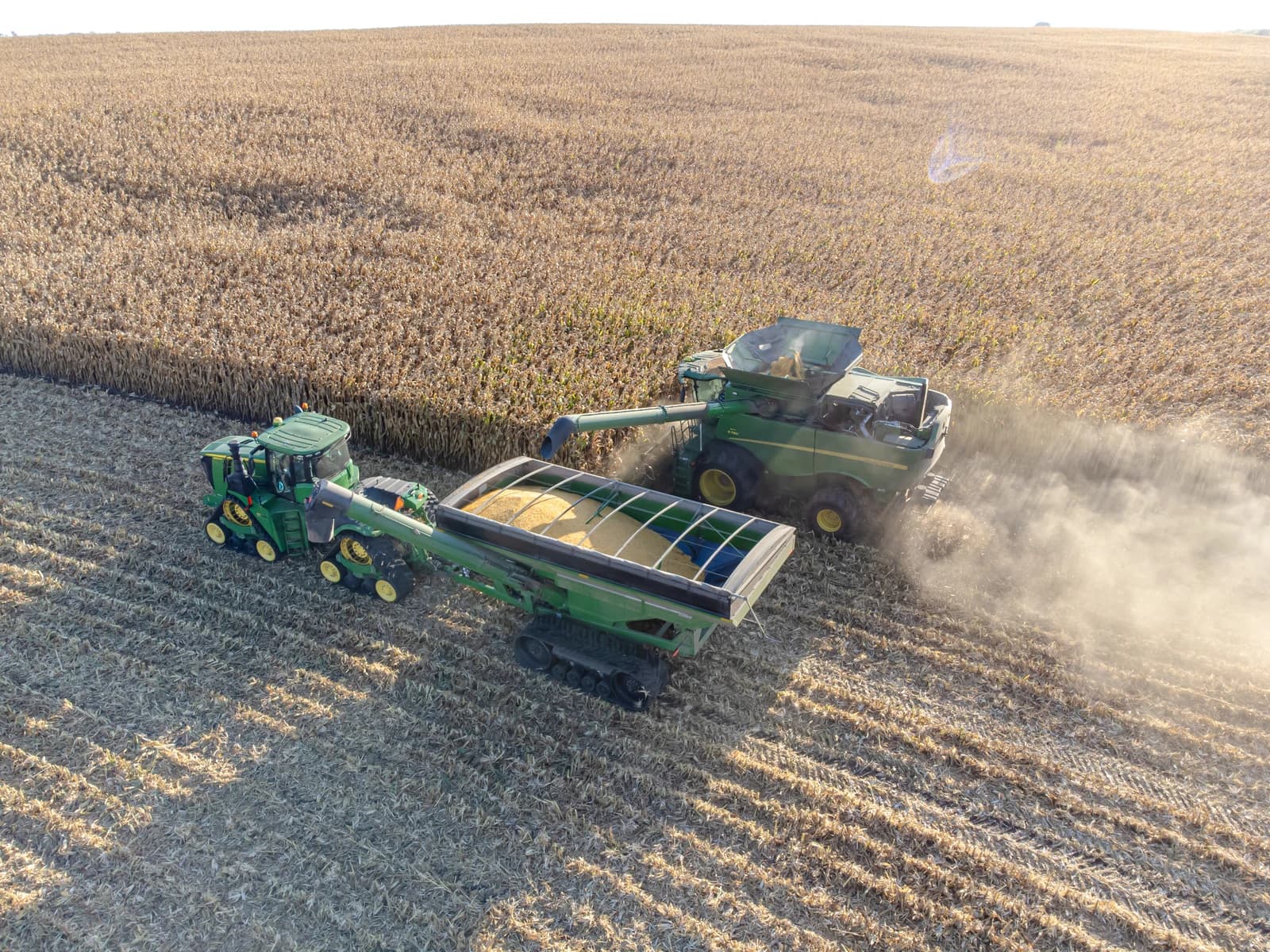
The move matters because corn is sitting at the center of a broader grain reset: abundant U.S. supplies are weighing on the feed and export outlook, soybean contracts are slipping in sympathy, and traders are treating the upcoming WASDE as a potential catalyst for a fresh repricing of yield, ending stocks and demand. For farmers, the weaker tone raises the risk of selling into a softer cash market. For livestock feeders and ethanol producers, it improves input-cost prospects if the decline persists.
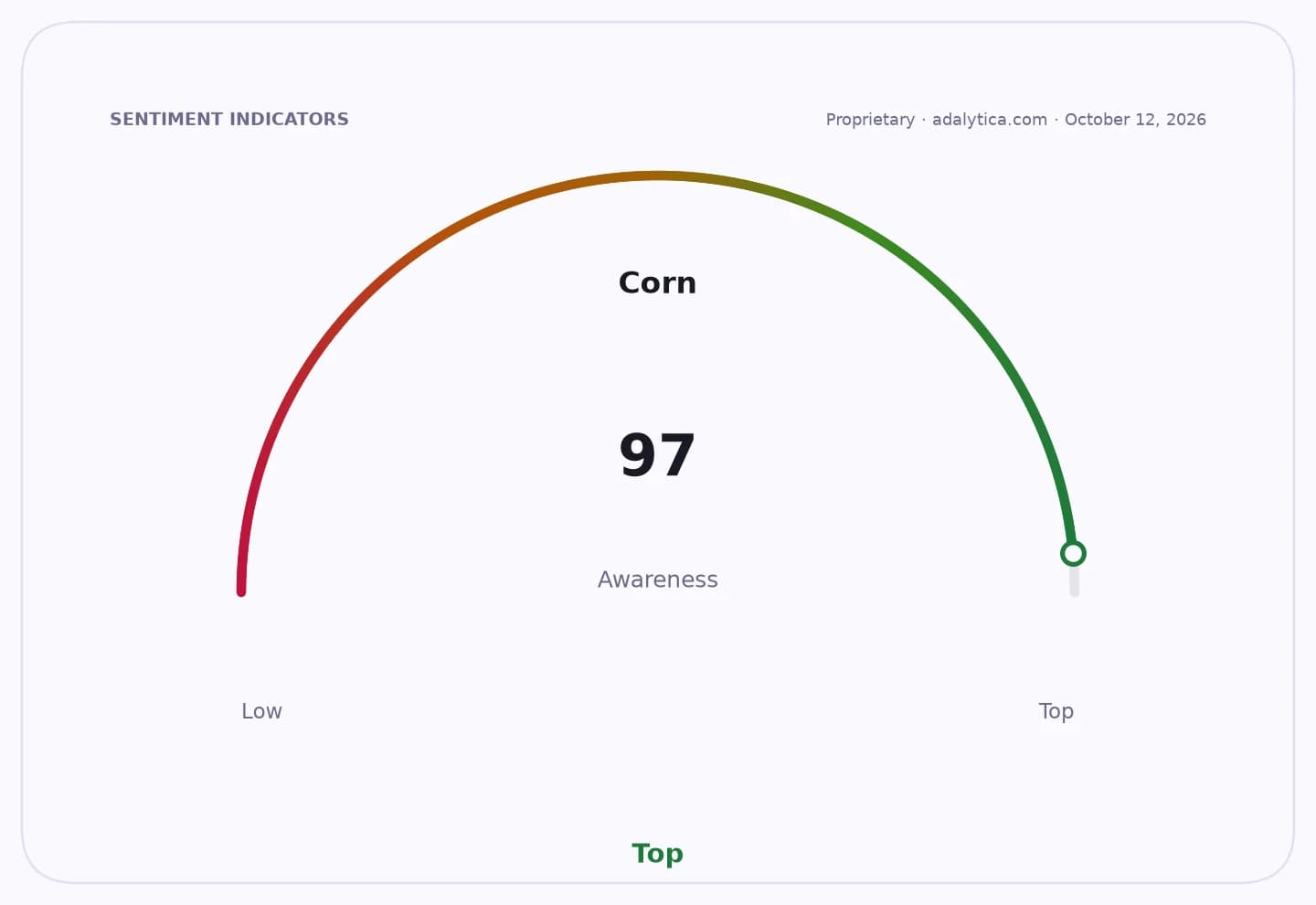
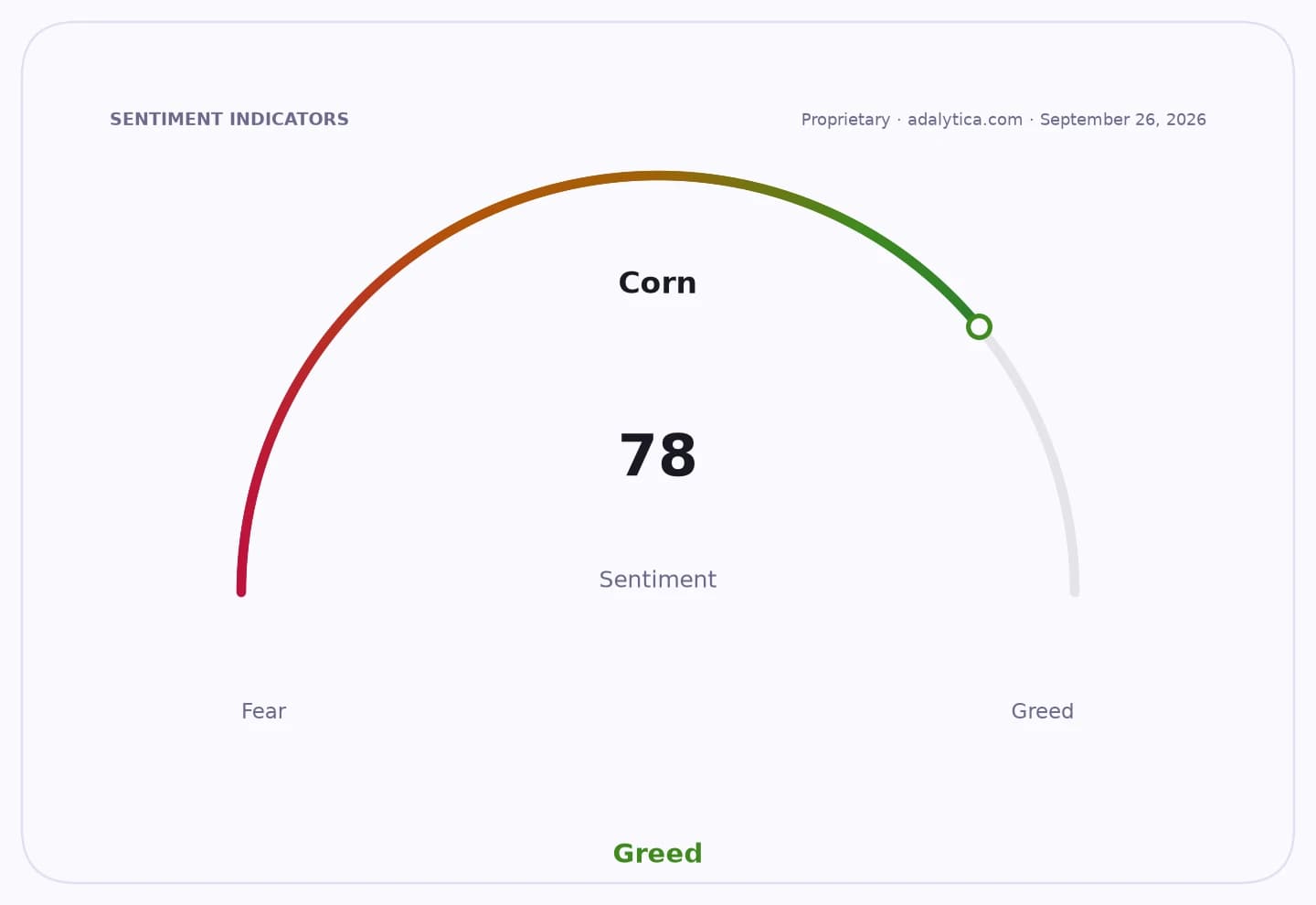
Sentiment IndicatorsⓘProprietary · adalytica.com · October 10, 2026
This is a snapshot — live sentiment, awareness and momentum for 130+ markets update continuously in the dashboard.Open AlphaPulse
On the board, corn closed at 18.42 on Oct. 9, down from 20.27 on Sept. 21 and 20.03 at the late-August peak. The recent slide has pushed the Relative Strength Index to 17.3, deep into oversold territory, while price is now below the 50-day moving average of 19.16. That does not guarantee a rebound, but it does show how quickly the market has unwound the euphoria that built up around the summer rally.
Soybeans have been less damaged but still weakened, with SOYB closing at 27.53 on Oct. 9 versus 28.14 on Sept. 10. The broader grain retreat reflects the same forces: harvest-season supply, position trimming and skepticism about whether demand can absorb another large U.S. crop without lower prices. Traders are also watching whether the USDA’s feed-use assumptions need adjusting, after market chatter about unusually large stocks helped amplify volatility.
The macro backdrop is mixed. Brazil has stepped in with corn stock distribution and an auction of 23 tons to ease domestic supply pressure, while also insisting there is no food shortage and that exports have been halted. That intervention underscores how grain markets are becoming more policy-sensitive as governments try to manage local affordability without letting global prices run ahead of physical supply.
Technically, the corn market still has support from the 200-day moving average at 18.17, but momentum has clearly deteriorated. The Adalytica Corn Fear & Greed Index shows sentiment at 70, labeled Neutral, while awareness sits at 95, or Extreme Greed, suggesting the trade remains heavily watched even as price action cools. That combination often leaves the market vulnerable to outsized moves if the USDA report deviates from expectations.
For investors, the key question is whether the selloff is a healthy correction or the start of a broader downside reset in grains. Bulls will argue that oversold readings and the lingering risk of supply surprises could spark short-covering. Bears will point to harvest pressure, fund liquidation and easing technical momentum as signs that rallies may now meet selling into strength. The WASDE release will likely decide which side wins.
| Entity | Gains | Losses |
|---|---|---|
| Livestock feeders | ▲Lower feed costs | ▼Corn growers |
| Corn bears / shorts | ▲Price downside momentum | ▼Bullish traders |
| Ethanol producers | ▲Cheaper input costs | ▼Holders of long corn exposure |
| Brazilian authorities | ▲Supply stabilization | ▼Exporters facing tighter controls |