World prices of rice, coffee and key agricultural commodities moved in opposite directions last week as weather, trade flows and harvest progress pulled different markets apart.
Rice Prices Rise as Coffee Slips on Harvests

The clearest upside came in rice, where Thai 5% broken white rice climbed to a two-month high as supply tightened and exporters scrambled to cover short positions. Platts, part of S&P Global Energy, valued the benchmark at $475 a ton FOB on Sept. 3, up $9 from the prior week and just below the $479 level seen on June 29.
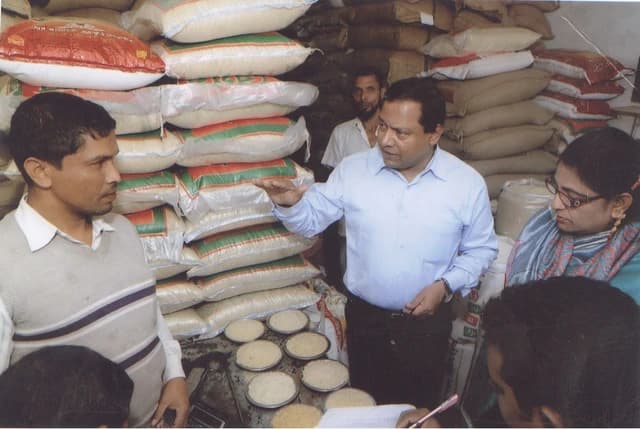
Traders said the rally was driven by replacement buying, strong near-term delivery demand and reduced supply caused by weather-related milling constraints and water shortages heading into the end of the rainy season. The Thai Rice Exporters Association said Iraq’s weaker buying reflected trade-route changes more than softer underlying demand, while the Philippines and Malaysia were absorbing more Asian supply.
Agricultural markets in the U.S. were also firm, with soybeans and corn rising for a fourth straight week even after both eased in Friday trading. Chicago soybeans slipped 0.06% to $13.15 a bushel, but still gained 2.12% on the week as China kept buying U.S. supplies and heat and dryness threatened Midwest yields.

Corn fell 0.09% on Friday to $5.40¼ a bushel, but rose 0.7% for the week on expectations of lower U.S. yields and lingering disruption risks around Black Sea shipments. Wheat was unchanged at $7.54 a bushel, though it fell 3.8% for the week after President Vladimir Putin said a peace deal to end the war in Ukraine remained possible.
Coffee, by contrast, was steady to lower after a run of losses. London robusta for September delivery held at $3,344 a ton, while the November contract rose 1.66% to $3,430. In New York, Arabica for September delivery slipped 0.03% to 324.25 cents a pound, though other contracts gained modestly.
The pause follows a drop that took Arabica to a one-month low and robusta to a three-month low earlier in the week. Prices have been under pressure as Brazil’s harvest improves and StoneX lifted its forecast for Brazil’s 2026-27 crop to a record 77.2 million bags, while Vietnam’s coffee exports rose 13.7% in the first eight months of 2026 to 1.33 million tons.
For investors, the split matters because it shows how quickly supply shocks can reverse across soft commodities and grains, creating both margin risk for food makers and trading opportunities for agribusinesses. Higher rice and grain prices support growers and exporters but raise input costs for importers and downstream buyers, while weaker coffee prices help roasters and consumer brands that have been facing elevated raw-material costs.
U.S.-listed crop names reflected the broader grain strength, with Nutrien, Bunge and Deere all trading near or above key technical levels in recent sessions, while the commodity backdrop also leaves food inflation sensitive to weather and geopolitics. The next catalysts are weather in the U.S. Midwest, further Chinese soybean purchases, and any sign that Brazil’s coffee harvest or Thai rice supply constraints are easing.
| Entity | Gains | Losses |
|---|---|---|
| Thai rice exporters | ▲Higher FOB prices | ▼Exporters waiting for volume |
| U.S. soybean and corn growers | ▲Stronger grain prices | ▼Livestock and feed buyers |
| Coffee roasters and consumers | ▲Lower green-coffee costs | ▼Coffee growers and exporters |
| Importing countries | ▲Softer coffee prices | ▼Rice importers facing higher bills |