The ringgit firmed against the US dollar on Monday as falling oil prices and fresh hopes for US-Iran diplomacy improved risk appetite across emerging-market currencies.
Ringgit firms on oil slide and US-Iran diplomacy

By 6 p.m. in Kuala Lumpur, the local note was trading at 4.0755/4.0800 per dollar, slightly stronger than Friday’s 4.0795/4.0840 close. The move was modest, but it reflected a broader shift in market mood after reports that US President Donald Trump could meet Iranian President Masoud Pezeshkian on the sidelines of the UN General Assembly this week.
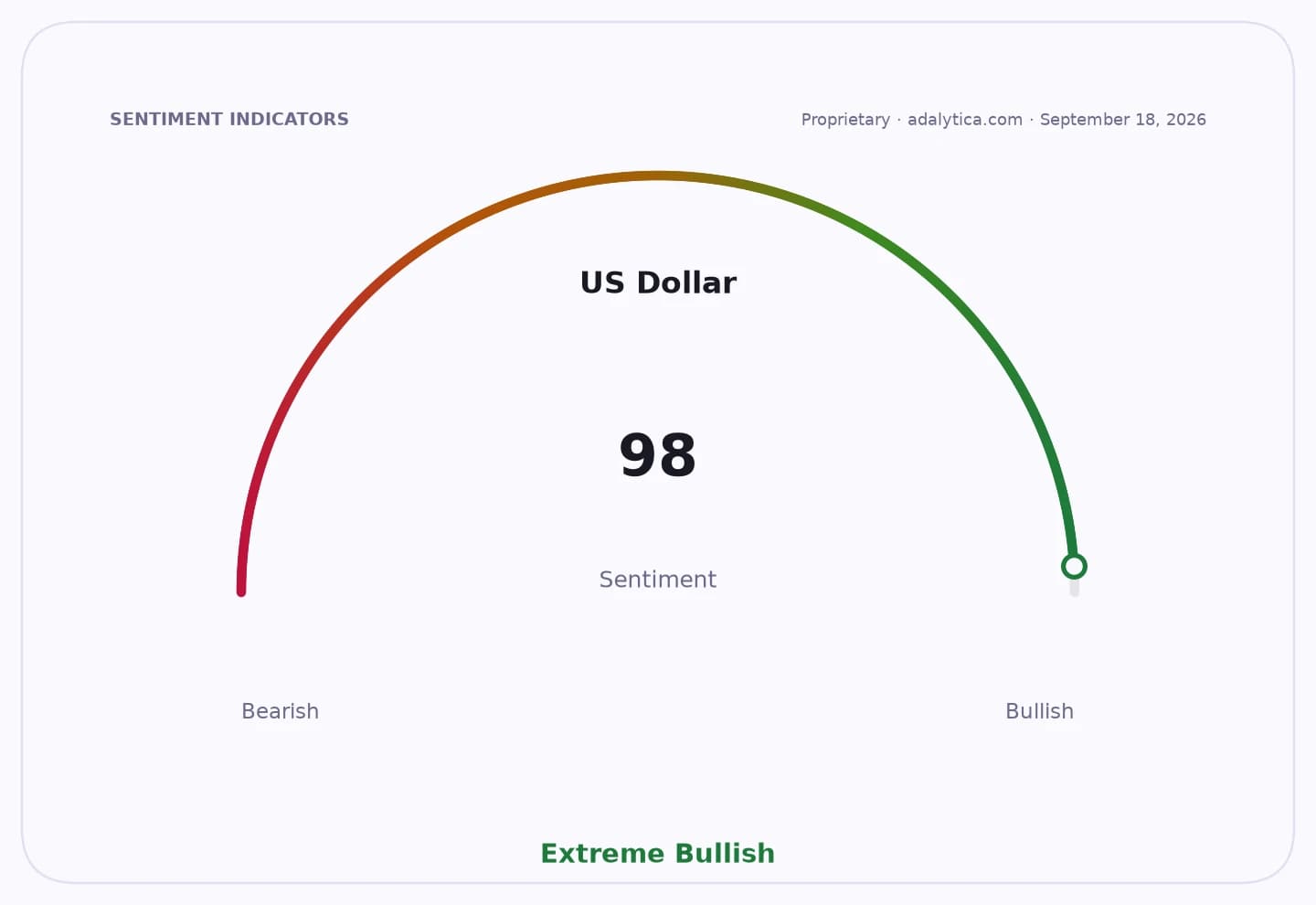
Sentiment IndicatorsⓘProprietary · adalytica.com · September 25, 2026
This is a snapshot — live sentiment, awareness and momentum for 130+ markets update continuously in the dashboard.Open AlphaPulse
For Malaysia, the biggest near-term implication is not the size of the daily gain, but the direction of flows. A softer dollar and better geopolitical tone tend to encourage investors back into higher-yielding and commodity-linked Asian currencies, and the ringgit has been especially sensitive because of its links to oil and regional risk sentiment. Bank Muamalat Malaysia chief economist Mohd Afzanizam Abdul Rashid said the improved tone had helped lift emerging-market currencies, including the ringgit.
The currency’s performance against other majors was mixed, underscoring that the latest strength was driven more by sentiment than by a decisive macro shift. The ringgit gained versus the euro and pound, but slipped against the yen. It also traded unevenly against ASEAN peers, rising versus the Philippine peso and Indonesian rupiah while losing ground to the Singapore dollar and Thai baht.
That pattern matters for investors because it shows the ringgit is still being pulled in opposite directions: from one side by a softer global dollar backdrop and ebbing geopolitical stress, and from the other by persistent caution around US interest-rate policy. Even with Monday’s bounce, the dollar remains supported by expectations of tighter-for-longer Federal Reserve policy, and that has kept gains in Asian currencies contained.
Technical indicators point to a market that has improved but not broken decisively in the ringgit’s favor. The currency has been hovering near its 50-day moving average in recent sessions, while dollar-tracking gauges such as the US Dollar index ETF, UUP, remain elevated. That suggests investors are willing to trim dollar exposure on better risk headlines, but have not yet abandoned the greenback’s broader appeal.
The wider takeaway is that the ringgit’s near-term path will likely continue to be driven less by domestic data than by external catalysts: US policy expectations, oil prices and geopolitical developments in the Middle East. If diplomacy holds the upper hand and the dollar eases further, the ringgit could extend its recovery. If Federal Reserve rhetoric turns more hawkish or oil rebounds sharply, the currency’s gains are likely to stay limited.
| Entity | Gains | Losses |
|---|---|---|
| Ringgit | ▲Slight FX rebound | ▼Dollar buyers |
| Emerging-market currencies | ▲Better risk appetite | ▼Safe-haven demand |
| Malaysian exporters | ▲More competitive pricing | ▼Importers paying dollars |
| US dollar | ▲Remains broadly supported | ▼Speculative longs if risk tone improves |