The ringgit edged lower against the US dollar on Friday as investors retreated from risk assets on renewed concern over stretched artificial intelligence-linked share prices, while falling Treasury yields reinforced demand for the greenback as a safe haven.
Ringgit slips as AI selloff boosts dollar
Malaysia’s currency closed at 4.0835/4.0875 per dollar, compared with 4.0815/4.0850 on Thursday, after trading in a tight 4.0813-4.0865 range, according to Bank Muamalat Malaysia economist Mohd Afzanizam Abdul Rashid. The move was modest, but it came against a backdrop of broader caution in global markets, where investors are reassessing whether the AI-led equity rally can continue without a sharper correction.
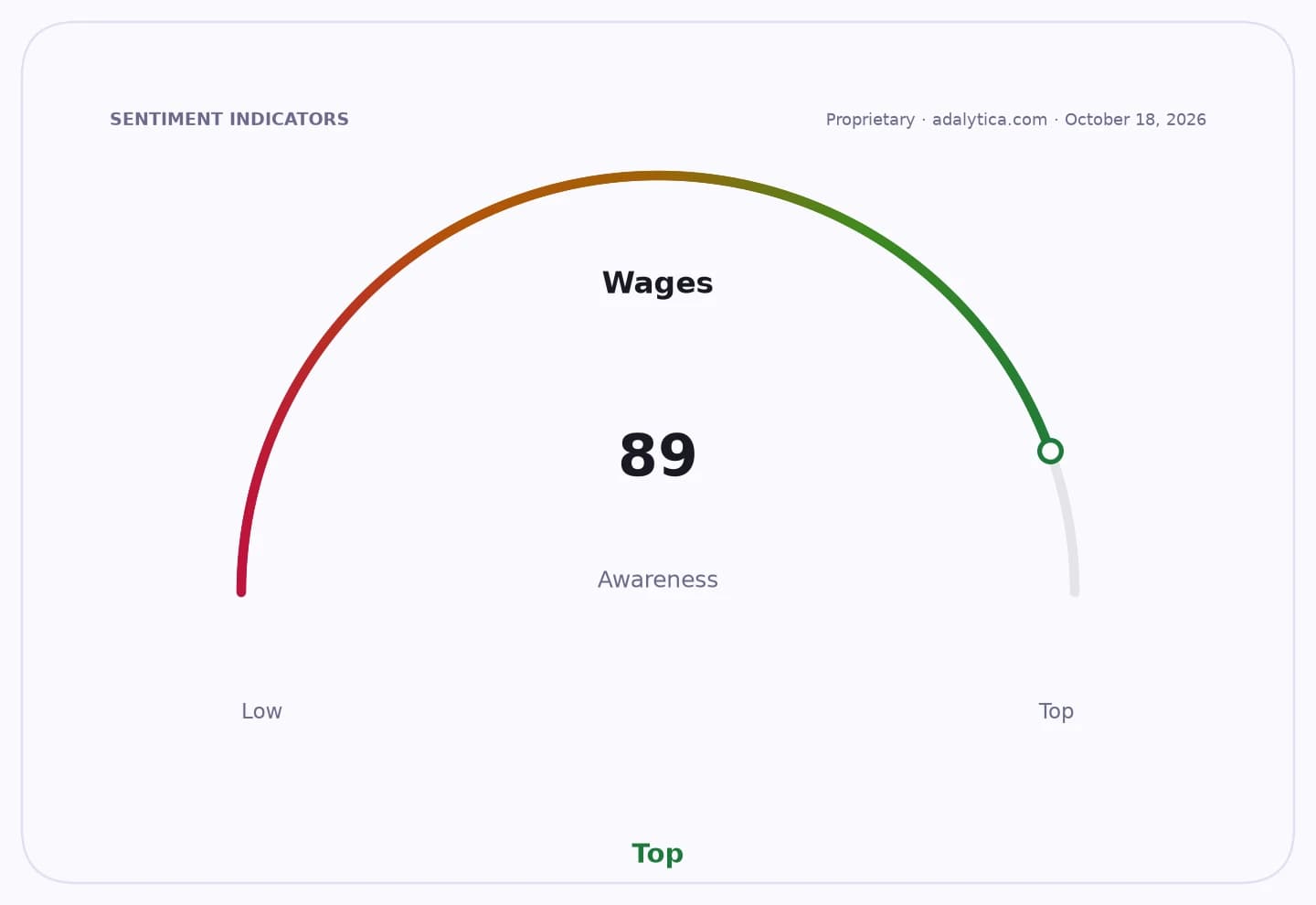
Sentiment Indicators
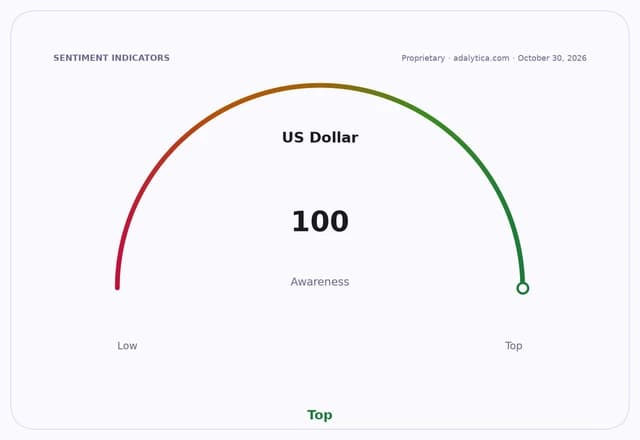
The dollar’s firmer tone matters for Malaysia because the ringgit is highly sensitive to shifts in global risk appetite and US rate expectations. When investors cut exposure to equities and move into government bonds, emerging-market currencies typically lose support. That dynamic was evident after US Treasury yields fell on Thursday as buyers sought safety, a signal that often benefits the dollar relative to regional currencies.
Markets are also waiting for next week’s Federal Open Market Committee statement and press conference, with investors broadly expecting the federal funds rate to stay at 3.75% to 4.00%. Even without a policy change, any shift in the Fed’s language on growth, inflation or further easing could move the dollar and ripple through Asian currencies, including the ringgit.
US Dollar — 30-day sentimentadalytica.com
Explore this data interactively — full history, time series and cross-market comparisons.
The ringgit’s performance was not uniformly weak. It strengthened against most major and regional peers, rising versus the British pound and euro, and gaining against the Singapore dollar and Indonesian rupiah. It slipped against the Japanese yen and Thai baht, underscoring how the US dollar’s strength remains the main driver rather than a broad-based deterioration in Malaysia’s own fundamentals.
For investors, the immediate issue is less the size of Friday’s move than the fragility of sentiment behind it. A ringgit trading near current levels suggests markets are still comfortable with Malaysia’s external position, but any deeper unwind in AI-related equities, or a sustained fall in global yields that drives more defensive dollar buying, could pressure the currency further. The near-term test is whether next week’s Fed communication calms markets or adds to the case for more volatility in FX.
| Entity | Gains | Losses |
|---|---|---|
| US dollar | ▲Safe-haven demand | ▼— |
| Ringgit | ▲Better against peers | ▼Slightly weaker vs greenback |
| Malaysian exporters | ▲More competitive receipts | ▼Higher import costs |
| Importers and dollar borrowers | ▲— | ▼More expensive payments |