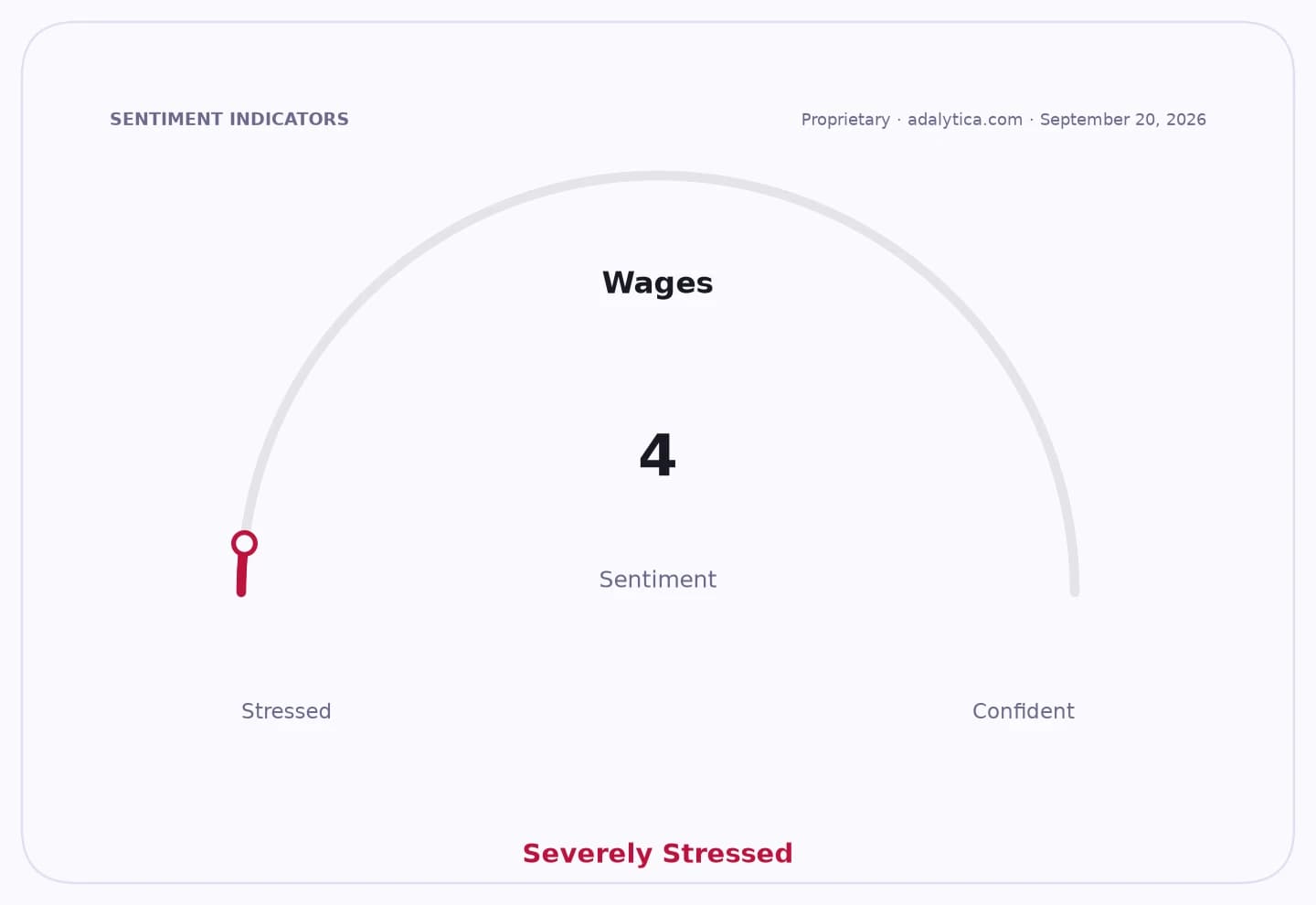
Southeast Asia’s economy is still expanding, but the region’s inflation surge is eroding purchasing power for low-income consumers and threatening the durability of the recovery.
Southeast Asia inflation pressures growth recovery
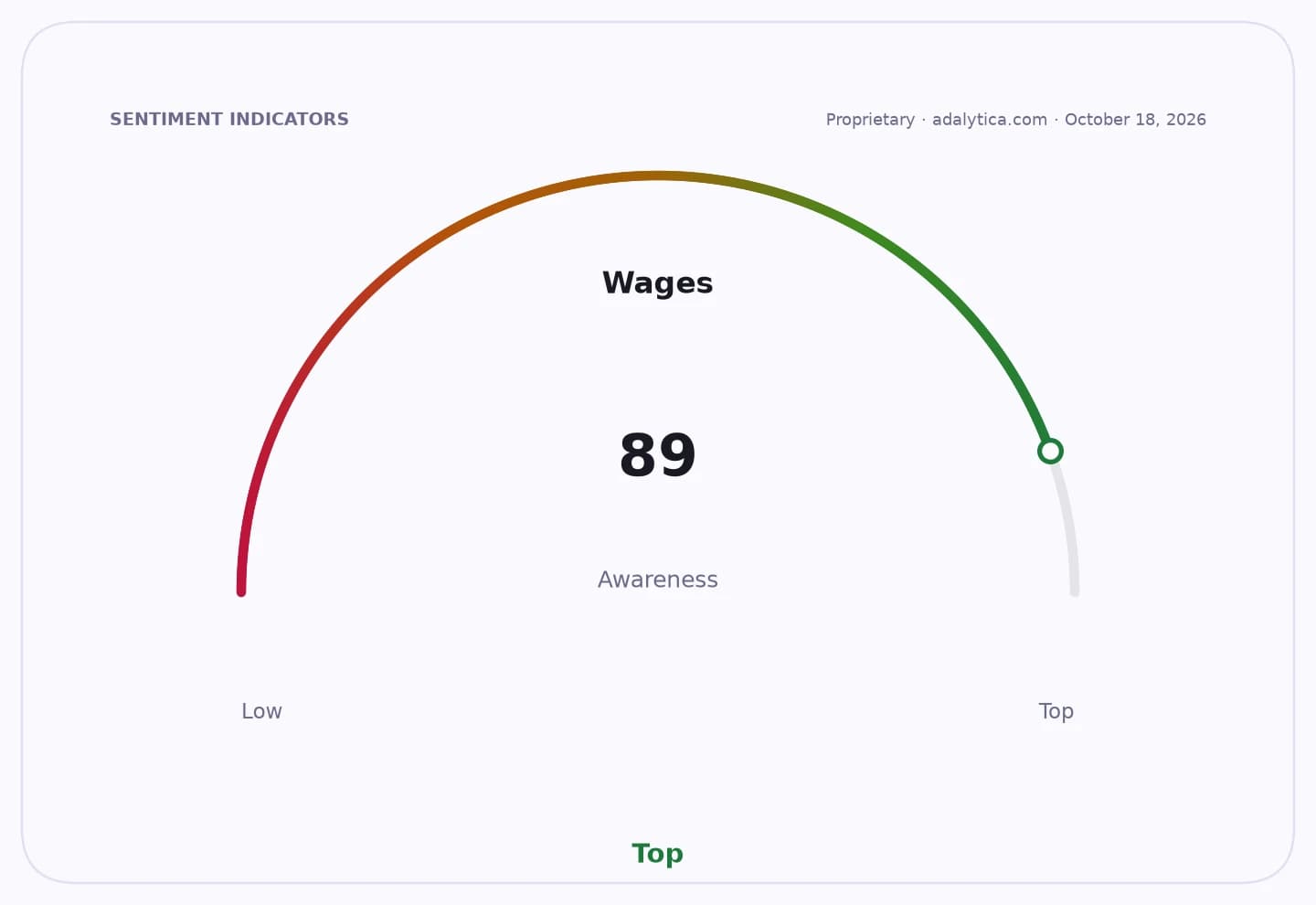
That split — growth on one side, pain at the till on the other — is the key economic story for investors. It suggests the region can keep producing headline GDP gains, yet still face weaker domestic demand, more uneven consumption and greater pressure on central banks to stay cautious even as global conditions remain volatile.
Sentiment IndicatorsⓘProprietary · adalytica.com · October 18, 2026
This is a snapshot — live sentiment, awareness and momentum for 130+ markets update continuously in the dashboard.Open AlphaPulse
The US inflation backdrop has added to that strain. September consumer prices in the world’s largest economy rose 3.7%, driven in part by energy costs, reinforcing a stronger dollar and tighter global financial conditions. For emerging and frontier markets in Southeast Asia, that matters because imported fuel, food and funding costs can rise quickly, while local currencies and policy room can narrow.
Investors are already seeing the divergence in market behavior. Hong Kong-listed focus-market exposure through the iShares MSCI Hong Kong ETF, EWH, has been volatile around its 50-day and 200-day moving averages, with the fund closing at $22.09 on Oct. 16, little changed from its 200-day line and below recent highs. Singapore exposure via EWS is still trading above its 200-day average, but the ETF has slipped to $31.34 from a recent peak near $34.57, while Malaysia’s EWM has fallen back to $26.51, below its 200-day average and its 50-day line. The message is not a wholesale regional selloff; it is a selective reassessment of growth quality and margin durability.
The inflation hit is also politically and socially sensitive. In Southeast Asia, food and transport take a larger share of spending for poorer households than for affluent ones, so even modest price increases can force cuts in non-essential spending. That tends to weigh on retail sales, discretionary consumption and small-business cash flow before it shows up in broader growth data. It also widens inequality, making the recovery look stronger in aggregate than it feels at street level.
Central banks will be reluctant to ease aggressively if inflation remains sticky. That keeps borrowing costs elevated for households and firms, especially in economies where real wage growth has not kept pace. For companies, the risk is margin compression: higher input costs are harder to pass through when consumers are already stretched. For investors, that makes earnings quality more important than top-line growth, particularly in consumer, financial and domestically oriented sectors.
There is a bullish case. If energy prices stabilize and the dollar eases, Southeast Asian inflation should cool, giving policymakers room to support growth without reigniting price pressures. Equity markets would likely reward that outcome, especially in rate-sensitive sectors and consumer names. But the bear case is that imported inflation proves persistent, wage gains lag, and demand softens enough to hit corporate earnings before policy support arrives.
For now, the dominant narrative is one of resilience with fragility underneath: Southeast Asia is still growing, but the benefits are not being shared evenly, and inflation is increasingly defining who feels that growth — and who does not.
| Entity | Gains | Losses |
|---|---|---|
| Southeast Asian exporters | ▲Stronger nominal demand | ▼Weaker local purchasing power |
| Low-income households | ▲None | ▼Higher food and transport costs |
| Consumer companies | ▲Select pricing power | ▼Demand from stretched shoppers |
| Central banks | ▲Policy credibility if inflation eases | ▼Less room to cut rates |