The Malaysian ringgit edged higher against the US dollar on expectations that the economy will keep growing well above trend, strengthening the case for tighter monetary settings or at least fewer cuts ahead.
Malaysia Ringgit Edges Higher on Growth Outlook

At 6 p.m., the local currency traded at 4.0800/4.0835 per dollar, little changed from 4.0805/4.0850 the previous close, but the market focus was firmly on what comes next: Malaysia’s third-quarter GDP estimate, which Bank Muamalat Malaysia expects to come in around 5.2%.
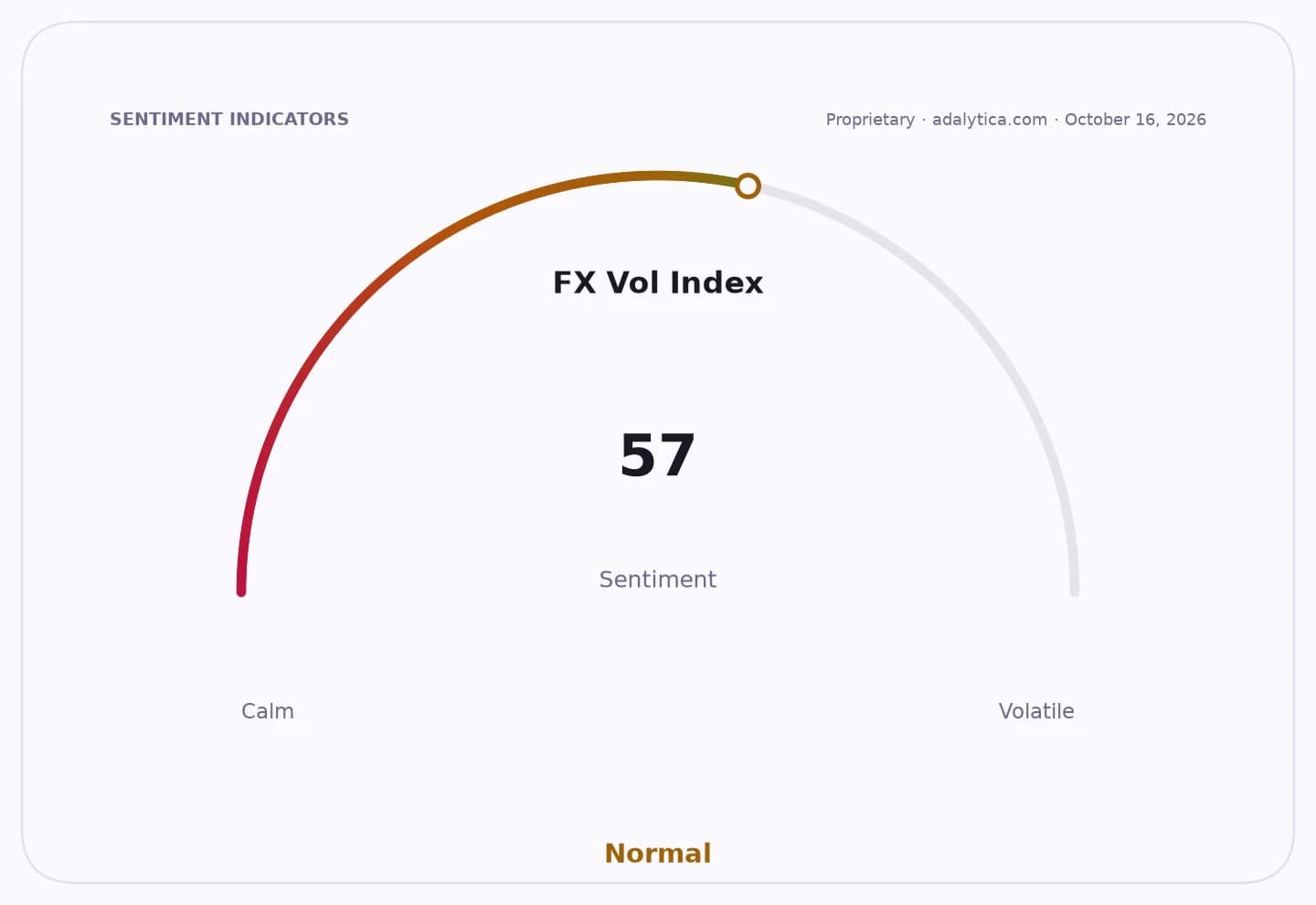
Sentiment IndicatorsⓘProprietary · adalytica.com · October 17, 2026
This is a snapshot — live sentiment, awareness and momentum for 130+ markets update continuously in the dashboard.Open AlphaPulse

That is slower than the previous quarter’s 6% pace, but still comfortably resilient by regional standards. For investors, the key point is not the moderation itself; it is that domestic demand and investment activity appear strong enough to keep the economy expanding above trend. In currency markets, that usually helps a nation’s exchange rate by reinforcing the case for stable policy and attracting capital into local assets.
Bank Muamalat chief economist Afzanizam Rashid said continued above-trend growth strengthens the argument for further normalization of the overnight policy rate toward 3.00%, especially if inflation pressures keep building. That matters because rate expectations are one of the biggest drivers of currency moves. If traders conclude Malaysia has less room to ease than the US or other major economies, the ringgit gets support.
The dollar also lost some of its shine globally after US inflation came in hotter than expected, with September consumer prices rising 3.7% from 3.4% in August. Even so, the dollar index fell, helped by a pullback in technology shares and a drop in US Treasury yields to 5.09% on the 10-year note as investors sought safety. That combination weakened the greenback just as the ringgit was trying to hold recent gains.
For long-term investors, this is a reminder that currencies are not moved by one data point alone. They reflect the gap between growth, inflation and central-bank direction. If Malaysia can keep posting solid expansion while the Federal Reserve stays cautious, the ringgit has room to recover further from its weak spots, even if the move is uneven.
The local note also traded mixed against other currencies, rising versus the Indonesian rupiah and Philippine peso but slipping against the yen, euro and Thai baht. That cross-currency pattern shows the ringgit is still being judged through a broad macro lens, not just a US-dollar one.
For investors with exposure to Malaysia through equities, bonds or funds, the takeaway is simple: a healthier growth backdrop and a steadier ringgit can support corporate earnings, imported inflation control and foreign inflows over time. The next GDP print will matter, but the bigger story is whether Malaysia can keep turning resilient domestic demand into a durable currency advantage. Worth watching for patient investors.
| Entity | Gains | Losses |
|---|---|---|
| Malaysian ringgit | ▲Firmer FX backdrop | ▼Dollar bulls |
| Malaysia economy | ▲Stronger growth case | ▼Rate-cut advocates |
| Malaysian bonds and equities | ▲Better policy confidence | ▼Importers hedging FX |
| US dollar | ▲Safe-haven demand only | ▼Broad G10 rivals |