The ringgit is holding up better against its Southeast Asian peers, but it is still struggling against a resurgent US dollar — a reminder that global risk aversion, not just local fundamentals, is driving the currency market right now.
Ringgit slips against dollar, beats Asean peers
That split matters because it tells investors the ringgit’s near-term path is still being set by the dollar’s strength and safe-haven demand. On Monday, the local note slipped to 4.0845/0890 against the greenback from 4.0820/0870 on Friday, even as it rose against most Asean currencies and gained ground versus the euro and yen.
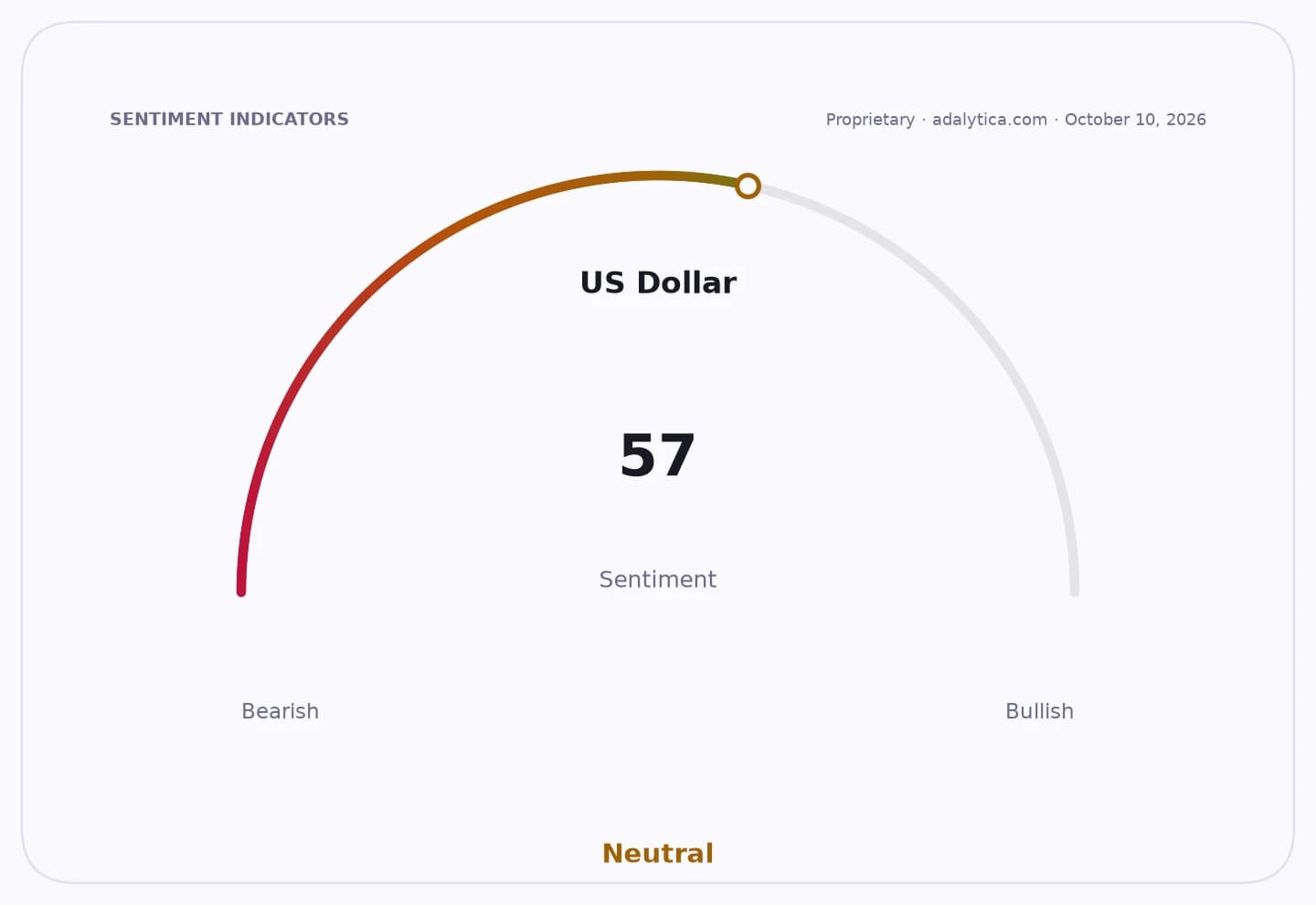
Sentiment IndicatorsⓘProprietary · adalytica.com · October 7, 2026
This is a snapshot — live sentiment, awareness and momentum for 130+ markets update continuously in the dashboard.Open AlphaPulse
The bigger backdrop is a broad move into the dollar as worries over European public finances and political upheaval pushed investors toward safer assets. Bank Muamalat chief economist Mohd Afzanizam Abdul Rashid said the dollar index gained momentum as risk-off sentiment prevailed, while the euro fell to a 17-month low after news of a snap election in Spain. In other words, Malaysia is not facing a purely domestic currency story; it is being pulled along by a global repricing of currency risk.
For long-term investors, that matters in several ways. A firmer dollar can tighten financial conditions globally, weigh on emerging-market currencies and add pressure to import costs for countries that rely on foreign goods, energy or capital. It can also shape returns for Malaysian companies with dollar debt, overseas earnings or heavy foreign-currency exposure. At the same time, the ringgit’s relative resilience against Asean peers suggests Malaysia is not the weakest link in the region, which may help limit imported inflation compared with currencies that are falling harder.
The market signals are pointing in the same direction. The US dollar appears to be benefiting from risk-off flows, and exchange-traded funds tracking the dollar have shown the kind of momentum that often accompanies a broader move into cash and liquid assets. By contrast, the ringgit’s mixed trading against major currencies shows investors are still weighing Malaysia’s position against a world that is increasingly being shaped by US yields and European uncertainty.
For investors, the key question is not whether the ringgit ticks a little higher or lower on a given day, but whether dollar strength becomes a lasting headwind for trade, inflation and corporate earnings. If the greenback stays firm, companies with dollar costs could feel the pinch, while exporters and firms earning in foreign currencies may get a cushion. That makes currency exposure worth watching, especially for anyone building a portfolio meant to compound over years rather than days.
For now, the ringgit’s message is straightforward: it can outperform nearby currencies and still remain vulnerable when the dollar is in charge. That is a good reason for investors to stay diversified, keep an eye on currency-sensitive holdings and treat short-term FX swings as part of the investing landscape, not a reason to panic.
| Entity | Gains | Losses |
|---|---|---|
| US dollar | ▲Safe-haven demand | ▼Importers in weaker currencies |
| Ringgit | ▲Versus Asean peers | ▼Against the greenback |
| Malaysian exporters | ▲Foreign-currency revenue boost | ▼If hedges miss the move |
| Malaysian importers | ▲— | ▼Higher dollar-denominated costs |