Romania’s reliance on borrowing is increasingly showing up in the currency, the budget and the cost of financing, with the leu now trading at 5.40 per euro after a roughly 6% depreciation this year as investors weigh widening fiscal and external deficits against a weak policy backdrop.
Romania Leu Weakens as Fiscal Deficits Widen
Debt Rules
That combination matters because Romania is not just running a large budget gap; it is also financing a trade deficit of €32.3 billion and an external debt load that has climbed above 60% of GDP, a level that raises refinancing risk for an emerging market with limited room to absorb shocks. The latest National Bank of Romania data cited in the analysis show international reserves of €58.6 billion at end-October, down from €64.8 billion at end-2025, while gold holdings stood at 103.6 tonnes, worth about €11.8 billion, offering a cushion but not a substitute for fiscal repair.
Sentiment Indicators
The story is not simply that Romania is borrowing more. It is that a large share of that borrowing appears to have financed consumption rather than productive investment, leaving the economy more exposed to external shocks and less able to grow its way out of debt. The author’s warning that debt levels rose by nearly 20% in some years, including 2020 and 2024, underscores how quickly balance-sheet pressures have built under repeated policy changes, pandemic disruption and the shock of Russia’s war in Ukraine.
For investors, the implications run through sovereign spreads, local rates and the currency. A weaker leu raises import costs and can keep inflation sticky, which in turn limits the central bank’s room to ease policy even as growth slows. Romania’s fiscal slippage — with a consolidated budget deficit of 9% of GDP in 2024 and again elevated in 2025 — also increases the risk that the government must offer higher yields to attract buyers of its debt, particularly if Brussels and rating agencies demand a credible consolidation plan.
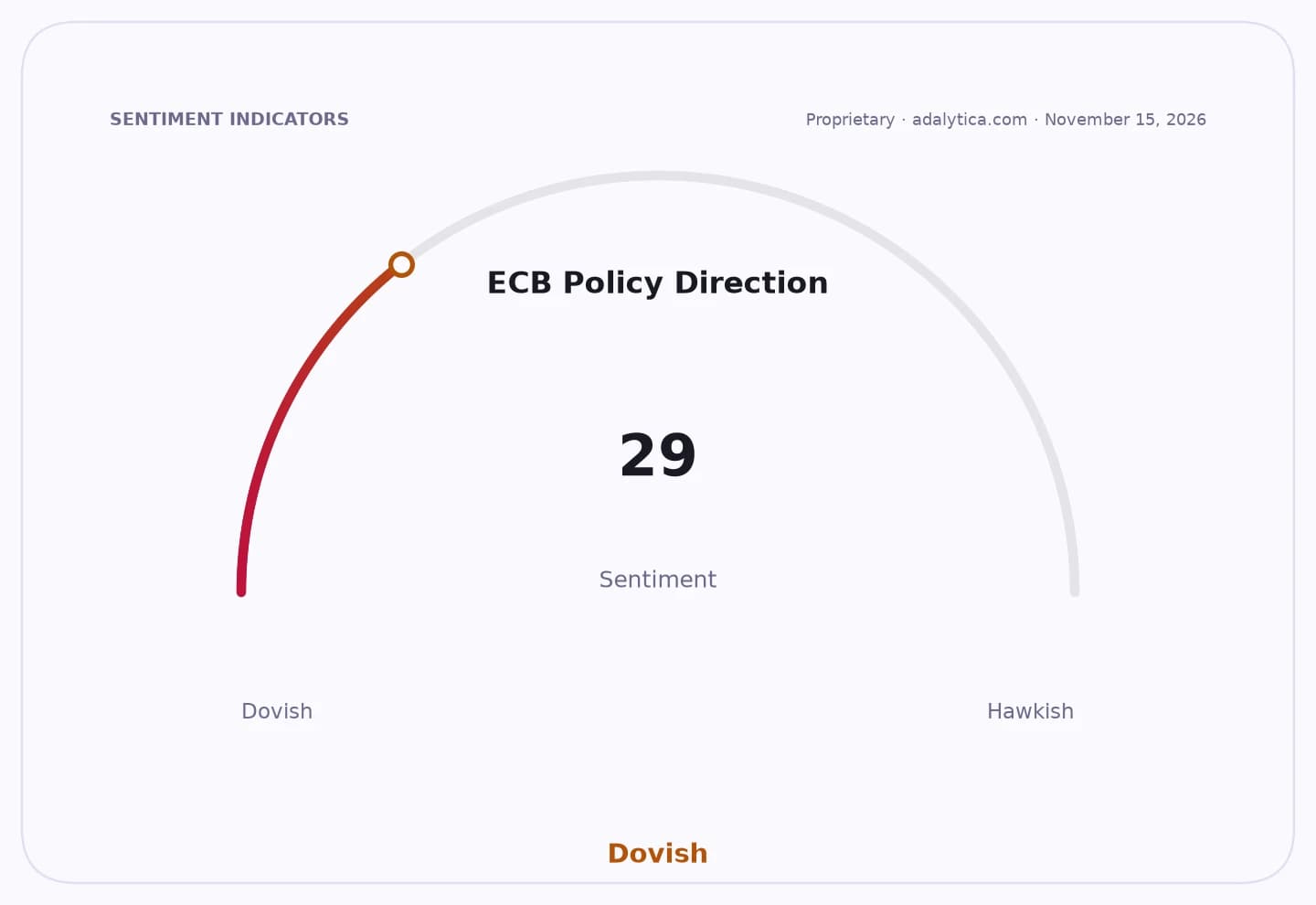
The market backdrop is not helpful. The euro itself remains under pressure in sentiment gauges, while the leu has already lost ground against the single currency. Standard technical indicators on EUR/USD show the pair below both its 50-day and 200-day moving averages, with RSI readings near the lower end of the range, suggesting the market is still pricing a relatively firm dollar and leaving more room for pressure on regional currencies if risk aversion rises. That matters for Romania because external funding costs tend to rise fastest when global liquidity tightens.
There is a political dimension as well. The brief interim government from May 5 to Oct. 20 added to the sense of policy drift, and repeated changes of administration have made sustained fiscal adjustment harder. The result is what the author calls political paralysis: the need to rein in spending collides with the social cost of austerity, making reform easier to promise than to execute.
The bull case is that Romania still has buffers — reserves, gold holdings and access to European financing — and that a newly installed government could finally tighten spending, improve tax collection and redirect borrowing toward investment. The bear case is that, without faster export growth and a sharper improvement in domestic production, the country keeps rolling over debt at higher cost while the leu weakens further and confidence erodes.
For markets, the key question now is whether 2027 becomes the year of adjustment or another year of borrowing to fund consumption. Until fiscal discipline improves and the external gap narrows, Romania’s debt story is likely to stay a currency story, a rates story and, increasingly, a credibility story.
| Entity | Gains | Losses |
|---|---|---|
| Romanian government | ▲Time to finance deficits | ▼Credibility and funding costs |
| Foreign lenders | ▲Higher yields | ▼Greater default and rollover risk |
| Holders of leu assets | ▲Potential policy tightening | ▼Currency depreciation |
| Romanian consumers | ▲Short-term spending support | ▼Higher prices and taxes |