Romania risks being left with a weaker security posture and less influence over the Black Sea order if the coming Trump-Xi-Putin discussions on Ukraine shape the next phase of peace talks without Bucharest at the table.
Romania risks exclusion from Ukraine peace talks
That is the key message from foreign policy analyst Ștefan Popescu, who says the outcome of the negotiations could define Romania’s strategic destiny for years, not months. For investors and policymakers alike, the concern is not simply diplomatic pride. It is about the rules that emerge around Ukraine, the Black Sea, NATO’s eastern flank and Moldova — all issues that directly affect regional stability, trade routes and defense spending.
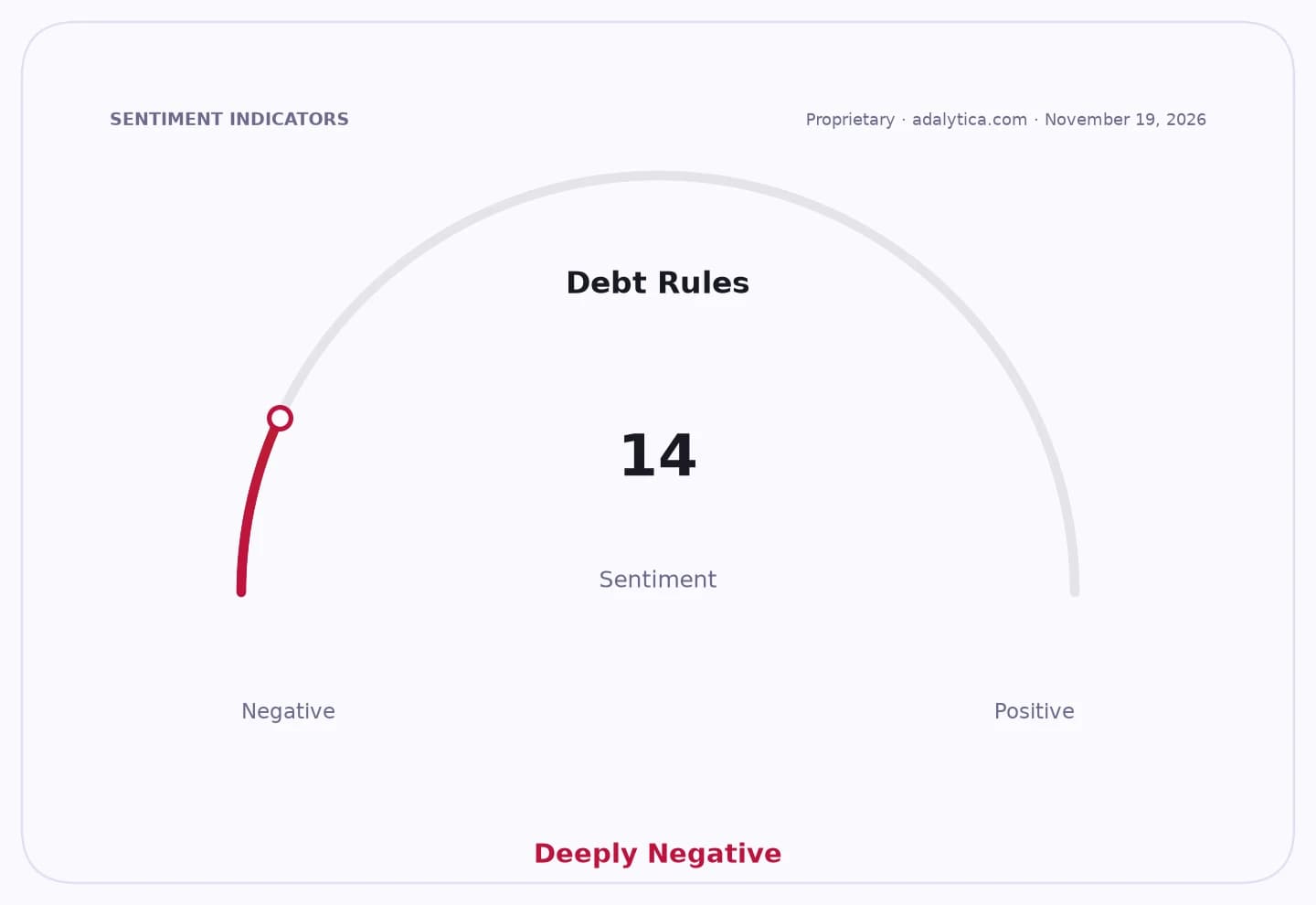
Sentiment Indicators
Popescu’s warning lands at a sensitive moment. European powers are already forming a narrower negotiating group on Ukraine, and Romania is not included. At the same time, Washington, Beijing and Moscow are preparing to discuss a file that will almost certainly include the war in Ukraine, even if only indirectly. If those talks produce a framework that hardens spheres of influence or redraws security assumptions in Eastern Europe, Romania will have to live with the consequences whether it helped shape them or not.
That matters economically because geopolitical clarity, or the lack of it, feeds directly into investment decisions. Romania sits on one of Europe’s most exposed frontiers, with direct proximity to Ukraine and the wider Black Sea theater. A settlement that reduces the risk of escalation could ease pressure on defense budgets and regional supply chains. But a deal that leaves insecurity unresolved could keep energy, logistics and insurance costs elevated while forcing Bucharest to spend more on deterrence and border security.
For investors, the story is also about positioning. Countries that sit at the edge of a new European security architecture tend to see their sovereign risk, infrastructure priorities and military procurement cycles change together. Romania’s role as a transit state and NATO member gives it relevance, but influence is not guaranteed. The more absent it is from top-level diplomacy, the more likely it is to become a rule-taker rather than a rule-shaper in the next phase of European security.
The domestic challenge, Popescu argues, is that Romanian diplomacy has been too quiet while the global order shifts around it. He says Bucharest wrongly assumed NATO and the European Union were permanent fixtures that would absorb shocks without much national preparation. That complacency is now costly. In a world where major powers are recalibrating their interests, smaller states on strategic fault lines need to be earlier, louder and more visible.
Romania also faces a narrower room for maneuver than some of its neighbors. Unlike Hungary or Bulgaria, it cannot rely on geographic distance from the Russian frontier. It also has immediate stakes in Moldova and in the Black Sea, where military tension, trade flows and energy security intersect. That combination makes passivity especially risky.
There is no quick fix. Rebuilding diplomatic leverage takes years, not weeks, and the window for influence in any Ukraine-endgame is already closing. For long-term investors, the lesson is straightforward: Romania remains a country to watch, but also one whose strategic premium will depend increasingly on whether it can turn geography into influence rather than exposure. That makes Bucharest worth following closely — and a reminder that in Europe’s next security settlement, being present may matter as much as being powerful.
| Entity | Gains | Losses |
|---|---|---|
| Russia, U.S., China | ▲agenda-setting power | ▼Romania’s influence |
| Romania | ▲little, unless it re-engages | ▼strategic leverage |
| NATO eastern flank | ▲clearer security posture if talks stabilize region | ▼higher risk if excluded |
| Investors in Romania | ▲possible long-term clarity | ▼near-term geopolitical risk |