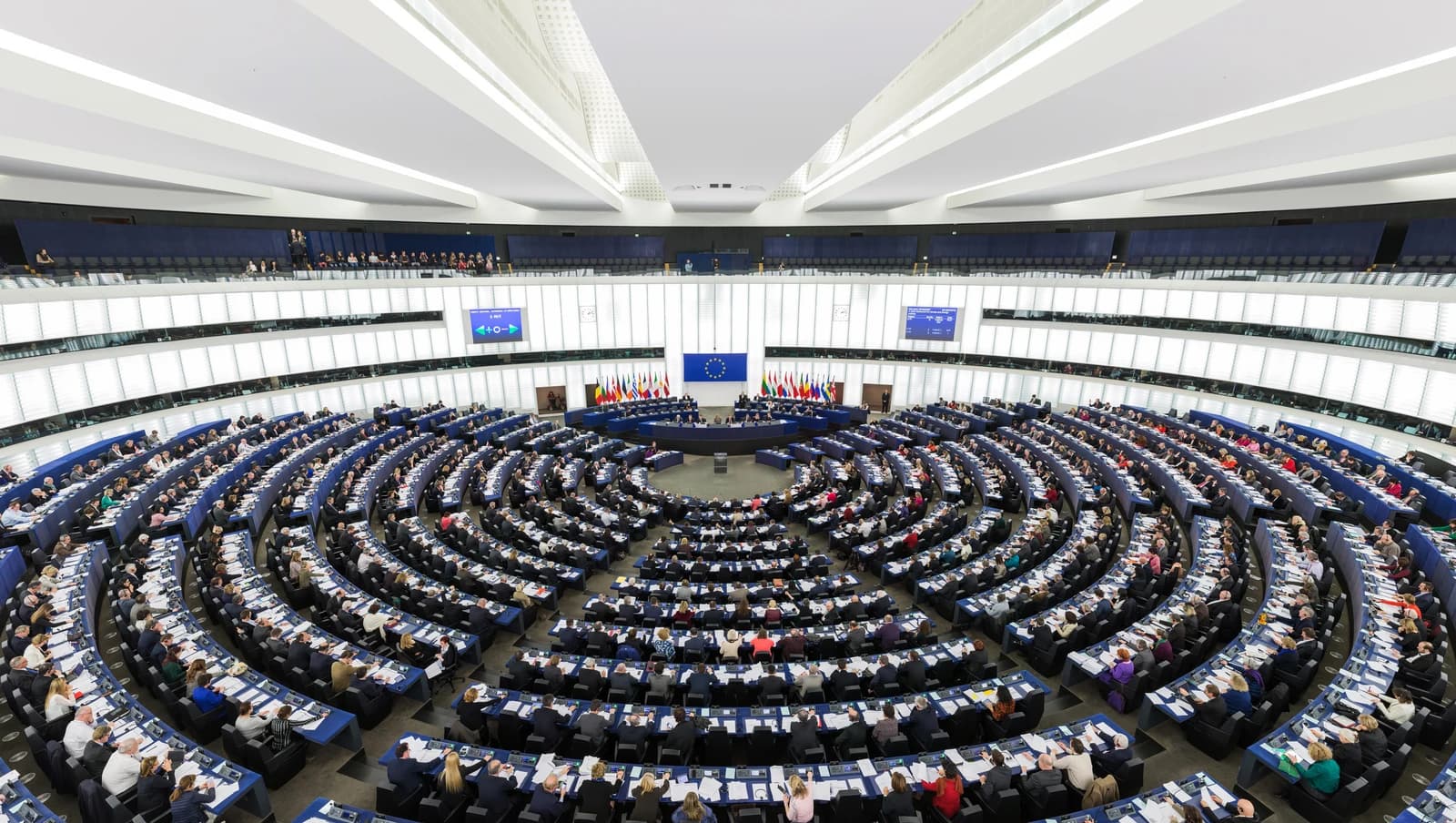
The European Union’s work on membership plans for Ukraine, Moldova and Armenia is widening the bloc’s geopolitical clash with Moscow and reinforcing the security premium across Eastern Europe.
EU Enlargement Plans Put Ukraine, Moldova, Armenia in Focus

Russian lawmakers seized on the move on Tuesday, saying the prospect of EU accession programs for the three countries directly touches Russia’s “strategic security.” That reaction matters because Brussels’ enlargement agenda has moved beyond a purely institutional debate and into the core of Moscow’s defense doctrine, with implications for sanctions policy, military risk and the broader investment climate around the region.
Sentiment IndicatorsⓘProprietary · adalytica.com · October 26, 2026
This is a snapshot — live sentiment, awareness and momentum for 130+ markets update continuously in the dashboard.Open AlphaPulse

For investors, the immediate relevance is not about near-term accession odds, which remain highly uncertain, but about what the process signals: a longer confrontation between the EU and Russia, deeper Western alignment with Kyiv and Chisinau, and a continued need for Europe to fund defense, energy security and infrastructure resilience. That tends to support spending tied to rearmament and reconstruction while keeping a floor under risk premia for assets exposed to the Black Sea, the Caucasus and the EU’s eastern frontier.
The message from Moscow is also a reminder that enlargement is now being framed as a strategic encroachment rather than a bureaucratic milestone. That raises the odds of retaliation in the political, cyber and energy spheres even if no immediate military escalation follows. The market impact is likely to be felt first in currencies, sovereign spreads and defense stocks rather than in broad equity indices.
Technical positioning in European ETFs with Eastern Europe exposure suggests investors are already differentiating by geography. The iShares MSCI United Kingdom ETF, EWU, has held above its 50-day and 200-day moving averages, but momentum gauges show a stretched near-term setup. The broader iShares MSCI Emerging Markets ETF, EEM, has weakened sharply, with its price below both major moving averages and RSI readings in deeply oversold territory, underscoring how sensitive emerging-market assets remain to geopolitical shocks and dollar moves.
The euro’s latest Adalytica trade snapshot shows extreme greed, while the dollar remains neutral with a fear-leaning awareness reading, a combination that suggests markets are still pricing a benign macro backdrop even as geopolitical risk rises. That gap can close quickly if the EU’s enlargement push hardens Russian countermeasures or complicates peace efforts over Ukraine.
The strategic narrative is straightforward: Brussels is extending its political and security perimeter eastward, Moscow sees that as a direct challenge, and investors will keep paying for the uncertainty until the path to enlargement and the Kremlin’s response become clearer.
| Entity | Gains | Losses |
|---|---|---|
| EU | ▲Strategic influence | ▼Short-term stability |
| Ukraine, Moldova, Armenia | ▲Accession momentum | ▼Near-term certainty |
| Russia | ▲Domestic rallying point | ▼Strategic buffer |
| Defense and security assets | ▲Higher spending outlook | ▼Peace-dividend trades |